Welcome to the next installment of my “What the Hell is Going On?” collection drawn from my first book and various new essays that I have been sitting on and am now ready to publish. You can read the whole collection.
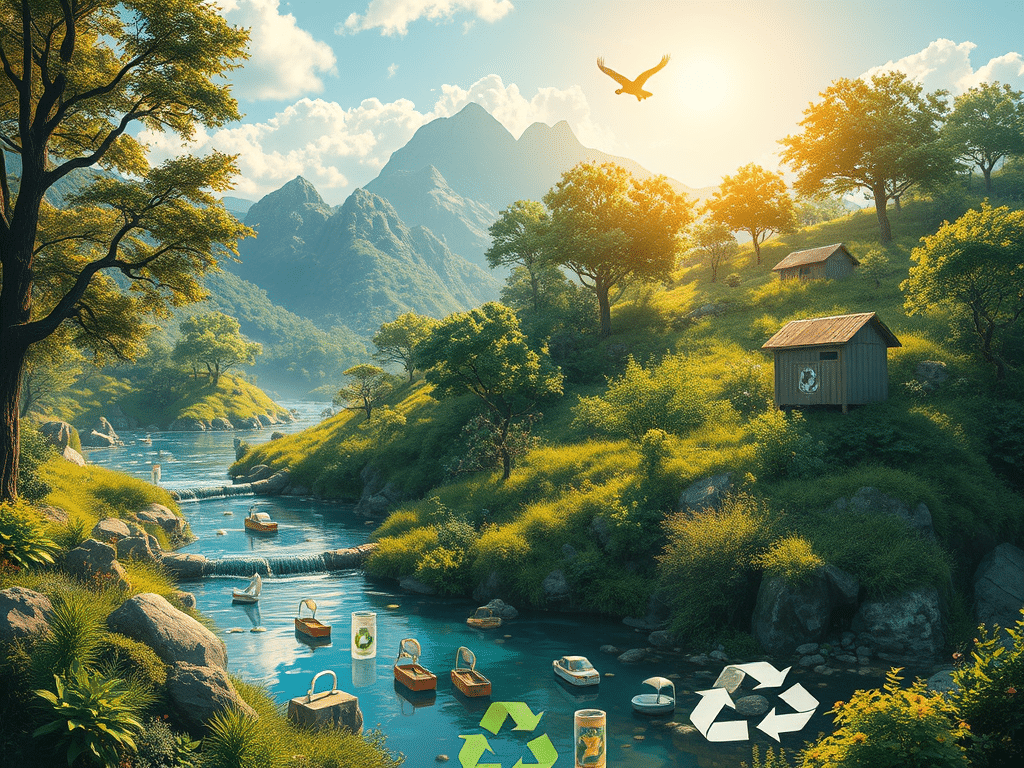
Sustainability has been a popular catchphrase within the next wave of the environmental movement for quite some time now. Sustainability, the very word, gives us some advice on what is necessary to sustain a system. A sustainable system is one where the process can be repeated over and over again with minimal input to that system for it to keep producing. The ecology of the planet works in this manner. Every creature, through its life, reproduction, and death, contributes to a sustainable ecology that requires no new input. To sustain something means that you should be able to do it over and over again in a way that doesn’t require a constant new input of material to keep the system going. The way our society is now is fairly far from that. We have to put in many new resources to keep the system going, and it produces quite a bit of waste that currently is clogging up the ocean, landfills, and the planetary system as a whole. One of the reasons that I like to focus on this aspect of the climate is because humanity can, as a planet, move the needle on ecology immediately if nations can make these changes. The results of 40 years of important environmentalism are all around. Air, water, and homes are cleaner and safer than ever before, and more can be done to move the needle and save not only lifestyles but the planet, as well. Humanity can work in harmony. I’ve identified 4 areas for increased work in creating a more sustainable future.
100% Recycling
Recycling materials is the most important thing we can do to reduce extraction and increase the reuse of materials, especially materials like “rare earths” and other metals that power our modern electronics. By enacting national legislation to help communities start recycling programs, more glass, metal, paper, and electronics can be recycled and reused more than ever before. Recycling shouldn’t just be for modern, trendy communities and big cities; every city, town, and county should have recycling available, and in the future, recycling should be required not only for communities but especially for corporations.
Zero Waste Policies
The next step after required recycling is the move toward zero waste. Companies can design products with compostable items instead of disposable items. Companies can find ways to make their products so that they do not produce waste at the end of their life cycles. By doing this, waste can be reduced down to the absolute minimum and in time, down to zero. The landfill could be out of date in 25 years. The impact of not burying millions of tons of material in the ground because there is nothing else to do with it will be highly impactful to our ecology and to the climate. Landfills are put off methane, which is not something that is being captured or used. It is released to go into the atmosphere and into people’s lungs.
Sustainable Farming
Food production is an energy-intensive process that requires many chemicals to be highly productive and low-cost. As I demonstrated in my essay on GMOs, mono-culture farming is chemically and energy-intensive. That can be changed right away here in the United States through farm subsidies. Farming is heavily insured and subsidized by the Federal government. When the USDA issues new rules and guidelines, farmers move quickly to bring their operations into line. If the USDA creates a program to promote sustainable farming using complementary planting practices and the increased use of resistant, non-chemical GMOs (like the orange and the papaya), then farmers will move quickly to change the way they grow food, and our ecology will benefit.
Ancillary problems, like bee colony collapse and dying soil biomes, will solve themselves. All we have to do is work in harmony with nature and not against using expensive chemicals and processes. Examples of this approach already do exist within the agricultural and farming industries, such as at Superior Farms, a North American leader in lamb processing that has built sustainability into its operations from pasture to processing. Superior Farms is just one company already demonstrating how humane animal treatment – when paired with responsible land stewardship and renewable energy investments – can align environmental responsibility with larger scale food production.
Natural Land Restoration
Natural Land Restoration is something already hard at work. The next step in natural land restoration is to find ways we can fit cities and towns into those models and paradigms. Growing up in the Denver area and exploring Boulder on a frequent basis, one could not but notice the vast tracts of farmland and open space around the growing city. That did not happen by chance. It happened very specifically using the “open space” program. Boulder pioneered it in the early 1970s as a way to preserve the rural and natural areas around Boulder. The City and County of Boulder will buy up land and then lease it back to farmers or simply let it grow wild in the natural state of Colorado. The benefit is that exploratory areas are created for outdoors activities and Boulder doesn’t get absorbed completely into a concrete jungle like Denver. It’s the perfect balance of town and country. Wetland restoration has saved the Mississippi Delta, the Everglades in Florida, and other sensitive areas around the country. This can become common practice. The future could offer the creation of cities that work in harmony with nature and where nature and society live together. It’s possible, if policy makers start planning and designing for this future now.
Our Ecological Future
We can have a better ecological future that will help us help the planet and really move the needle on our changing climate. Humans have had to adapt to climate for millennia. Civilizations that can’t adapt do not survive. Modern humans have the advantage of technology and a unique foresight to understand how to adapt to the changes in the planet. Creation of a sustainable future is something that is positive for people, animals, and the planet. It’s possible with political will and a desire for a sustainable future that everyone can enjoy.
Discover more from The Cameron Journal
Subscribe to get the latest posts sent to your email.