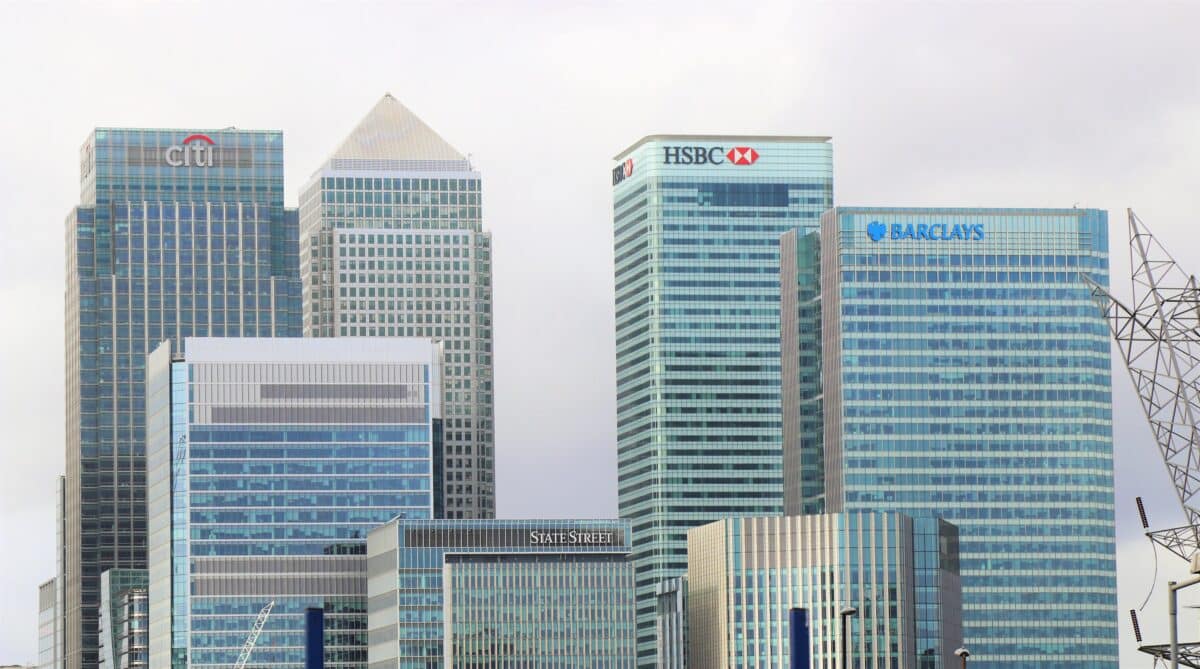
The number of Americans who don’t have a bank account, as of 2016 is around 7% (according to the Federal Deposit Insurance Corporation). The FDIC defines that as a household that does not have an account an an FDIC insured institution. At the height of the recession, it was up to 7.7%. That might not seem like many people but that represents millions of Americans who do not have access to basic banking services. This leaves them using check-cashing services at grocery stores and payday loan shops. The same group of people also use payday loans to bridge financial gaps. Those predatory and high interest loans can lead to other financial problems.
When I found myself without a bank account or the ability to access one, I never realized how hard it was to function without having a bank account. What I also didn’t understand, was how hard it would be to work as a freelancer providing writing and marketing services to small and medium sized business would be, also without a bank account. I had always just deposited my checks in an account. Now, I was getting checks from my customers and I had nowhere to deposit them. The checks were worthless to me unless I could find a way. I had seen signs for check cashing locations and so, one night, I decided to try it out.
The way that I became a member of the unbanked was my own fault. People will often blame banks and banking policies, but ultimately, it’s a matter of responsibility. I was irresponsible with my business and personal banking accounts and by the time everything with my financial life had fallen apart, I was a couple thousand dollars in debt including to my former banking institutions. I couldn’t afford to pay it and I couldn’t afford to not having some money coming in, so rather than deposit my checks into my account and eating away at the balance, I walked in to my first check cashing location.
Many grocery stores and other large retailers will cash computer-generated payroll checks. The money is guaranteed to be there. However, for handwritten or personal checks, you have to go to a real check cashing shop which usually also a payday loan shop. The very first one I ever walked into was in Greeley, Colorado where I went to college. I had 3 checks in my wallet and it was around 4 or 5 in the afternoon. The sun was low in the sky when I piloted my van into the small parking lot of 10th ave in a suburban area of Greeley and gingerly walked into the glass and metal shop. The sun kept the room hot. The cashiers stood behind bullet-proof glass. The store manager, a distinguished man, tall and with whitening hair took my business. I think he sensed that it was my first time. He guided me through the small amount of paperwork and the 1 time membership fee you had to pay. He cashed my checks after running them through his computer and handed me the cash, less the posted fees on the stained wall between 7% and 10%.
I also remember the last time I went into a check cashing place. I wanted to open my new credit union account with cash so there would be fewer questions. I had gotten a check for a project and I remembered thinking, “This is the last time I have to pay these fees, get the questioning looks and glares, and the last time I have to pray that they will take my check without too many problems.”
For the next 2 and 1/2 years, I would exist without a bank account. On the few times I couldn’t get paid in cash, I would take the checks in my wallet and head to the nearest branch of that chain of check cashing stops. I would look for the familiar green sign and pull in. I tried to always go to the same one once I left Greeley. If you were consistent and your checks were always good, there were fewer problems. You had to go early enough in the day in case they had to call for verification of funds. I received a dirty look from my Mom one time when she saw where her check to me had been cashed. Other relatives knew about it but didn’t comment on my situation. I was always in a messy situation as an artist/freelancer and I think most of my family came to expect it from me.
I felt like I was on the edge of society. As a kid growing up in a middle class community and parents who were fastidious about money, I had never experienced life on the edge of the institutions that keep our economy running smoothly. My first bank account was not even from a bank, it actually was from a credit union. During The Cameron Cowan Show I talked about credit unions and how wonderful they are to have. I got my first debit card at 16 years old. My parents dutifully taught me how to fill out the little deposit slip and how to read a bank statement. It was a good start but life would interfere.
Like many people who use the banking services for the unbanked, my situation was problematic.
I graduated with my Master’s in International Relations in 2011. I decided not to continue on to a PhD, as the market for PhDs was not great. I felt like I was too academically exhausted for law school. I wanted to see if I could pursue my interests in art, writing, magazines and my books. I also had a bit of a thing for fashion and so when I moved to Denver from Greeley and back in with my parents, I was sick, tired from doing both my degrees in 4 and a half years, and flat broke.
Not only was a flat broke but I had made a serious of necessary, if disastrous, financial decisions. When I was an undergrad, my tuition was paid for but my remaining personal expenses were not covered. This left me with no money to live on. I didn’t have any money for food off-campus, clothes, gas, or doing anything beyond sitting in my dorm room. I had a credit card at the time and I could get more. By the time I was 21 I was juggling about 3 already, plus a Target store card. At the time, I was still freelancing online and money was coming in. I had a major client with some possibilities. It was tough to balance a full school schedule as well as take care of clients, but I was able to pull it off. There weren’t too many jobs in Greeley, a modest town of 45,000 people. My big van and it’s terrible gas mileage weren’t suited to traveling to another nearby town for a job. I felt lucky, even while I was on the phone with my clients between classes. At least I was able to make money through my own means.
Then 2008 happened. My school schedule was picking up and I was struggling to balance everything. However, my scheduling problems would soon evaporate along with my clients in the recession. The recession started to take hold and my one source of income dried up. My credit card balances skyrocketed and unlike the past where I was able to pay, pretty soon I was balancing minimum payments and collection calls. I was “paying peter to later rob peter to pay paul” and that included my bank accounts as well. By the time I graduated in 2009, I thought I was in the clear. I had some money coming in and I applied to grad school. I thought my troubles would be over. I signed a lease on a garden level apartment and excitedly made small improvements and painted my new rooms. I set up an office and got an office line. I bought kitchen supplies and furniture. However, I did not understand the depth of the recession and what we really faced. I expanded my business and took on new clients. I completed writing work and marketing tasks and sent out invoices only not to have them paid. Expenses piled up and my cash flow dwindled.
By the time dust settled, it was 2011. I was graduating from grad school and my situation had become problematic. My credit score was trash and I was still fielding collection calls at the dozens a day. My mom texted me every time that a collections company called her asking where I was or if my phone number still worked. My bank accounts had all been discharged and I was regularly making due with a paypal account and check cashing locations.
I had gotten a school-of-hard-knocks lesson in the dark side of poverty in America.
In my talking about the dire state of people who don’t have banking services, I don’t want to place blame anywhere else than myself. I wrote back checks, over drew accounts, over charged credit cards, and I didn’t pay people that I owed money too.
I did that.
I’m responsible for that bad behavior.
That’s now I became one those people who were unbanked. Over my time being unbanked I had a chance to sit in many cash cashing locations in Colorado. I watched people pay off payday loans only to withdraw them again, the most they could get, for outrageous interest. I watched people bring in their paychecks to be cashed paying a fee for the privilege of having their cash right there but yet still paying for something that a bank or credit union doesn’t charge to do. I noticed that these patterns were generational as well. I watched mothers teaching their sons how to take out a pay day loan and what paperwork they needed to bring to do that. I watched single mom’s with babies nervously cashing a check or getting a loan and then crossing the parking lot to buy groceries alongside women who paid with their groceries with their AMEX for the reward points.
It was a look into a world that I had no idea existed. The reality is that many American live this story and continue to live the story for years. This is an area that Silicon Valley is trying to break into. I’m not calling for massive banking reform or anything like that, however, reform in the payday loan/check cashing industry is definitely with exploring.
Discover more from The Cameron Journal
Subscribe to get the latest posts sent to your email.