
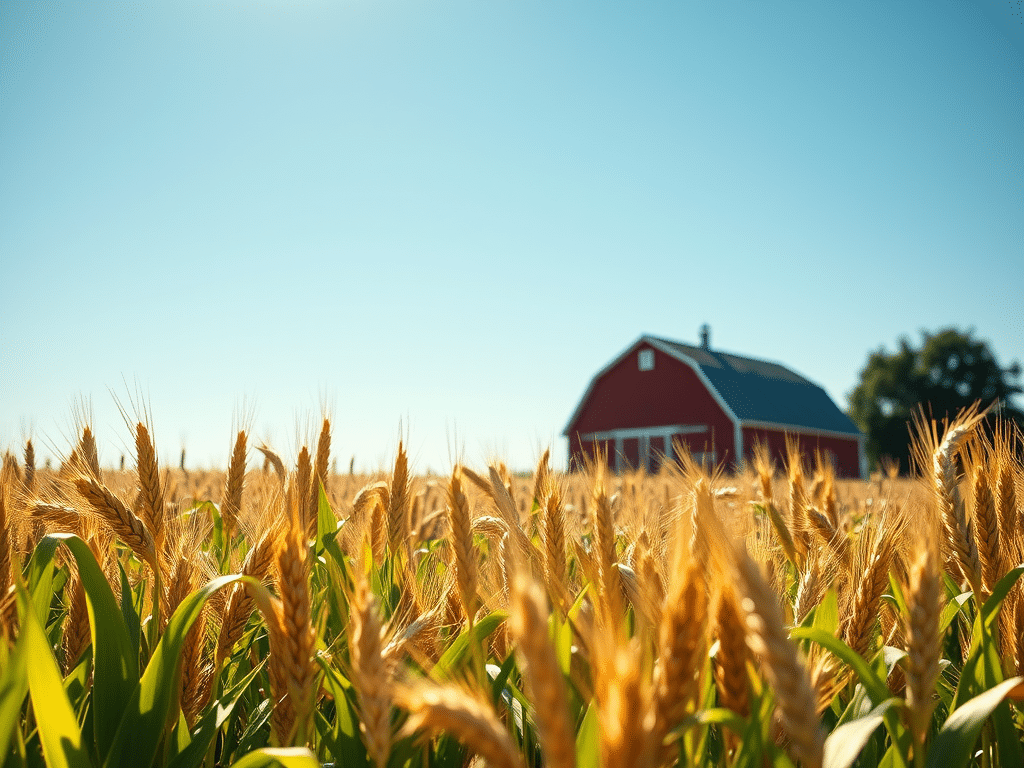
In 2020, I was traveling around the country, and as I was traveling through the Great Plan, I passed fields of wheat and corn. Kansas and the areas surrounding it are America’s heartland. An old sign near Hays, KS, reminds everyone that each Kansas farmer feeds 101 people. I’m sure that is far out of date now (that sign has been there since I was a kid). America’s bread basket is vital to national and international food supply. We’ve already seen from the disruption of grain shipments from Ukraine that a single lost food source can have devastating effects around the globe. I’ve passed by these farms many times, and behind the amber waves of grain lies an entire industry of seeds, chemicals, processes, and machinery that makes farming, particularly in that climate, possible.
On the one side, this industry makes feeding 8 billion people possible. Humanity has less food insecurity today than at any time in human history. However, this food security has come at a terrible cost, including a degradation of insect populations and a rise in pollution. Ironically, I stopped for gas while listening to a Monocle Magazine podcast about making agriculture green. It might seem counterintuitive, but the statement remains true. Despite being an iconically “green” activity, agriculture has departed from natural processes and routes.
One of the most important things that has come up since I wrote my original essay about genetically modified foods, bees, and pesticides is how much agriculture needs to change. In my original essay, I suggested we needed to reduce the use of pesticides and completely change how we grow food. This idea that we need to change agriculture has become much more mainstream since I did my initial research.
In The Bees Are Not Alright, I posited that pesticides and monoculture farming destroyed natural ecology. Without Bees and other pollinators, our food supply would collapse. Between the excess use of pesticides that go along with genetically modified seeds (the only type of GMO that is a net negative in my view) and the chemicals that those crops are bathed in, agriculture is often a toxic stew—these chemicals. These range from fertilizers to pesticides, insecticides, and herbicides, and they end up in the ocean, where they cause destructive algae blooms or rid the area of oceanic life entirely. Considering we live on a planet where 1/3 of the protein comes from fish, this is quite a big problem. Ironically, GMOs could help by reducing, rather than encouraging, pesticide use.
In this follow-up essay, I want to discuss some of the latest trends in agriculture and ecology, the environment as a system, and understanding how humans can meet their needs while working harmoniously with ecology.

Houses and farmland
I recently watched a documentary (Losing Ground, 2019) about the loss of small family farms and how often these farms are sold off to developers who turn them into massive housing developments. The sad reality is that we have minimal farmland, only about 12% of the Earth’s surface. In the United States, some of that land is not in productive use for farms but is trapped under sprawling suburbs.
It is well known that the American family farm has been under attack for decades. Major corporations like Cargill and other big agricultural producers now own most farms. Companies like Bayer-Monsanto and DeKalb also control seeds and fertilizers. Corporate America is firmly in charge of food production. Many family farms have been sold off and turned into developments. The closer to a growing city the farm was located, the more likely that the farm had been torn down to build new housing. From a food production perspective, this is not an optimal land use. Fortunately, here in the US, we have so much land that land use isn’t as extensive of a priority as it is in other countries, especially our partners in the EU.
The reality is that if we want to continue producing food without as many chemicals in the process, land use will be something that needs to be addressed. Whether restoring wilderness, grasslands, wetlands, or reserving arable land for farming, the US cannot afford to let its largesse of land lull policymakers into a false sense of security.
Monoculture Farming
Before mechanized agriculture arrived in the late 19th and early 20th century, farms tended not to focus on just one crop. This was primarily for two reasons: it was impractical to farm only one crop due to labor, and two because many relied on their farms to produce a cash crop and food for their families. Most farms were subsistence operations. However, farms began to grow as the US created an agricultural surplus that could be exported.
Much of the agricultural heritage we now enjoy comes from farms engaging in diverse crops, farming methods, and producing various food and other goods. On The Cameron Journal, I posted a video about the legacy of dairy farming in Wisconsin. It was (and still is) common for dairy farmers to grow some of their feed. There are cost savings, and many legacy farms already have land built for the purpose.
However, with mechanization, monoculture farming began to take over the farms of America. It was easier to plant acre after acre of one crop and harvest it uniformly using machines to reduce labor. This allowed the number of people working in agriculture to reduce dramatically. This was good for people but a net disaster for ecology near arable land.
Much of these changes have entirely broken down local food supplies, and now food is shipped around the country by land and sea to get it to where it can be processed or delivered to others who will use the raw goods to make finished goods. The reality is that farms surround many major cities and could source more food locally. The rise of the “farm-to-table” movement aims to restore these local food connections. Years ago, when I first wrote about this, it was a hipster trend, but now it is an accepted part of life. Monoculture farming is still a part of that system, and more progress should be made.
As I have written before, monoculture farming is terrible for pests and requires chemicals to be sustainable. Meanwhile, all the other insects that would otherwise thrive in that environment have no food supply and disappear. This has knock-on effects on the greater food chain as well. Birds and other creatures who might eat those insects are out of food as well. An industry that should be the most natural thing in the world and contribute to the local ecology ends up being land-soaked in various chemicals and fertilizers year after year. There is a better way to accomplish the yields that humans require while reducing the use of chemicals in food production.

Agroecology
I remarked in my original essay that changing the food culture in the United States wouldn’t take very long if the Department of Agriculture offered subsidies to support different ways of farming (complementary planting, for example); it wouldn’t take farmers long to get on board. This is the mission of several new organizations working on changing our human-grown food on the planet. Even legacy organizations like the World Wildlife Fund are helping to create this solution with their “Nature Needs Half” campaign. They advocate for a balance between the wild, natural world, and human civilization.
Agroecology offers a solution to our issues with industrial farming. Industrial farming relies on pesticides and fertilizers to create tremendous yield by improving the soil and giving plants the necessary nutrients. However, according to experts (like the folks at CivilEats.com), fertilizer and pesticides contribute to nearly a quarter of the world’s carbon emissions, which has an outsized effect on climate change. Pesticides and fertilizers also end up in waterways and adversely affect those waterways and the oceans they pour into.
Agroecology also takes into account the greater ecology of an area. Remember that agriculture as we know it often depends on natural processes like pollination. For over 70% of crops (according to the Agroecology Coalition), pollinators are essential. As I wrote in my essay on Bees, our plates would look very empty without bees. There would be nearly no fruit and almost no vegetables. Agroecology considers these natural processes and uses biodiversity to create an environment where both agriculture for human uses and the natural world can thrive together.
This type of farming is essential to make farming a sustainable activity. Martin Oulu explains it this way through the Agroecology Coalition: “A lot of conventional agricultural practices have had a lot of detrimental effects on biodiversity. This is in terms of biodiversity loss, which results from the many chemicals used in agriculture. We also have issues with the loss of diversity because we only farm a few crops. If we look at grains, only 3 or 4 major grains are widely cultivated, while others have been neglected. This also contributes hugely to the loss of biodiversity. A lot of the impacts of agriculture on biodiversity are negative. Still, there could also be positive impacts in reducing pollution and enhancing soil fertility by understanding issues of below-ground biodiversity and using organic fertilizers.”
One aspect of Agroecology that is mainly promoted by organizations like the ones I’ve cited here is how Agroecology is not even new; as such, Civil Eats makes a point that this kind of farming has been common in some form among indigenous peoples and analyzing these traditional practices can help modern society create more co-creative and natural agricultural processes. The Agroecology Coalition is pairing these ideas with emerging nations like Kenya and Cambodia.
It is important to note that not everything is a panacea when it comes to reforming food processes. Farmers in the Netherlands have been protesting about the new restrictions on fertilizers as the Dutch seek to reach their EU-mandated climate goals. The farmers are complaining that the yield reductions will make their operations unprofitable. Elsewhere, a famine developed in Sri Lanka due to a wholesale abandonment of modern fertilizers favoring organic processes. The land in Sri Lanka is relatively poor, and without modern fertilizers, food production plummeted, leaving many of its poorest citizens without food. When it comes to food and feeding the planet, this has dire consequences if not done carefully and with a mind to maintain a safe and plentiful food supply.
In 2021, the World Wildlife Fund produced a report called Farming with Biodiversity. In the report, taken from experts worldwide, they articulate the basic principles of agroecology.
The WWF outlines them as follows:
Diversity: diversification is vital to food system transitions to ensure food security and nutrition while conserving, protecting, and enhancing natural resources.
• Co-creation and sharing knowledge: innovations in food production (in land and water) respond better to local challenges when co-created and contextualized through participatory processes.
• Synergies: building synergies enhances essential functions across food systems, supporting production and multiple ecosystem services.
• Efficiency: innovative practices that rely on regenerative food production systems or agroecology produce more using fewer external resources.
• Recycling: more recycling means agricultural and fisheries production with lower economic and environmental costs.
• Resilience: enhanced resilience of people, communities, and ecosystems is key to sustainable fisheries, food, and agricultural systems. Resilience is the capacity of socio-ecological systems to maintain key aspects of their biological, social, and functional identity in a context of constant internal and external change.
• Human and social values: protecting and improving rural and coastal livelihoods, equity, and social well-being is essential for sustainable food systems.
• Culture and food traditions: it is necessary to support healthy, diversified, and culturally appropriate diets, thus contributing to food security and nutrition while maintaining the health of ecosystems.
• Responsible governance: sustainable food production requires responsible and effective governance mechanisms at different scales – from local to national to global.
• Circular and solidarity economy: circular and solidarity economies that reconnect producers and consumers provide innovative solutions for living within our planetary boundaries while ensuring the social foundation for inclusive and sustainable development.

Thinking Differently About Food
Our whole conversation about food and what we eat is changing. Plant-based alternatives are becoming more popular, and more Americans are switching to plant alternatives. Even conventional farmers are trying new farming practices that can reduce costs, increase yields, and leave some cover crops or plants to help pollinators and minimize erosion. This is all good progress, but there is quite a long way to go. I will say that one of the things I noticed in the years since I wrote about genetically modified foods and bees is that the conversations around these topics have changed. GMOs aren’t nearly the trigger they used to be, and many more people are aware of our collapsing bee populations. Fortunately, bee populations have stabilized, and neonicotinoid pesticides are a known harm to them.
As part of the conversation on climate, food scarcity, food deserts, and food supply, we are still changing how we manage the food supply and how we plant crops and help them to thrive. Recently, the pandemic has created great upheavals in this system. The war in Ukraine has also shifted global food supplies because Ukrainian grain has been restricted on and off throughout the war. We have no shortage of abundance. We need to get the right food to the right people at the right time. We must also manage how our agriculture works harmoniously with the greater ecology.
As I always say on these matters, the changes we need to make are possible; we merely lack the will to do so. As the world becomes more unstable, there is an opportunity to accelerate how we manage the food supply. Now is the time to shift how we do agriculture; the best time was yesterday.
Discover more from The Cameron Journal
Subscribe to get the latest posts sent to your email.


