
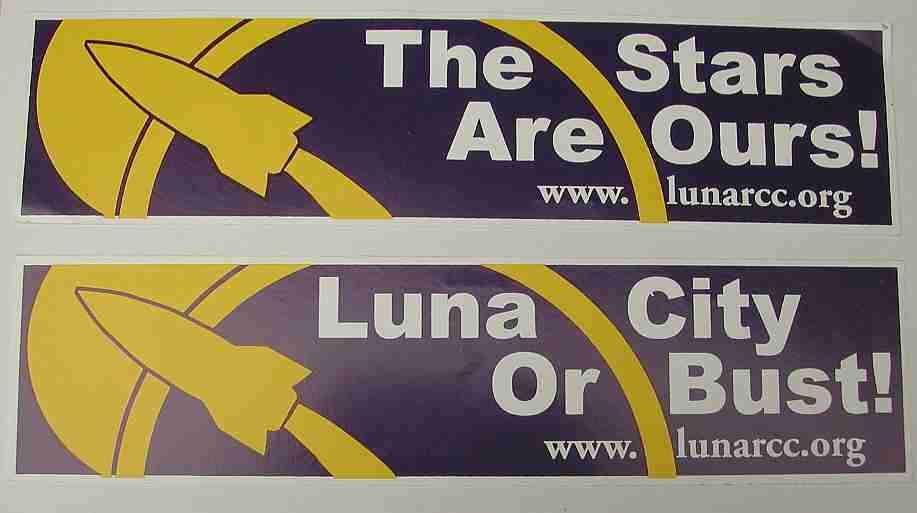
C.D. Carson is the head the Luna project, a project dedicated to mankind’s return to and settlement of the moon.
As many of my readers know I’m an addict of Netflix documentaries. When I saw one called, “Lunarcy” and that it was all about people wanting mankind to return to the moon as quickly as possible, I knew I had to watch. Among all the people they talked about one stood out to me: C.D. Carson. He is a young man who, “wants to become known for doing something out of the ordinary” some would say he is a true pioneer just like the first people to set out into the American West. Just like the European pioneers and their children who settled North America he believes in something more: “We are being fed, boring homogenized pre-packaged life. Let’s do something different. People need to be where they need to be so that they can contribute to the greater society.” He believes the pathway to throwing off the chains of “pre-packaged life” is to settle the Moon, sooner rather than later.
The Stars Are Ours
He signs his emails, “The Stars are Ours!” His lilting but authoritative voice is passionate and knowledgable about what it would take to really go to the Moon and stay there. So how does a young man from Ft. Worth, Texas decide that he wants to go to the Moon? As with many problems, blame the parents. A childhood of Star Trek and a mother with a degree in physics made his fertile little brain start to wonder, “Why don’t we have a interplanetary civilization?” That bit of thought quickly became an idea of, “What could I do to advance this?” He choose the moon for a couple reasons: ease of travel, proximity, and habitability given technology. He started to articulate this idea in high school and by 2007 his ideas really started to germinate in the forms of semi-technical papers to prove that he wasn’t crazy and that in fact with only a few hundred tons of specific items, tools, and people, a completely self sustaining lunar colony could be launched into near orbit and then gently pushed to the moon. His blueprint? The Stanford summer study of 1975. They experimented with what a sustainable colony on either the Moon or Mars might need and what it might look like both based on the Moon and in an orbiting ring (to provide gravity) between the Earth and the Moon.
He describes the The Luna Project is “nascent” and he is moving from the very beginning to the place where a popular consciousness is raised. As the documentary shows he goes to various conventions and other places where people interested in going to the Moon might populate. He has a blue smock that says, “The Luna Project” and will talk to anyone that will listen to him.
“If you are going to have New York City you need the lungfish and I’m going to be content to be the lungfish.”
There are many things that need to occur to make Moon colonization possible. There are obvious things like air, water, sustainable food supply, and waste disposal. There also has to be a reason to go to the Moon. He views this in terms of production. Carson maintains that Moon manufacturing would allow us to create a space infrastructure that would have wonderful implications right here on Earth. Moon production would help industry to use the materials there on the Moon like Basalt which is in plentiful supply. 3D printing also might have wonderful applications on the moon as well. Objects made of basalt could be printed in Basalt and sent back to Earth as well as used on the Moon. As with anything, energy is a big concern. He believes that solar can provide all the power on the moon (at least on the sun facing side) and that because there are 350 hours of sun time, that is when all heavy-power work should take place. The other 350 hours can be used for leisure activities and personal enrichment. This would generally speaking lead to a 2 weeks on 2 weeks off method of working. As he puts it, “I like to think of it as similar to a traditional agricultural community with 12 winters a year.”
The Moon is our Future?
It all sounds very exciting and very futuristic but I’m sure the reader is thinking, “But don’t we have enough problems here on Earth? Between Ebola, AIDS, hunger, labor conditions, it seems like those resources would be better spent right here on Earth?” He laughs at this common retort and says, “A Global perspective is too narrow.” He gives a moving example: War. What if we could shift the ambition for War towards Space? In that way Space could solve war, maybe those people who focus on ways to kill people will go capture an asteroid rather than steal from someone else or harm people. The ability to see Earth from outside (the overview effect) could radically change how we do things right here on Earth. “The spinoffs are amazing, we invent amazing things when we do Space. We are still experiencing the wonderful things we’ve gotten from the inspiration of Apollo. If you aren’t into the spinoffs then you don’t deserve to go into space.” Carson said. It seems grandiose and almost impossible but that is how C.D. Carson thinks every day.
He makes a compelling case for going to the Moon. I gently remind him that the big focus right now is going to Mars. NASA is testing the Orion launch system with the idea that it will be the platform that will take mankind to Mars and maybe beyond. C.D. Carson doesn’t think Mars is worthwhile and has little use for the agency that took mankind to the Moon the first time. He points out that Constellation (the program slated to replace the Space Transportation System or Space Shuttle) was canceled and was a huge waste of money. NASA is also hamstrung by legal restrictions on what it can and cannot do as well as money even though the amount of money to make a real Moon mission possible is comparatively small. He thinks that the Orion system is a waste and that money should be invested in creating the infrastructure to make permanent Space settlement possible. Carson cites important progress like launching fuel into orbit so vehicles can refuel and then proceed to their destination is an important part of an overall infrastructure that makes settlement and regular transit a possibility.
How Do We Get to the Moon?
Carson has a few suggestions on how we might accomplish this. Rather than using only government programs he believes we should all give $5 to the project to go to the Moon. He also believes that open source is the answer as it is easier and faster to do get people to collaborate and create the plan and then to execute the aforementioned plan using many of the ideas he mentioned. People have to have something to contribute to and people need to see what they are going to give to. “That is why I talk to people.” He admits it’s not his strength but he is in a strange position between not wanting to interact with the public but also be willing to do whatever it takes to do to move the cause forward.
In the documentary he says, very casually, that if he had $500 million dollars he would already be on the moon. It sounds like a lot of money but in reality it is less money than was spent developing the new F-35, a plane that has trouble flying in the rain. He is passionate about getting people gathered around the concept and to mobilize our power, as people, to go to the Moon. He believes that we have everything it takes, except the will to do so.
“A Journey of a 1000 miles begins with a single step.” is how he addresses the huge project that is settling space. Carson says that The Luna Project is over when the moon can deliver goods and services to near by orbiting stations and back to earth. He gives great hope between Space X and other positive improvements going to and settling the Moon seems to be more and more within our grasp. When that day might come might be far off but one thing is clear: we need to try.
The Bottom Line
I’ve never been a big proponent of Space travel. In many cases I think it is a waste of time and money that could be channeled elsewhere. I think learning to be a global civilization where everyone (and I do mean everyone) is treated equally is important. We know more about Mars than we know about the very oceans on own planet and they are easier to get to and study. That is as worthy of research as much as figuring how to 3-D print basalt structures. Does that trump colonizing the Moon? At some point yes and at some point no. As much as I think it is a waste of time I know that for centuries mankind has looked to the stars and wanted to go there. I know that mankind will continue to reach for the stars but while we reach for the stars let us also remember to solve our very terran problems.
Discover more from The Cameron Journal
Subscribe to get the latest posts sent to your email.


