
Key Takeaways
- Slab leaks can continue beneath concrete without producing an obvious indoor flood.
- Moving water meters, warm flooring, moisture damage, unusual sounds, and musty odors can all be warning signs.
- A simple meter check may reveal hidden water use, but it cannot pinpoint the damaged pipe.
- Not every crack, damp spot, or high bill means there is a slab leak.
- Prompt professional testing can reduce water loss and help limit damage to flooring, walls, and belongings.
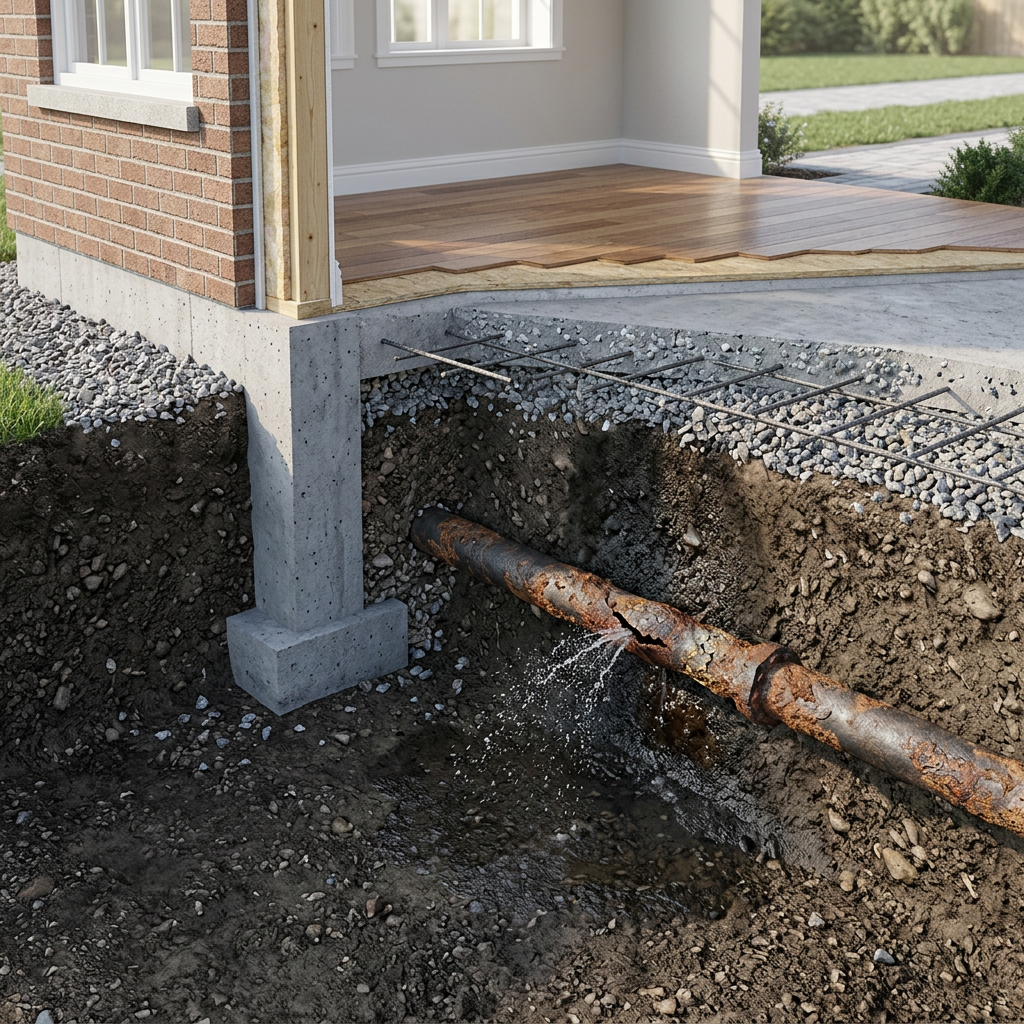
A slab leak can quietly waste water beneath a concrete foundation long before a puddle appears indoors. For Honolulu homeowners, paying attention to small changes in water use, flooring, and household sounds can make a meaningful difference. If several warning signs are present, arranging slab leak detection and repair in Honolulu, HI, can help identify the source before moisture causes broader damage.
Hidden plumbing problems are easy to overlook because the pipe is below concrete, flooring, furnishings, and sometimes soil. A higher water bill may be the first clue, not visible water. Quick observation and safe, noninvasive checks are usually a better first response than removing flooring or attempting to open the slab.
What Makes a Slab Leak Hard to Notice?
A slab leak is a leak in a water or drain line located beneath a concrete slab foundation. Water does not always rise directly above the damaged area. It can move through soil, along pipe routes, or beneath flooring before becoming visible somewhere else. As a result, a soft patch of flooring may be several feet from the actual pipe failure.
Concrete cracks, loose tile, and damp carpet have many possible causes, so they should be treated as clues rather than proof. In some homes, the only early symptom is a water bill that increases even though the household’s routines have stayed the same.
Seven Warning Signs Homeowners Should Watch
An Unexplained Increase in Water Use
Compare recent bills with the same season in prior months or years when possible. A noticeable rise without extra guests, irrigation changes, or other clear explanations may point to a hidden leak.
A Water Meter That Keeps Moving
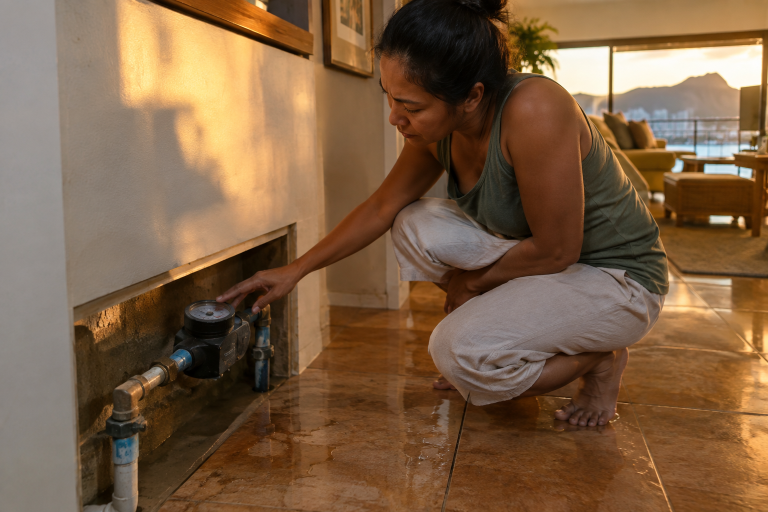
If the meter indicator moves while all fixtures and water-using appliances are off, water may be flowing somewhere in the property. Toilets, irrigation equipment, and other visible leaks should be ruled out first.
Warm Spots on the Floor
A warm area on tile, vinyl, or another floor surface can suggest a hot-water line leak. Sun exposure, appliances, and nearby mechanical equipment can also create warmth, so the area should be evaluated in context.
Damp, Soft, Warped, or Discolored Flooring
Watch for lifted flooring, stained carpet, warped wood, soft areas, loose tile, or separated grout. Persistent moisture can affect materials even when water is not pooling on the surface.
The Sound of Running Water
Hissing, rushing, or trickling sounds that continue when no faucet, shower, appliance, or irrigation system is operating deserve attention. Listen at different times of day, since normal neighborhood and household noise can make the sound difficult to identify.
Musty Odors or Mold-Like Growth
Ongoing moisture can create musty odors and support visible surface growth in affected areas. Honolulu’s humid conditions can make indoor moisture management especially important, but an odor alone does not identify its source.
Cracks, Gaps, or Uneven Areas
New or widening floor and wall cracks, gaps near baseboards, or uneven flooring should be documented. These changes can occur for several reasons, including settling, material movement, or moisture, and should not automatically be blamed on plumbing.
A Safe Water-Meter Test to Try at Home
- Turn off faucets, showers, washing machines, dishwashers, and irrigation systems.
- Confirm that toilets are not running or refilling.
- Photograph the meter reading or leak indicator.
- Wait 30 minutes to two hours without using water.
- Check the meter again and record any change.
A changed reading can show that water is moving, but it cannot locate the leak or confirm that it is beneath the slab. The EPA recommends checking a meter during a period of no water use and checking it again later as part of routine home maintenance.
Common Causes of Slab Leaks
Pipe corrosion, age-related wear, weak joints, damaged fittings, and installation issues can contribute to leaks. Pipes may also be affected by contact with surrounding materials, shifting soil, or unsuitable water pressure. A home’s age can justify closer attention to its plumbing history, but it does not prove that a slab leak is present.
What to Do When a Slab Leak Seems Likely
- Limit unnecessary water use until the source can be checked.
- Move rugs, boxes, and furniture away from damp areas.
- Photograph visible changes and note meter movement, sounds, and odors.
- Locate the main water shutoff valve before an urgent situation occurs.
- Arrange professional leak testing if symptoms continue or worsen.
Do not break concrete, remove flooring, or enter areas with electrical hazards based on a guess. If water is actively spreading near outlets, appliances, or electrical equipment, keep clear of the area and seek appropriate help promptly.
How Professionals Locate a Hidden Leak
Leak detection may involve pressure testing, acoustic listening equipment, moisture measurements, infrared temperature checks, or camera inspections for suitable drain-line concerns. The best approach depends on the pipe material, the plumbing layout, the flooring, and the suspected leak location. Targeted testing helps avoid unnecessary demolition.
Repair Choices Homeowners May Hear About
Localized Access and Pipe Repair
A technician may open a limited section of flooring and concrete to reach and repair a specific damaged area.
Rerouting a Water Line
A new pipe route may be considered when the original line is difficult to access or has experienced repeated trouble.
Replacing Larger Sections of Plumbing
When multiple sections are deteriorated, a broader replacement plan may be more practical than repeated isolated repairs.
Post-Repair Drying and Restoration
Stopping the leak is only part of the work. Wet materials may need drying, cleaning, repair, or replacement to address lingering moisture damage.
How to Reduce Future Leak Risk
- Review monthly water use for unexplained changes.
- Inspect exposed pipes, valves, fixtures, and toilet tanks regularly.
- Address irrigation leaks and outdoor pooling when noticed.
- Ask a qualified professional to evaluate unusual pressure readings.
- Keep records of plumbing repairs, pipe materials, and recurring symptoms.
- Consider a flow-monitoring or moisture-alert device for earlier warning.
Even a small leak can add up when it continues day after day. Examples showing how ongoing water loss accumulates can help put the value of early action into perspective, including the long-term leak waste examples from the U.S. Geological Survey.
Questions Homeowners Often Ask
Can a Slab Leak Stop on Its Own?
A change in symptoms does not mean the pipe has healed. Water may have changed direction, pressure may have shifted, or the leak may still be active but less noticeable.
Is a Slab Leak Always an Emergency?
Urgency depends on the amount of water loss, the leak location, and whether damage is spreading. Active water loss should be addressed promptly.
Could a High Water Bill Have Another Cause?
Yes. Running toilets, irrigation leaks, dripping fixtures, appliance problems, seasonal water use, and billing changes can all affect a bill.
Will Insurance Cover the Repair?
Coverage varies by policy. Homeowners should review their policy and ask their insurer about coverage for the failed pipe, resulting damage, cleanup, and restoration.
Final Checklist Before Calling for Help
- Record when the first symptom appeared.
- Compare recent bills with earlier periods.
- Note warm, damp, soft, or discolored areas.
- Check the water meter when no water is being used.
- Photograph visible damage and keep children and pets away from wet areas.
A hidden slab leak rarely presents one perfect warning sign. More often, it leaves a pattern of clues, such as a rising bill, a moving meter, a warm floor, or a persistent musty smell. Recognizing that pattern early gives Honolulu homeowners a better chance to reduce water waste, protect their living space, and make informed repair decisions.
Discover more from The Cameron Journal
Subscribe to get the latest posts sent to your email.




