
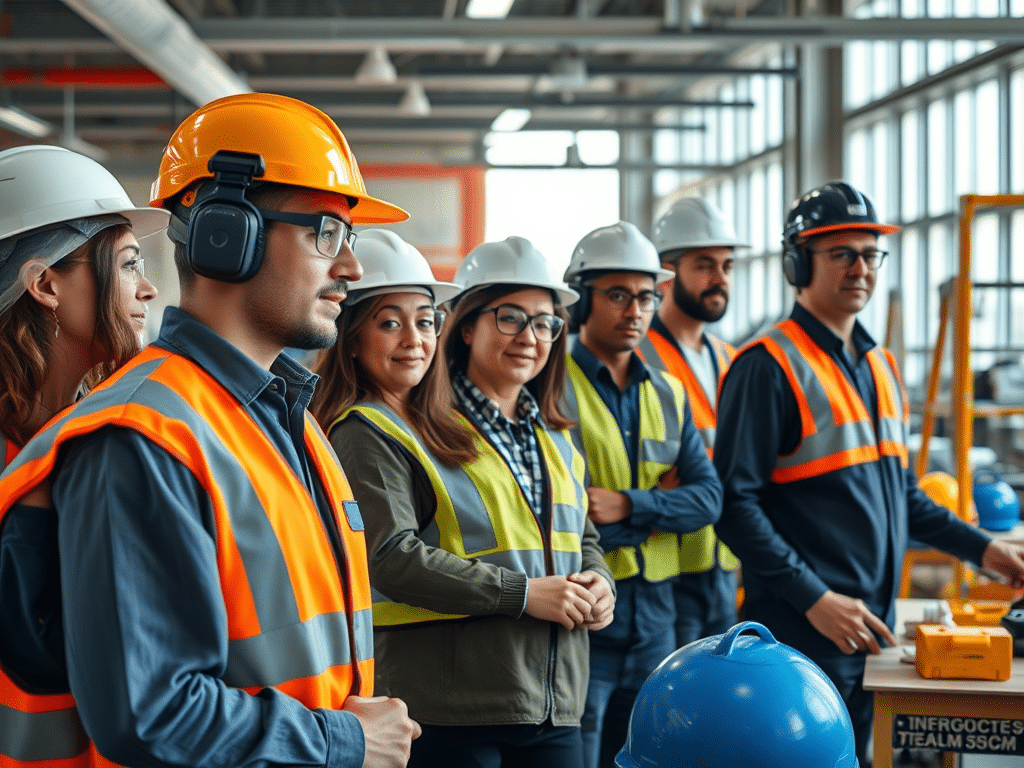

Health and safety is one of those buzzwords that comes up in the conversation, but keeping your employees and your customers safe isn’t an optional task.
You should be doing everything you can to make sure that your workplace is as safe an environment as possible. This keeps your company legally in the clear, but it also helps your employees to feel more comfortable and even work more effectively.
Why It Matters
First, let’s explore why it’s so important to keep your employees safe.
The most obvious reason is that there are health and safety laws in place in most parts of the world, so you need to be on the right side of the law. If someone is injured in your workplace because you ignore legal guidelines, then you could be liable for damages and, depending on the circumstances, you may also face more severe legal consequences.
But there’s also the simple fact that you don’t want your employees to get injured. As well as the business-related reasons, such as avoiding lawsuits and lost productivity due to the need to replace an employee and the workplace potentially being shut down for a short time, you should think about the human aspect.
If your employees get hurt, they won’t feel safe working at your workplace anymore. People will avoid danger when they can, so they will look for jobs that have a more robust attitude to health and safety. It’s also bad for your company’s reputation.
Most importantly, you don’t want to be responsible for someone getting hurt or even killed at your workplace. So, do what you can to keep your people safe and show them that you care about their wellbeing more than your profits.
Understanding and Reducing Hazards
Some workplaces are inherently dangerous places to work. Construction sites are an obvious choice, but many other workplaces have dangers and hazards. Commercial kitchens, for example, have open flames, blades, and potential slip hazards.
The first step is to understand what hazards might be present. Even an office space has some hazards, including electrical equipment and trip hazards. Once you know what they are, you can do something about them.
For example, you can get equipment to reduce the danger in an area. A fume hood, for example, can provide a lot of extra ventilation, preventing dangerous gases from building up. Or, if you’re working at a height, you can get scaffolding instead of ladders so that you can work from a more stable area.
Encouraging Open Reporting Without Fear
One area that is often overlooked is how comfortable your employees feel about speaking up. Even the best safety systems can fail if people are hesitant to report near-misses, unsafe conditions, or mistakes. You need to create an environment where employees know they can raise concerns without fear of blame or punishment. This could be as simple as anonymous reporting options, regular check-ins, or visibly acting on feedback when it’s given. When people see that their input leads to real change, they are far more likely to participate. In more serious situations, having access to professional legal insight, such as guidance from Gatti, Keltner, Bienvenu, & Montesi PLC, can also help you understand your responsibilities and strengthen your overall approach. A workplace that listens is a workplace that prevents problems before they escalate.
Signs and Barriers
Another important way to control the hazards in your workplace is to make sure that people who don’t need to be in these areas can’t access them in the first place. You don’t need the general public to go wandering around in a construction site, and there are often times where it’s even beneficial to restrict access to other employees.
If you make sure that only certain people can access these dangerous areas, you massively decrease the chance that someone can get hurt there.
Use barriers to block them off and let people know not to go in a specific area. In some cases, you might even use fences, gates, and identity cards to only let authorized people in that part of the worksite. This is good for safety and security, because it can be used to protect sensitive equipment and valuables as well as people’s health.
Signs simply tell people where the danger is and what it is. This is important in any situation, but it’s especially necessary if the hazard isn’t immediately obvious. Electricity and many gases are both invisible, but they can be fatal if people don’t know to be careful around them.

Appropriate Training
One of the best ways to make sure that your employees are as safe as possible is to provide training opportunities. If an employee isn’t properly trained to work in a specific job role or to use equipment, they won’t be able to use it effectively or safely. Accidents happen when employees don’t have the proper training, which is why it’s usually a legal requirement for people to have qualifications like forklift certifications before they can do something.
When hiring employees, always make sure that they have these qualifications and that they are legitimate.
You can also hire people and train them on the job. While this is an investment, it can be worth it, and people often consider training opportunities a perk of the job, especially if it can help their career in the long run.
As well as necessary qualifications for specific job roles, look into employees who also have first aid training and certifications, as well as training in safety management. These “soft skills” can add up to a much safer environment, and sometimes you may even need a first aider on site to work legally.
Personal Protective Equipment
The personal protective equipment used by your employees depends largely on what type of work they’re doing, the hazards they are in contact with, and the legal requirements in your area. The equipment needs to be appropriate for the job.
It wouldn’t be practical or appropriate for a pharmaceutical worker to wear a hard hat and high vis, but they might need to wear a lab coat and safety glasses. The personal protective equipment is designed to keep them safe and, in some cases, to keep the area as clean as possible.
Hygiene and Tidiness
Hygiene plays an important role in keeping your employees safe, both from illnesses and injuries. If a workplace is untidy or has spills everywhere, the risk of tripping, slipping, and falling is considerably higher than it should be.
It’s important to keep your workplace as clean and tidy as possible. Even places like construction sites, which aren’t going to be clean no matter what you do, should be regularly tidied up throughout the day and after each workday. This will make sure that it’s safer and it’s easier to clean at the end of the job.
Discover more from The Cameron Journal
Subscribe to get the latest posts sent to your email.




