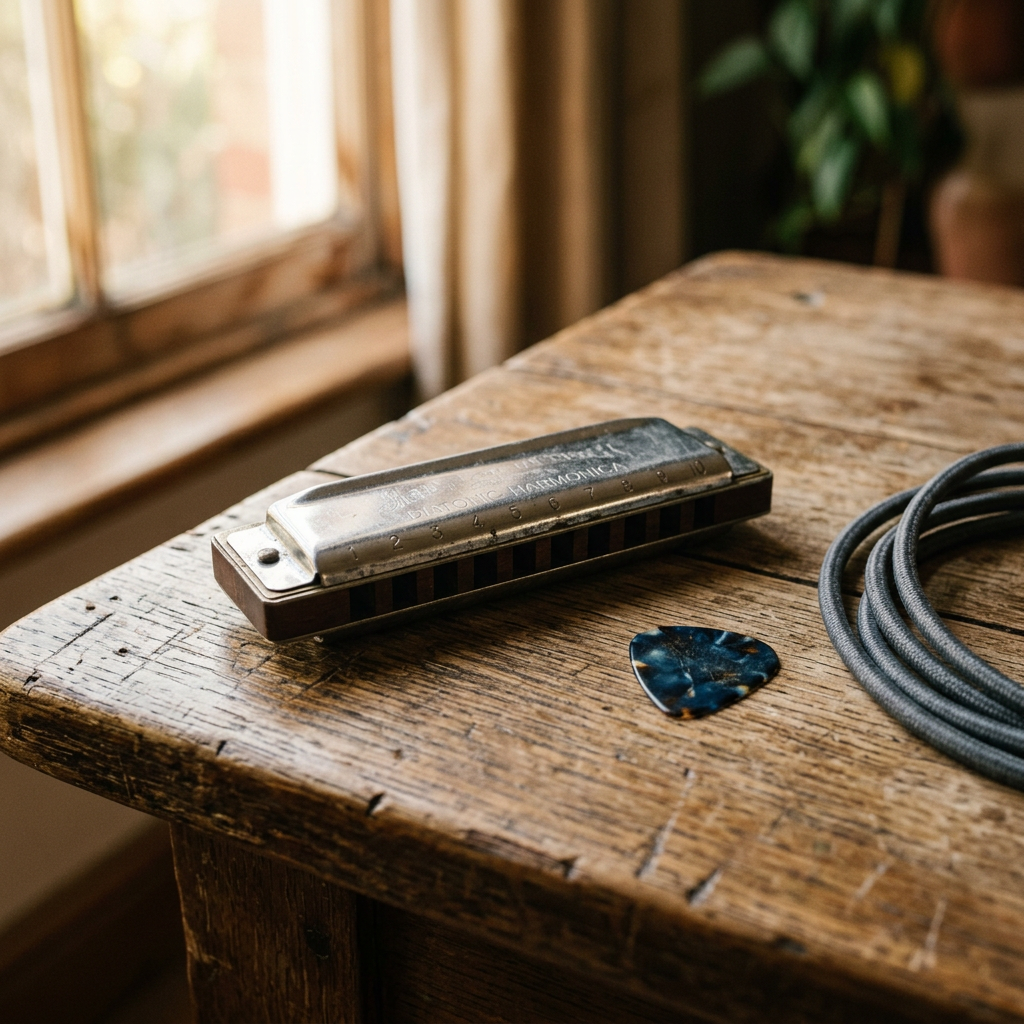
Most guides tell you to buy a C harp. That’s fine for working through your first scales at home. It won’t help as much when you sit in for blues or need to follow a singer’s key.
Pick the key for how you’ll play
A standard 10-hole diatonic uses Richter tuning. That layout gives you easy chords on the low end and single-note melody on the top. It does not provide every scale in every key. You get one main major scale, with bends to fill the gaps.
Position matters more than brand here. First position means you play in the key stamped on the cover. Folk and melody players often stay there because the home scale lines up naturally.
Blues usually sits in second position. On a C harp, that means you play in G. The draw notes form the core of the groove, and the bends fall where you need them.
If blues is your focus, choose around the keys used by the musicians you play with. An A harp puts you in E for cross harp, while a G harp puts you in D. A C harp remains useful for lessons and puts you in G in second position.
Singers usually need the harp to match the song. If the band plays in E, grab an A harp for second position. If you play alone, pick the key that lets you sing without strain.
Choose the harp that matches the music you’ll actually play.
Match construction to your touch
There is plenty of talk about tone wood and reed alloys. You can ignore most of it at first. What you will notice straight away is airtightness. A tight harp responds with less breath, while a leaky one makes you push harder and can make bends less stable.
Comb material affects comfort and upkeep. ABS plastic tolerates moisture and is straightforward to maintain. Wood can offer a different feel on the lips, although its finish and sealing vary by model. Metal adds heft and gives the harp a slick mouthfeel that some players prefer.
Reeds affect how the harp responds when you push it. Most stock plates are brass. You’ll also find phosphor bronze, while a small number of models use stainless steel. The setup matters as much as the material.
When you draw hard on holes two and three, a well-sealed comb keeps pressure where it belongs instead of letting air escape around the edges of the plates. If you want deep blues bends, look for a tight comb and even reed gaps. Those details can matter more than price. If you plan to chase overblows, you need that same tight seal along with a precise setup. A basic melody harp won’t get you there without additional work.
Screws let you open the harp to clean inside. Nails make that job harder.
Pay for fit and setup
An affordable harmonica can be enough for daily practice if it responds evenly and feels comfortable. At higher prices, compare specific features rather than assuming the instrument will be louder or easier to play. Look for smooth edges, secure assembly and, if repairability matters to you, replaceable reed plates. Model design and setup deserve more attention than price alone.
Before you buy a full set in every key, buy one and live with it. Carry it daily, then play it both loud and soft. Once you know you like the mouthfeel and bend response, you can browse versatile diatonic harmonica models that fit the same build and expand from there.
Rinse your mouth before you play. Tap out moisture afterwards and let the harp dry with the holes down. Don’t store it in a damp case. Wipe the covers dry, then leave the case open for an hour.
Try sound first, then choose tuning
Most players start on Richter tuning. It’s the layout behind first and second position. Alternate layouts provide more scale notes with less bending. You can explore those positions later, once the basic draw and blow response feels natural.
Those options may suit folk or jazz players who want clean melodies without relying heavily on bends. Stick with Richter if blues phrasing is your goal. If you play minor-key songs, look at harmonic minor and natural minor versions that keep the bends in useful spots. Country tuning changes one reed to provide a different seventh.
Longer 12-hole versions exist, but most learning material assumes 10 holes. Start with ten holes. Second position feel and airtightness will tell you more than the cover art.
It’s easy to shop by name, but the logo alone cannot tell you whether a particular model will suit your embouchure and playing style.
Listen to raw demos without effects. One player’s warm sound is another’s dull one. Trust your ears when judging bends and top-end clarity. Play the same riff on two models back to back, and the differences should become easier to hear.
Ask what the shop checks before shipping and how its returns process works. A good shop will answer plainly. Keep the box until you’ve played the harp for a week.
Pick for style first, and the rest gets simpler. Get the key that fits your music and a build you enjoy holding. Learn how its tuning works before you start stacking up more keys. You’ll practise more and spend less on swaps.
Discover more from The Cameron Journal
Subscribe to get the latest posts sent to your email.