
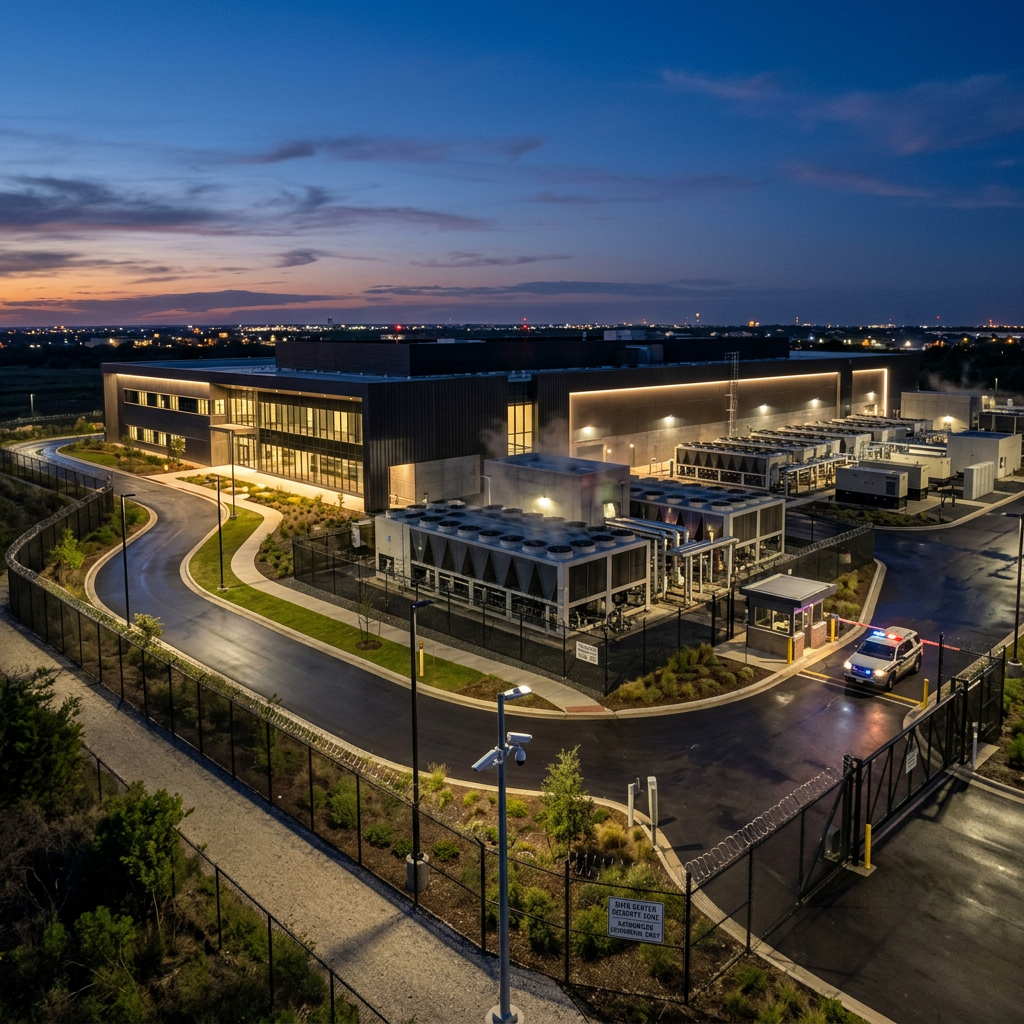
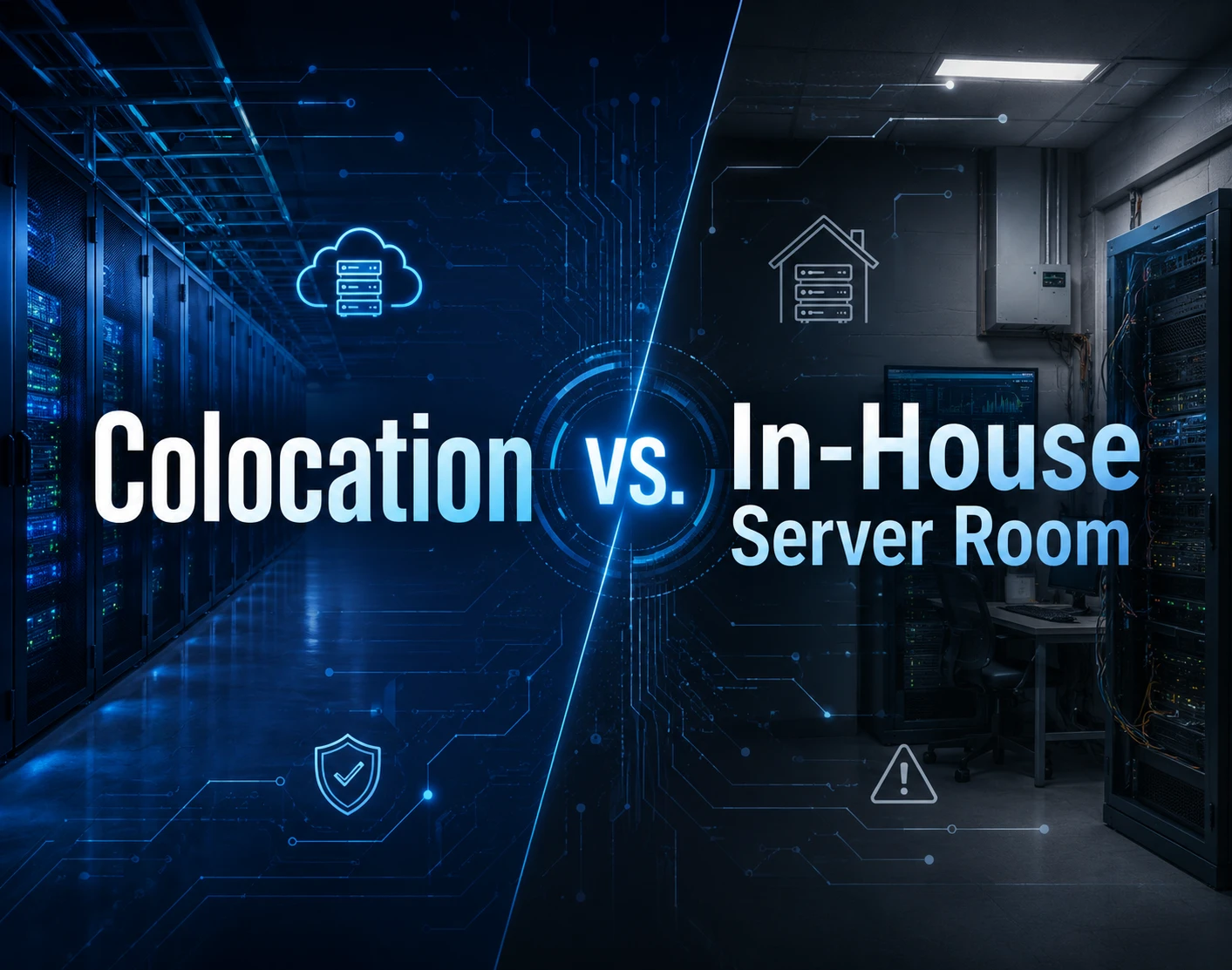
For many companies, an in-house server room has long been a traditional way of hosting IT infrastructure. Servers were located inside the office or on the company’s own premises, employees controlled the equipment, and capital investments were considered a long-term asset.
However, in 2026, the approach to IT infrastructure deployment has changed significantly. Rising energy costs, increasing security requirements, the development of cloud technologies, and the emergence of new computing demands, including artificial intelligence, are forcing companies to reconsider traditional models and explore alternatives such as colocation server solutions.
Today, more and more organizations compare two approaches:
- In-House Server Room — hosting servers in the company’s own server room;
- Colocation — hosting company-owned hardware in a professional data center.
The key question is not only which option appears cheaper at first glance, but which one provides the optimal total cost of ownership, reliability, and ability to support business growth.
Why Companies Are Rethinking Server Infrastructure in 2026
Over recent years, IT infrastructure requirements have increased significantly. In the past, a small server room was often sufficient for corporate systems, file servers, and internal applications.
Today, companies face different challenges:
- growing data volumes;
- the need for 24/7 service availability;
- increasing information security requirements;
- adoption of hybrid cloud solutions;
- higher computing demands;
- implementation of AI and analytics projects.
An in-house server room that fully met business requirements several years ago may become a limiting factor today. Companies must consider not only server costs but also expenses related to space, electricity, cooling, security, and technical staff.
This is why the comparison between colocation and an in-house server room is increasingly based on the Total Cost of Ownership (TCO) — the complete cost of owning and operating infrastructure.
The Real Cost of an In-House Server Room
At first glance, an in-house server room may seem like an economical solution: the company already owns the space, installs the equipment, and does not pay monthly fees to a data center provider. However, the actual costs are much broader.
Capital Expenses
Creating an in-house server room requires significant investment:
- preparing the facility;
- server racks;
- power supply systems;
- UPS systems;
- cooling infrastructure;
- fire protection;
- access control systems;
- network equipment.
Even a small corporate server room requires infrastructure capable of ensuring stable equipment operation.
For mission-critical systems, redundancy is often required — for example, additional power sources, backup cooling systems, or a second internet connection.
Electricity and Cooling Costs
One of the most noticeable cost factors is energy consumption. Server equipment operates continuously 24/7, and a significant portion of energy is used not only by the servers themselves but also for cooling the environment.
As workloads increase, companies face higher:
- electricity consumption;
- cooling requirements;
- need for infrastructure upgrades.
This becomes especially noticeable when using powerful servers for analytics, machine learning, or AI workloads.
Technical Maintenance and Personnel
An in-house server room requires continuous attention from specialists. Companies must provide:
- equipment monitoring;
- component upgrades;
- troubleshooting;
- temperature and humidity control;
- backup management;
- infrastructure upgrade planning.
For large organizations, these tasks may be handled by an internal IT team.
However, for many companies, maintaining specialists solely for physical infrastructure management becomes a significant operational expense.
Hidden Costs of In-House Server Infrastructure
When comparing an in-house server room and colocation, companies often consider only obvious expenses: hardware costs and facility costs. However, hidden costs frequently have the greatest impact on the total cost of ownership.
Downtime and Availability Risks
An in-house server room usually has a lower level of redundancy compared to a professional data center. For example, cooling system failures, power issues, or network equipment failures can lead to interruptions of critical services.
To improve reliability, companies must invest independently in:
- backup power sources;
- additional network connections;
- redundant equipment;
- monitoring systems;
- emergency procedures.
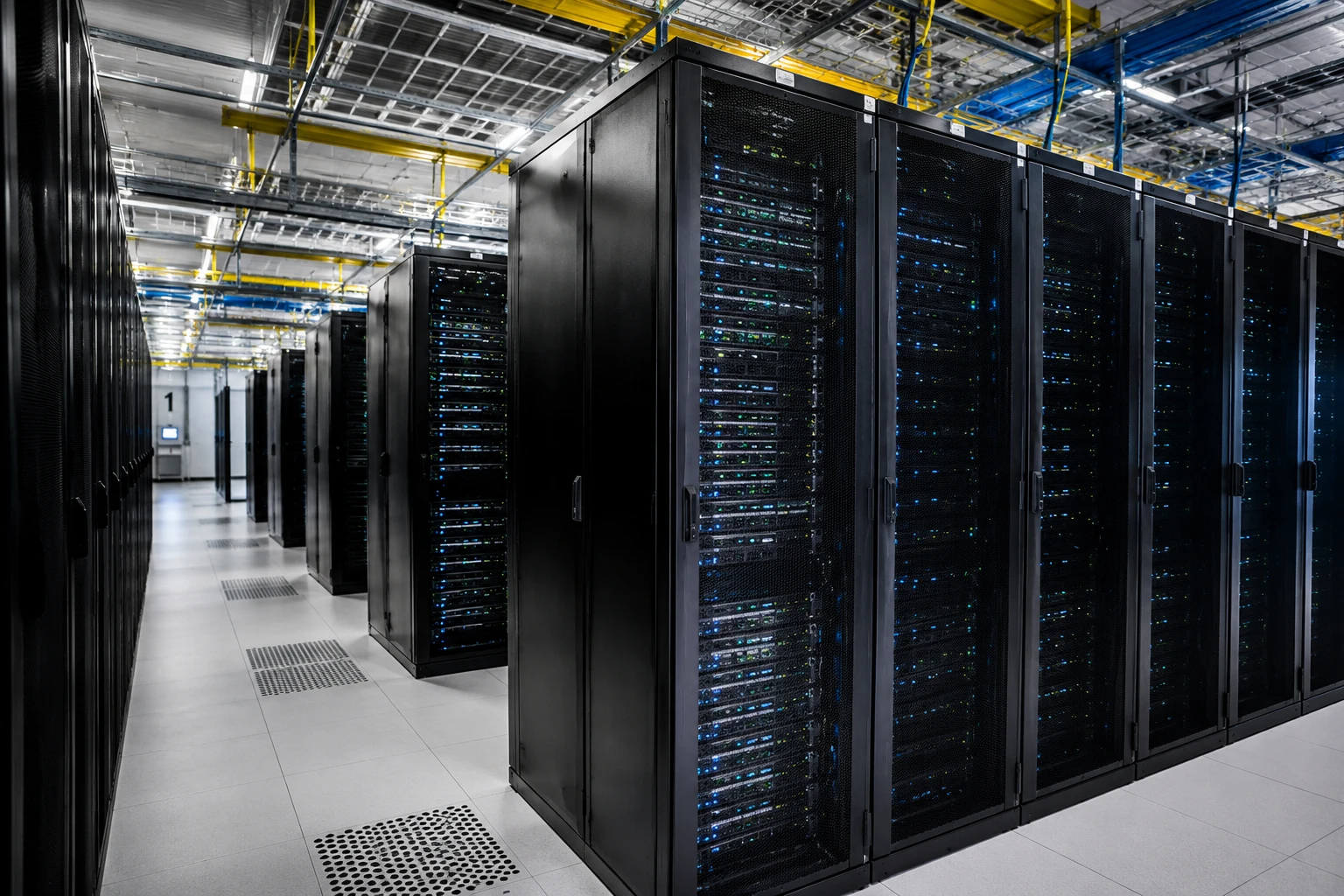
In a professional data center, this type of infrastructure is already included as part of the standard service.
Space Limitations
Office facilities are rarely designed specifically for hosting server infrastructure. Over time, companies may face several limitations:
- lack of available space;
- inability to increase power capacity;
- cooling challenges;
- unsuitable conditions for new equipment.
This is especially relevant for companies that are growing rapidly or adopting new technologies.
Security and Access Control
Protecting a server room requires not only software solutions but also physical infrastructure. Companies must independently provide:
- employee access control;
- video surveillance;
- equipment protection;
- visitor management procedures;
- environmental monitoring.
In a professional data center, these processes are already integrated into the operational model.
What Is Included in the Cost of Colocation
Colocation is a model where a company retains ownership of its hardware but places it in a specialized data center.
Instead of building and maintaining its own server infrastructure, a business gains access to a ready-made professional environment.
Colocation pricing typically includes:
- server space or rack allocation;
- power supply;
- cooling;
- physical security;
- network infrastructure;
- basic monitoring;
- access to technical specialists.
The main advantage is that companies pay only for the resources they actually need and can scale their infrastructure as the business grows.
When an In-House Server Room Can Still Be Justified
Despite the advantages of colocation, owning and operating infrastructure remains a suitable option for some companies.
An in-house server room may be justified if:
- equipment must physically remain on company premises;
- there are specific infrastructure requirements;
- the IT environment is small and does not change significantly;
- the company already has suitable facilities and specialists;
- there are internal restrictions regarding data placement.
For example, manufacturing companies may use local server rooms located near production equipment for systems that require minimal internal network latency.
However, even in these cases, companies are increasingly adopting hybrid models: critical local systems remain on-site, while additional resources are hosted in professional data centers.
When Colocation Becomes a More Cost-Effective Solution
For most growing companies, colocation becomes more attractive in the following situations:
Business Growth
As the number of servers gradually increases, an in-house server room requires continuous investment in expansion.
Colocation allows companies to add new racks, servers, or power capacity without reconstructing their own infrastructure.
Limited IT Resources
Many companies prefer to allocate engineering resources to developing products and services rather than maintaining physical infrastructure.
A data center takes over a significant part of operational tasks.
High Availability Requirements
For online services, SaaS platforms, financial systems, and digital products, downtime can cost significantly more than infrastructure hosting.
Colocation provides a higher level of availability through redundancy and professional operation.
Entering New Markets
For international companies, placing servers in strategic locations allows them to serve customers in new regions faster.
For example, hosting infrastructure in a European data center can provide low latency for users across different countries without the need to build a dedicated facility.
How to Properly Calculate Total Cost of Ownership
To objectively compare the two approaches, companies need to consider the entire lifecycle of their infrastructure.
The calculation should include:
- hardware costs;
- server lifecycle and replacement periods;
- electricity expenses;
- cooling costs;
- maintenance;
- employee salaries;
- redundancy requirements;
- upgrades and modernization;
- potential losses caused by downtime.
A simple comparison of “data center rental versus free company-owned space” does not reflect the real situation.
The right question should be:
How much will it cost the company to ensure the required level of availability, security, and scalability over the next 3–5 years?
This approach is often what reveals the advantages of colocation.
Hybrid Approach: Combining In-House Infrastructure and Colocation
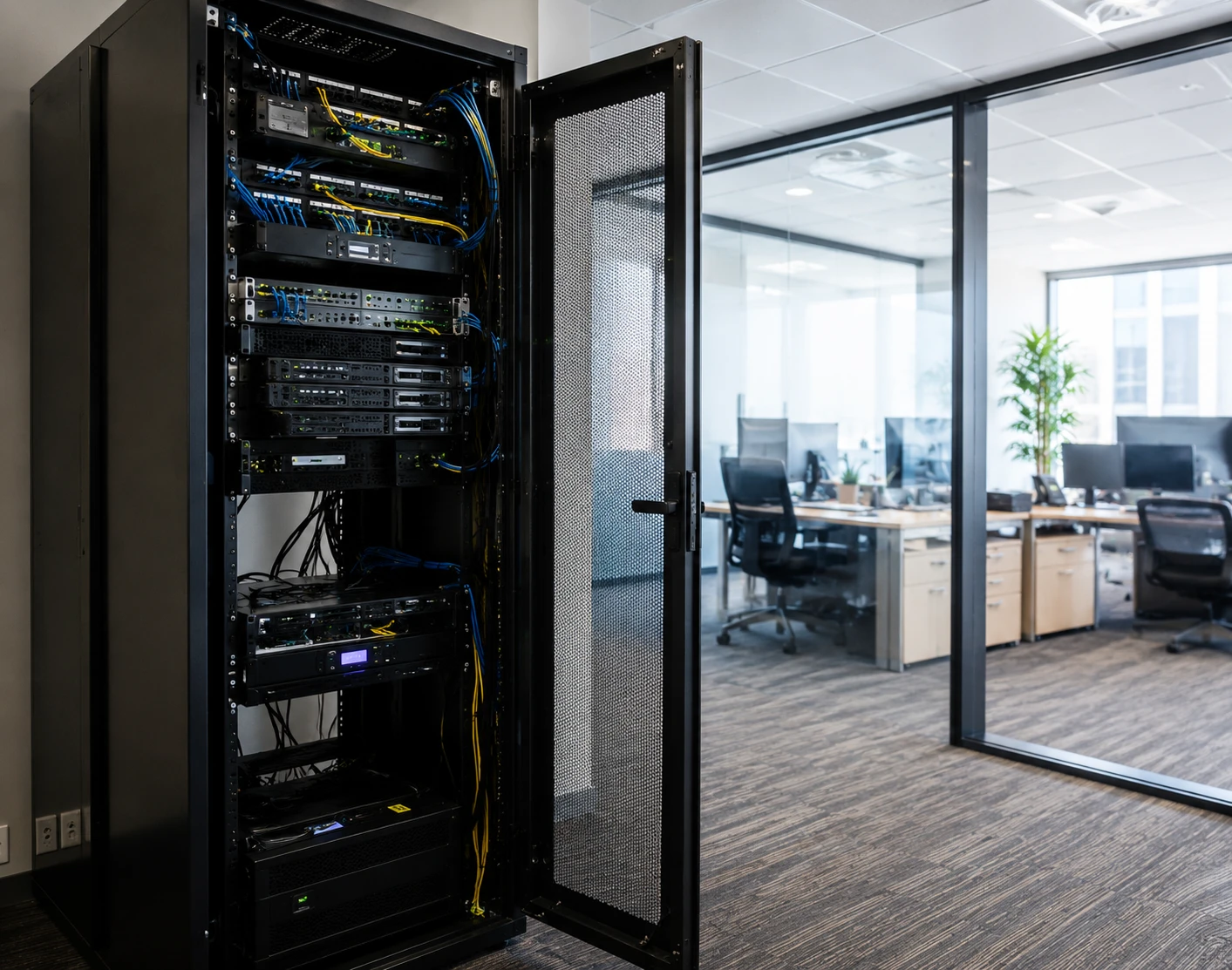
For many companies, the optimal solution is not a complete replacement of their own infrastructure, but a hybrid model.
In this scenario:
- local systems remain within the company;
- mission-critical services are hosted in a data center;
- backups and Disaster Recovery are managed through external infrastructure;
- cloud resources are used for additional scalability.
This approach allows companies to maintain control over specific systems while gaining the advantages of a professional data center.
A hybrid model is particularly relevant for organizations that are gradually modernizing their IT infrastructure and are not ready for a complete migration in a single step.
Why Colocation Often Provides Better Long-Term Value
The main advantage of colocation is not only the reduction of individual cost items. Companies gain access to infrastructure that would be difficult and expensive to build independently:
- professional engineering systems;
- data center-level redundancy;
- advanced network ecosystems;
- physical security;
- expansion capabilities;
- technical support.
At the same time, businesses retain control over their own hardware and software environments.
It is this combination of control and ready-to-use infrastructure that makes colocation an attractive solution for companies that need to develop their IT capabilities without continuously increasing operational expenses.
Colocation vs. In-House Server Room: Which Is More Cost-Effective in 2026?
There is no universal answer — the right choice depends on the company’s size, infrastructure requirements, and growth strategy.
An in-house server room may be justified if a business has stable workloads, sufficient resources, and specific requirements for equipment placement. However, for most companies developing digital products, working with large amounts of data, or planning future expansion, colocation becomes a more predictable and cost-effective solution.
In 2026, IT infrastructure costs are determined not only by hardware or facility expenses. The key factors are availability, security, flexibility, and the ability to quickly adapt to changing business requirements.
This is why more and more companies view colocation not simply as an alternative to an in-house server room, but as a strategic tool for developing their IT infrastructure.
Discover more from The Cameron Journal
Subscribe to get the latest posts sent to your email.




