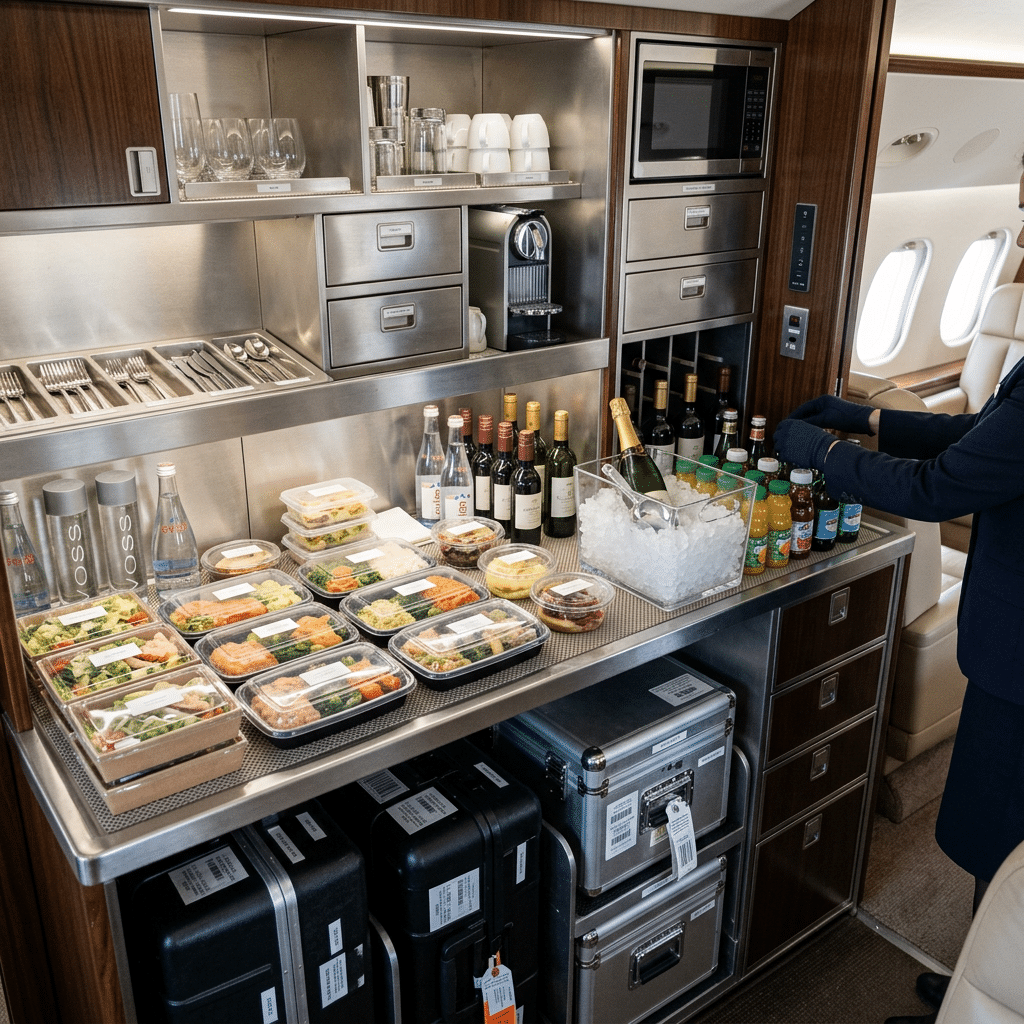
A private jet catering order needs more than a menu. Aircraft details, passenger requests, and the delivery handoff all shape what reaches the cabin. This preflight checklist helps crews and operations staff keep those details together, from the first request to the final galley check.
Confirm tail number and FBO first
Start every order with the current tail number and the exact receiving FBO. Yesterday’s schedule may already be out of date because aircraft swaps happen fast and each tail has different galley space and seating limits.
Spell out the FBO name and driver phone number in the order notes. Terminals on the same field don’t share gates or access roads, so ‘same airport’ isn’t close enough when departure is under an hour away.
That one check saves a scramble on the ramp.
If a tail swap happens after ordering, contact the caterer promptly. Confirm the new aircraft type and delivery point, then agree on any changes to preparation or packing. Galley space and oven size may differ, so review whether the original meal still suits the replacement aircraft.
Share the pilot or lead flight attendant’s phone number with the caterer for day-of updates. If the FBO changes or the slot moves up, the driver needs a live contact who can respond quickly. That direct line keeps the catering handoff moving when plans shift.
Check galley equipment before finalizing menu
Ask the crew what the galley has and what actually works. Ovens and chillers determine what can be served hot and what must stay cold on a longer leg.
Don’t plan a full hot breakfast for an aircraft with no working oven. Choose cold-pack items that hold their texture when chilled, like grain bowls and sliced fruit. If there is an oven, ask about tray size and power before portioning. Ask for secure, compartmentalized packaging that fits the available storage. Presentation starts with meals arriving in containers the crew can actually stow and handle.
Make a short equipment note part of the order: oven dimensions, available refrigeration, and serving supplies. Plan the menu around that hardware as well as passenger preferences.
Flag special requests early. Kosher meals and specific snacks often come from outside suppliers with longer lead times. If the galley is small, ask for compact packing so extra boxes don’t take up chiller space.
Build menu for altitude and document allergens
Account for cabin conditions when discussing flavor. Lufthansa Group reports that sugar can taste 15 to 20 percent less sweet in flight, while perceived saltiness can fall by up to 30 percent. Simply adding more salt or sugar isn’t the answer.
Ask the caterer about herbs, spices, and sauces that suit the chosen dishes. A menu designed for onboard service should balance flavor with how each meal will be stored, reheated, and presented.
Request ingredient and allergen information for each passenger’s meal rather than a generic sheet for the whole order. Match each per-passenger label to the meal assignment before loading. Resolve questions with the caterer before unpacking so the crew has clear information for service.
Don’t forget drinks and ice. Confirm beverage preferences, quantities, and storage space with the crew. Keep service ice separate from cooling supplies, and ask how drinks should be packed so containers stay secure during delivery and onboard storage.
Lock pax count and plan for last-minute changes
Tail swaps and late additions don’t keep office hours. When arranging an order with a provider such as SkyDine, confirm the best way to reach dispatch and report changes. SkyDine lists 24/7 phone support and off-menu sourcing. Agree on the delivery update process so the crew knows whom to contact if departure timing changes.
Plan for passenger-count changes. The headcount given at booking may change before departure, affecting portions and individual meal requests. Agree on a deadline for confirming the final count with the caterer, and put it in writing so everyone works from the same information.
Confirm lead times up front for the first order and for final confirmation. Ask what the caterer can still source after cutoff, like kosher meals and specific bottles, and what must be locked in earlier. Knowing those limits during planning avoids an unwelcome surprise on the phone at midnight.
Manage handoff and reheating instructions
Meet the driver at the FBO with the manifest in hand. Count meals against pax count and read every allergen sticker before loading. Flight attendant coordination starts at this handoff, before the food reaches the cabin.
Ask for written hot-hold versus cold-pack instructions with every delivery. Each hot item needs a reheat time and temperature for the aircraft oven, and each cold item needs a clear ‘serve chilled’ note. Crews shouldn’t have to guess what gets heated and when.
Check the packing before accepting the order. Lids should close securely, sauces should be contained, and trays should fit their intended storage space. Confirm which containers are for transport and which are intended for serving or reheating.
Do a final galley check before pushback. Confirm hot items are stowed for heating and cold items are already chilled. A quick photo of the loaded carts gives ops a record to refer to if counts are questioned later.
Good catering depends on quiet logistics. Run the checklist and lock the details early so the crew can focus on service from takeoff to touchdown.
Discover more from The Cameron Journal
Subscribe to get the latest posts sent to your email.