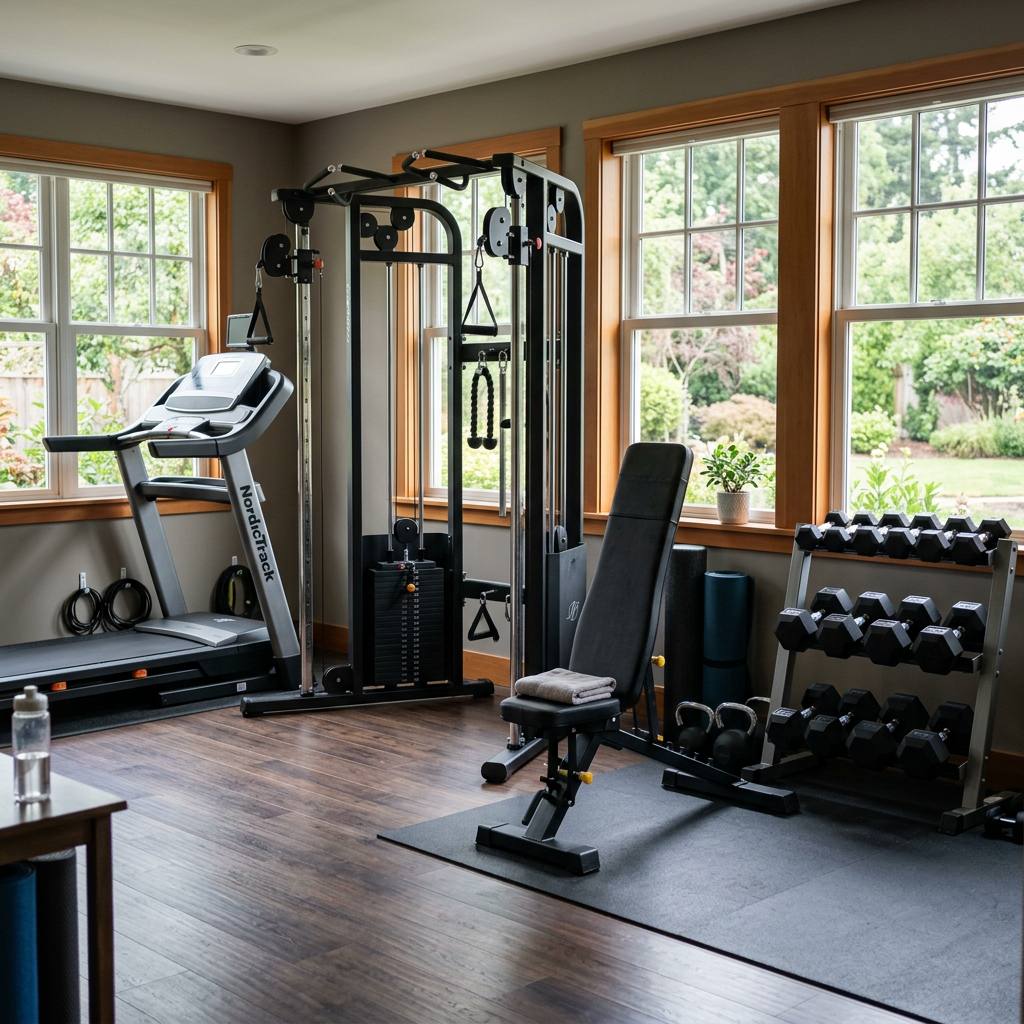
Key Takeaways
- Short, consistent inspections can identify loose hardware, worn cables, damaged belts, and electrical concerns before they become bigger problems.
- Cardio machines, cable systems, benches, and free weights each need their own maintenance routine.
- Cleaning matters, but safe equipment ownership also requires checking movement, stability, fasteners, and power components.
- Stop using any machine with exposed wiring, a frayed cable, cracks, burning odors, unstable movement, or a safety mechanism that will not lock.
- Keep the owner’s manual, service records, model number, and recall information available for every major machine.
A home gym is a practical way to keep a fitness routine going through Chicagoland’s changing seasons, but every machine still wears down from use, dust, sweat, vibration, and shifting indoor conditions. Whether a treadmill is in a city condo, a suburban basement, or a small training studio, regular care helps keep it stable and ready for use. When an issue goes beyond routine upkeep, professional treadmill repair in the Chicagoland area can help owners address problems before the equipment is returned to service.
Maintenance is not about keeping a machine looking brand new. It is about spotting conditions that could affect safe operation. A damp basement, a crowded garage, an uneven floor, or a poorly ventilated workout room can all make it more important to inspect equipment consistently.
Why Routine Maintenance Matters
Minor defects can become serious when equipment remains in use. A loose bolt can cause a wobble, a worn treadmill belt can affect how the deck and rollers perform, and a damaged cable can fail under load. Equipment may still appear to work while a developing problem remains hidden.
Pay attention to changes rather than waiting for a complete breakdown. For example, a treadmill that exhibits scraping, slipping, unusual vibration, excessive heat, or a different motor sound warrants an inspection. Do not assume that a machine is safe simply because it still powers on.
Start With a Simple Inspection System
For homeowners and managers of small fitness spaces, a treadmill repair company in the greater Chicago area may be appropriate when the issue involves the motor, electronics, belt adjustment, or structural components. Before reaching that point, use a repeatable three-part inspection routine:
- Look: Check for cracks, rust, loose covers, torn padding, frayed cables, damaged grips, and exposed wiring.
- Move: Test handles, pedals, seats, adjustment levers, safety pins, and moving parts without placing a full workout load on the machine.
- Listen: Notice squeaks, clicks, rattling, grinding, belt slipping, or unexpected changes in motor noise.
Keep a simple written record with the inspection date, machine, concern, action taken, and return-to-service decision. This makes recurring problems easier to identify and helps ensure that maintenance is not based on memory alone.
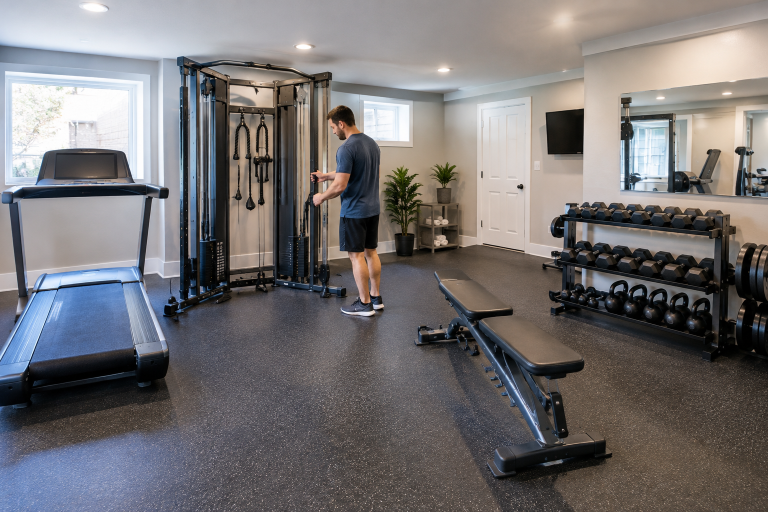
Daily and Weekly Care
Most routine tasks take only a few minutes after a workout or at the end of the week:
- Wipe sweat from handles, seats, rails, grips, and console surfaces.
- Remove dust from frames, vents, and accessible areas around moving parts.
- Check cords, plugs, and outlets for visible damage or heat discoloration.
- Look for missing caps, loose fasteners, torn upholstery, and damaged flooring.
- Keep shoes, towels, toys, pets, and loose objects away from belts, pedals, and flywheels.
- Make sure the floor is dry, level, and clear before beginning a workout.
Use only cleaning methods permitted by the manufacturer. Excess moisture, harsh solvents, and sprays applied directly to screens or electrical areas can damage finishes, foam, rubber, or electronics.
Monthly Maintenance by Equipment Type
Cardio Equipment
Inspect treadmills for belt tracking, belt condition, roller noise, deck condition, and stable operation. Check bikes, ellipticals, steppers, and rowers for secure pedals, smooth resistance changes, stable seats, and unusual vibration. Follow the owner’s manual before lubricating a treadmill belt or adjusting belt tension, as procedures vary by model.
Strength Machines
Examine cables along their full length, including connection points and protective sleeves. Check pulleys, guide rods, selector pins, weight stacks, adjustment levers, frames, and upholstery. A pin or latch that does not fully engage is a stop-use issue, not something to work around.
Free Weights and Benches
Check dumbbell heads, bar sleeves, collars, rack hardware, bench welds, bolts, and adjustment mechanisms. A bench that rocks, shifts, or will not lock securely should be removed from use until repaired or replaced.
When to Stop Using Equipment
Immediately stop using a machine if you notice any of the following:
- Smoke, sparks, a burning smell, or excessive heat.
- A frayed cable, cracked frame, split belt, or exposed wire.
- Unexpected acceleration, resistance changes, or movement.
- A safety pin, latch, seat adjustment, or folding mechanism that will not lock.
- Sharp edges, broken covers, severe rust, or unstable equipment.
- Noise or vibration that continues after basic cleaning and inspection.
Place a visible “Do Not Use” notice on equipment that has been removed from service, especially in shared household or studio spaces. Then consult the manual, arrange a qualified repair, or replace the damaged part with an approved component.
Check Recalls and Safety Notices
Owners of new, older, and secondhand equipment should check recalls as part of an annual safety review. For example, a January 22, 2026, notice from the U.S. Consumer Product Safety Commission states that certain Matrix and Vision treadmills had power cords that could become loose in the power socket, creating a fire hazard. Review the listed models and serial-number guidance in the treadmill power-cord recall if those brands are in your space.
Recalls can also involve strength equipment. The CPSC described a Precor cable multi-station issue in which a pop-pin could fail to fully engage, allowing a pulley carriage to drop. That cable machine safety notice reinforces why locking mechanisms, warning labels, and moving carriages deserve regular attention.
DIY Tasks Versus Professional Repairs
Cleaning, visual checks, documentation, and manufacturer-approved basic tightening are often reasonable tasks for owners. Electrical faults, motor issues, snapped cables, damaged frames, control-board problems, and repairs involving stored tension or heavy weight should be handled by a qualified technician. Use this decision process:
- Read the owner’s manual for the exact model.
- Identify whether the concern is cosmetic, mechanical, electrical, or structural.
- Stop use whenever safety is uncertain.
- Use approved parts and tools only.
- Call for service when the repair involves wiring, heavy components, tensioned parts, or a safety system.
Build a Maintenance Calendar
- After each use, wipe high-contact surfaces and clear any loose debris.
- Weekly: Inspect belts, cables, pedals, pins, cords, and visible fasteners.
- Monthly: Review stability, moving parts, frames, flooring, and room conditions.
- Every six months: Review service history, the owner’s manual, and replacement needs.
- Once a year: Complete a full inspection and check active recalls.
Make Maintenance Part of the Workout Routine
Safe home gym care does not need to be complicated. A few minutes of cleaning, inspection, and recordkeeping can help protect equipment and the people using it. In Chicagoland, where workout spaces may range from compact apartments to finished basements and busy garages, the smartest gym is one where every machine is stable, maintained, and taken out of service when something does not look, sound, or feel right.
Discover more from The Cameron Journal
Subscribe to get the latest posts sent to your email.