The office is dying, long live the office.
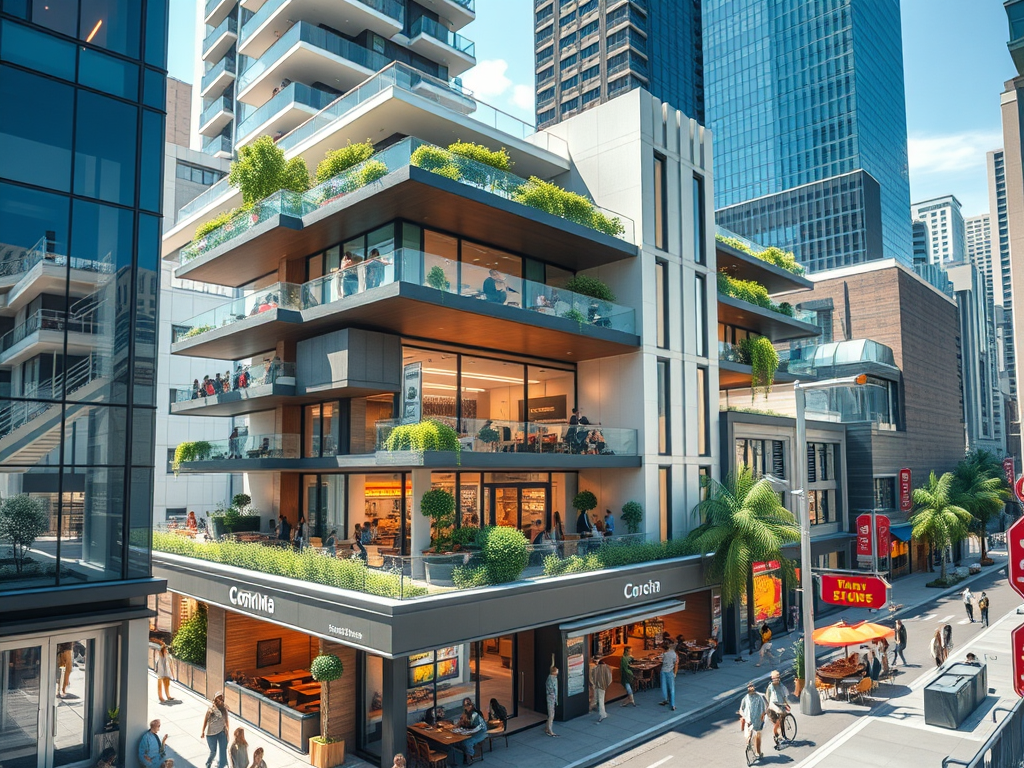
If you read real estate data these days, you would be forgiven for thinking we solved the future of work with some glass, steel, and a Starbucks in the lobby. CoworkingCafe recently counted 542 live‑work‑play developments that opened between 2016 and 2025, with another 69 slated to arrive in 2026. These are the new vertical villages: apartments on top, some office floors, a few restaurants and shops, and if you are lucky, a coworking space and a gym.
On paper, it sounds like a utopia. In practice, it tells us a lot about who the post‑Covid economy is being built for, and who is still left waiting on the bus.
I have been talking about the future of work for years, from the early days of “laptopistan” and coffee shop workers, to the pandemic world where everyone was suddenly forced to work from home whether they were ready or not. We learned that many jobs do not need an office at all. We also learned that the economy around the office is huge and fragile. As I wrote in my pieces on Covid and work‑life balance and working from home forever, when workers stay home, downtown coffee shops, transit systems, and business parks all feel the pain.
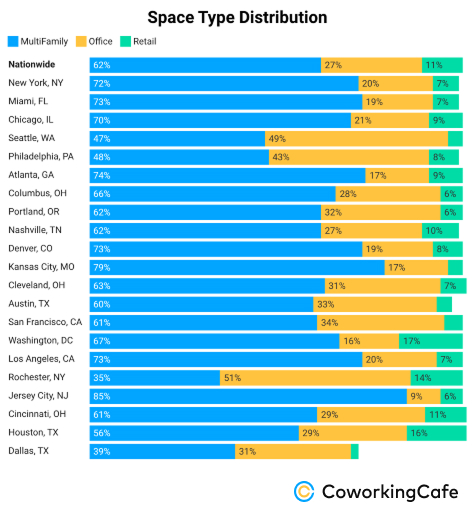
Enter the live‑work‑play building. According to CoworkingCafe’s numbers, nationally these developments are about 62% residential, 27% office, and 11% retail. Developers are taking the old business park model I critiqued in “Can We Fix the Business Park?” and stacking it vertically. You live upstairs, you work a few floors down, you have dinner and drinks on the ground floor. Your commute is an elevator ride.
If that sounds like the urbanist dream of the 1990s finally coming true, it is worth asking a few questions. Whose dream is this? Who can afford to live there? And what kind of city is left outside these glossy towers?
CoworkingCafe notes that flex office space in general grew nearly 60% between 2023 and 2025, reaching 8,854 coworking locations nationwide. Within LWP buildings specifically, the number of coworking spaces rose from 35 in 2022 to 56 in 2026. That is real growth, but it is also strangely modest when you look at the broader remote work revolution. More than 21 million workers in the U.S. are fully or partially remote, yet most of these live‑work‑play buildings do not actually integrate coworking as a default feature.
In other words, we are building “live‑work‑play” towers where the “work” piece is often still a traditional leased office that assumes a single employer and a neat corporate hierarchy. Meanwhile, the actual labor market looks more like what I described in “The New Contractor”: a patchwork of freelancers, remote employees, side hustlers, and people living in permanent precarity. For that world, coworking is not a luxury. It is basic infrastructure.
Some of the city‑level data from the report makes this disconnect painfully clear.
New York City has 119 live‑work‑play developments, more than anywhere else, with residential making up 72% of their square footage and office just 20%. Only 14% of those buildings host a coworking space. Meanwhile, rents in New York continue to defy gravity and workers are stuffed into tiny apartments that were never meant to be offices, as I have noted in my writing on affordable rent. The city is leaning into density without truly modernizing how people work inside that density.
Then there are the outliers. Seattle’s LWP buildings are almost half office, half residential, and half of them have coworking. San Francisco has only seven LWP buildings but six of them contain coworking, which means nearly every mixed‑use tower there has flexible space. Jersey City has just 9% of its LWP footage in office, yet five of its six buildings contain coworking. These cities are experimenting with treating coworking as a core amenity, not an afterthought.
On the other side, places like Miami, Austin, Los Angeles, and Houston have booming remote worker populations, plenty of high‑end LWP towers, and almost no coworking inside them. Those markets are essentially exporting their flexible workers out to separate coworking centers or back to their kitchen tables. It is a missed opportunity to integrate how people actually live and work.
This is not just an argument about office layout. It is about who gets to enjoy convenience and who pays the cost of that convenience.
If you live in a Class A live‑work‑play development in New York or Chicago, your life might actually get easier. Your commute disappears. You grab coffee downstairs before logging into a hybrid job that lets you float in and out of the office or a coworking lounge. The building has a package room, a pet spa, maybe even a rooftop pool.
If you are a barista, cleaner, delivery driver, or retail worker servicing that same building, your life looks very different. You still spend that hour a day commuting that CoworkingCafe cites from Census data. You probably cannot afford to live anywhere near where you work. You might work in the same tower where some lucky lawyer’s commute is a 60‑second elevator ride.
The live‑work‑play model, as currently built, risks becoming another way of drawing the line between those who are fully integrated into the post‑industrial economy and those who are simply serving it. I wrote in “Globalization is So 20th Century” about people grieving futures they never got. LWP buildings are selling a version of that lost future back to a narrow slice of the public.
So what should cities and developers be doing differently?
Build It
If you are going to call something “live‑work‑play,” then work cannot just mean a couple of corporate floors at the top of the stack. Cities should be encouraging, or even requiring, that significant office square footage in these buildings be allocated to flexible work: coworking, incubators, community business centers. The data in this report makes it clear that when you do that, as in San Francisco or Jersey City, coworking takes root.
Keep Costs Down
We need to talk seriously about affordability. If almost two‑thirds of LWP square footage is residential, then we have a choice. These can be vertical gated communities for the professional class, or they can be mixed‑income communities that blunt the worst effects of the housing crisis I have written about in my pieces on rent and America at a crossroads. Inclusionary zoning, subsidized units, and protections for existing residents are not luxuries. They are the difference between revitalization and displacement.
Impact
We have to stop pretending that this trend is neutral. As I have argued in “What the Hell Is Going On?”, the built environment is politics in concrete form. When you concentrate high‑end housing, flexible work, and amenities in a handful of towers, you are making a decision about where opportunity lives. When you move office workers into vertical villages and leave downtowns hollowed out, you are making a decision about which neighborhoods get investment, transit, and safety.
The live‑work‑play boom is not simply “more options” for people who enjoy convenience. It is the early draft of how post‑Covid America will physically organize itself. We still have time to edit that draft.
As I keep saying in The Cameron Journal, the world is hard, this is not. We know what people need: stable housing, flexible work, shorter commutes, and communities that do not require a car for every human interaction. CoworkingCafe’s data shows that we are halfway there. We are building the buildings. The question is whether we will have the courage and imagination to build a society inside them that works for more than just the people on the top floor.
Discover more from The Cameron Journal
Subscribe to get the latest posts sent to your email.