
Every significant decision I make goes through the same filter. Three questions. Same order. Every time. They are partly influenced by my Dad who absolutely loves to play devil’s advocate. If you want to find out why you should not do something just ring my Dad and he’ll talk you right out of it. He starts with these three questions with the first one being particularly pointed:
What’s the worst realistic outcome?
Not the catastrophic fantasy where everything burns down. The actual worst case that could happen based on what I know about how the world works. This question forces me to look at downside risk without the drama. When I was deciding whether to rebuild The Cameron Journal as a business after my MFA, the worst realistic outcome wasn’t financial ruin. It was spending two years building something that generated modest income while I figured out what actually worked. I could live with that, so I got busy.
The Belief Audit
What would I need to believe for this to work?
This one catches me every time. You list out every assumption your decision depends on. Then you look at each one and ask if you actually believe it or if you just need it to be true.
When I see founders struggling with messaging, it’s usually because they’re operating on beliefs they haven’t examined. They believe their audience cares about features when the audience cares about outcomes. They believe complexity signals expertise when clarity signals confidence.
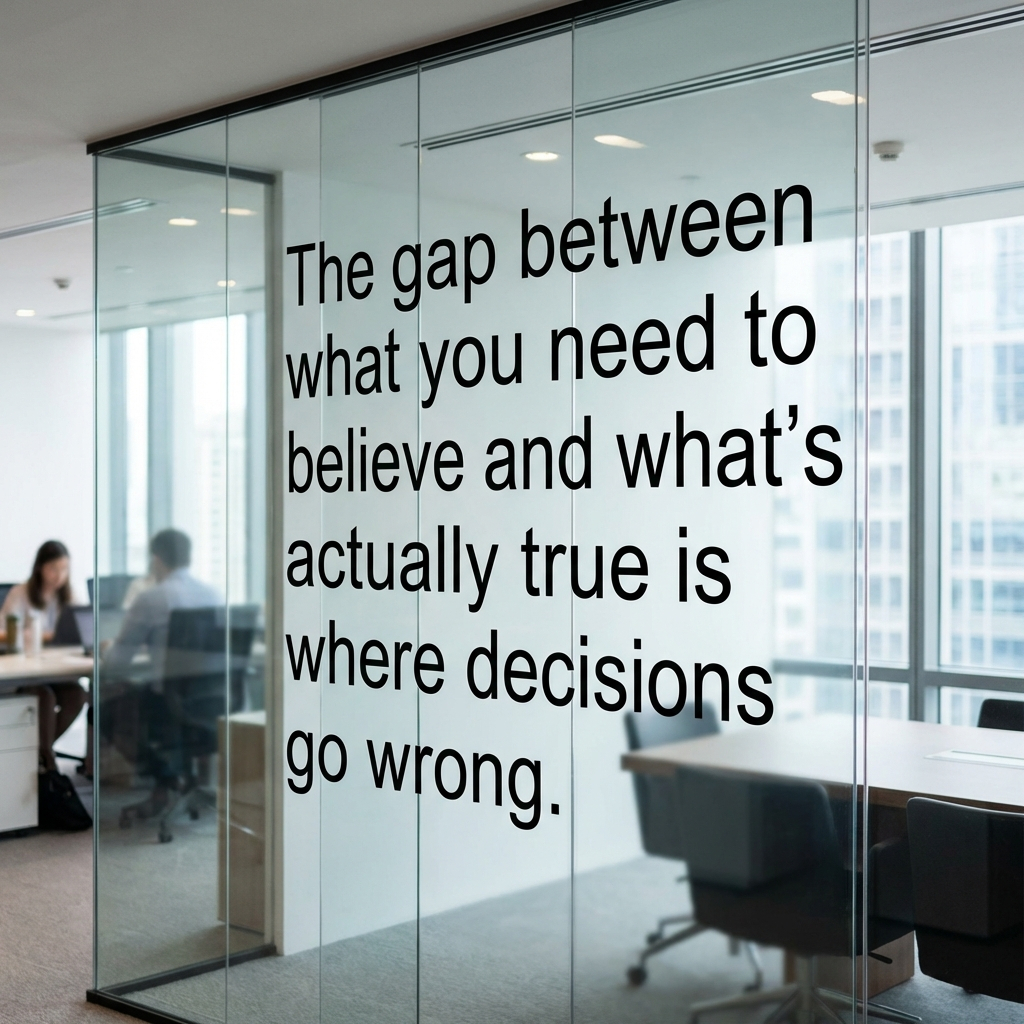
The gap between what you need to believe and what’s actually true is where decisions go wrong.
The Blind Spot Check
What am I not seeing because I want this to work?
This is the hardest question because it requires you to argue against yourself. I’ve spent over a decade trying to build an alternative to outrage-based commentary. There were years when I missed obvious signals that the approach needed adjustment because I was so committed to the vision. The question isn’t whether you want something to work. You do. The question is what that desire is hiding from you.
Are you ignoring the timeline? The resource requirements? The market feedback? The fact that three people you respect have said the same concerned thing in different ways?
Why These Three
These questions work because they force you into different mental modes. The first question makes you face reality without panic. The second makes you examine your logic. The third makes you check your blind spots. Together, they create a decision-making system that’s both rigorous and fast. I can run through all three in less than ten minutes for most decisions. For bigger ones, I’ll write out the answers.
The goal isn’t perfect decisions. The goal is fewer disasters and more decisions you can live with when they don’t work out. Because sometimes the decision is wrong. But if you’ve asked these three questions, you’ll know why it went wrong and what you missed. That’s how you get better at this.
Most people skip straight to “should I do this or not?” These three questions get you there faster and with more clarity about what you’re actually choosing.
Discover more from The Cameron Journal
Subscribe to get the latest posts sent to your email.