
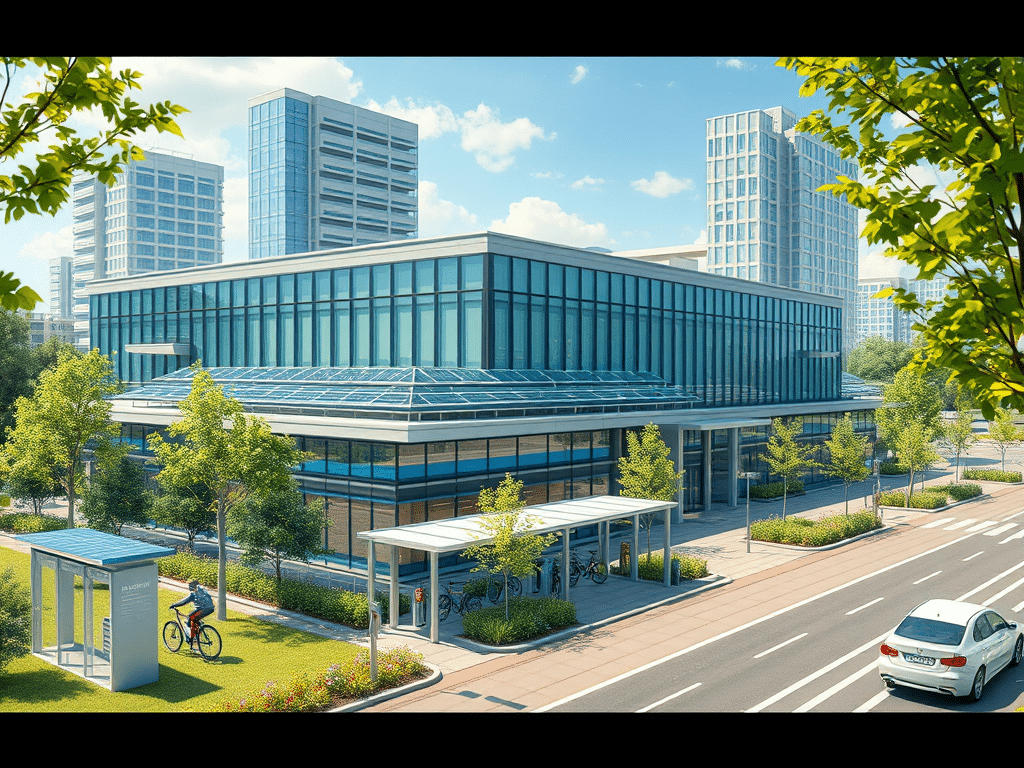

Sustainability is no longer a buzzword in business: it’s a baseline. Businesses are now starting to feel the real cost of carbon – not just from an environmental standpoint, but also economically and operationally. From rising energy bills on one hand to customer expectations on the other, the pressure is on to rethink how we build, maintain and use facilities.
The good news is that smart changes to business facilities can deliver genuine ROI not just in terms of sustainability, but also efficiency, employee satisfaction, and brand reputation.
Energy efficiency
Efficiency on this front is often the first step. Businesses in the modern day are retrofitting insulation, installing LED lights and seeking out renewable energy suppliers. That said, carbon savings go beyond utilities. The way a company handles transport, movement, and even its deliveries can have a major impact on its carbon footprint.
On the road
Transport emissions are among the toughest challenges to tackle, especially for urban businesses. Company fleets, staff commuting, and last-mile logistics can add up – and this is where smarter infrastructure can make a big difference. Businesses that invest in facilities to support greener transport will not only see a reduction in emissions – they’ll also boost their sustainability credentials in the eyes of the public.
Let’s take cycling as an example. Whether it’s your employees making their way to work, couriers using cargo bikes, or clients arriving on two wheels rather than four, the decision to offer cycle shelters is a small change that can make a big difference. It shows that a business is walking the walk; not just speaking about low-emission travel, but actively enabling it.
Facilities
This thinking can, and should, become habitual and form part of the decision-making process across the board. Carbon-conscious companies are, more and more, beginning to consider how much their physical sites enable or inhibit sustainable choices. Do you have charge points for electric vehicles? Are delivery areas optimized for bike drop-offs? Does the layout of the building support natural ventilation or reduce heating and cooling needs?
Carbon is, increasingly, a design challenge, and businesses that see their buildings as part of the solution will position themselves for better results in the long term. Regulations are tightening, and consumers are watching. The companies that act now won’t just avoid penalties – they’ll likely see a performance advantage over their less agile competitors.
Change is possible
It would be ignorant to imagine that retrofitting and making core changes comes without a cost. But infrastructure changes don’t have to be sweeping to be worthwhile. Even smaller additions such as green roofs, rainwater capture, and bee hotels can bring value both for emissions reporting and for the people who use your premises daily. Because in the end, carbon costs aren’t going to go away – so businesses that treat them as a catalyst instead of a constraint are the ones best placed to operate in the future.
Discover more from The Cameron Journal
Subscribe to get the latest posts sent to your email.




