
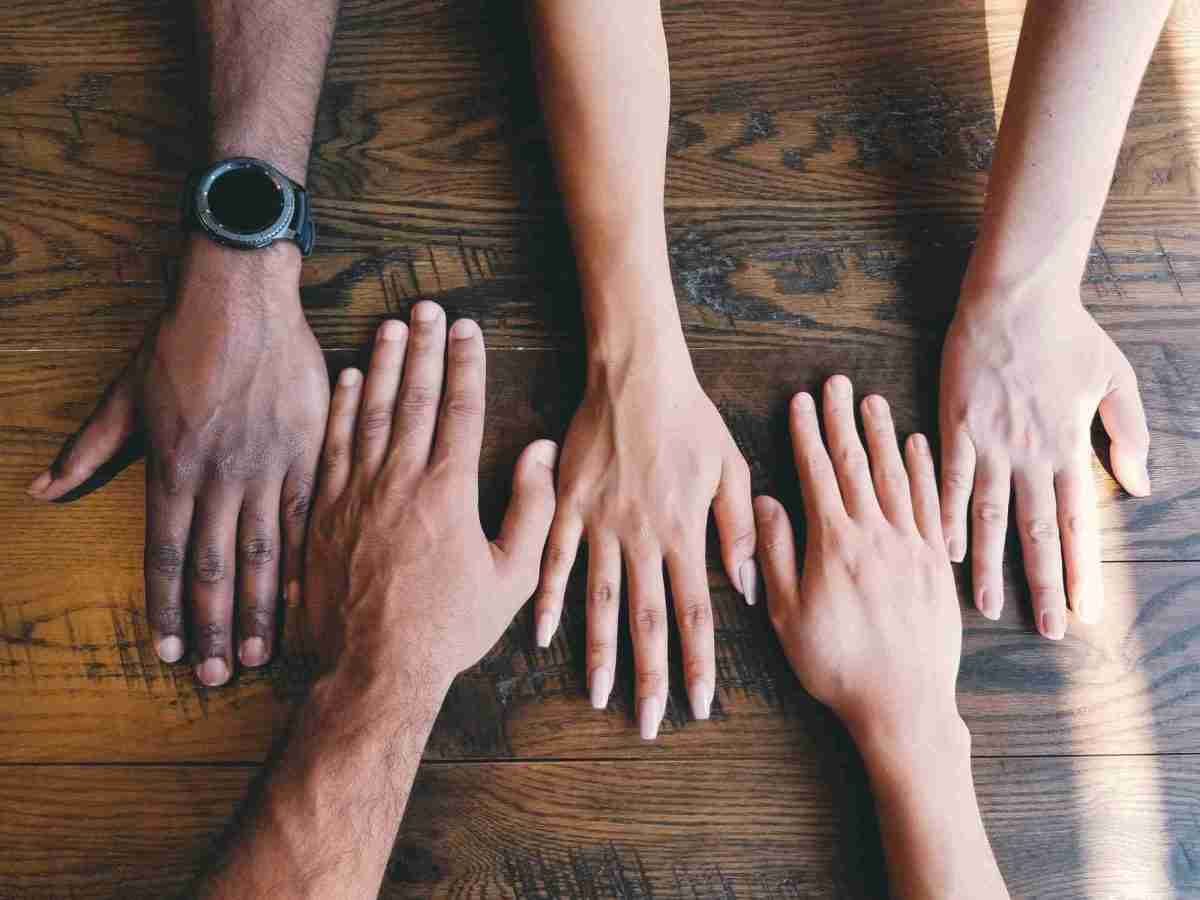

Has America had it with woke culture? Is there going to be a backlash? I saw a YouTube comment that said woke culture will be my generation’s disco. What happens when we attempt to balance making society more fair and more equitable with the seeming less endless social requirements on speech and actions?
The new “woke” language includes things that seem unnecessary to most and often people confront this, the first time at work. This is not your father’s or mother’s diversity training. Things like putting pronouns in email signature is a daily reminder of the new standards. The benefits for people are not well explained to the average person, and for many it seems incredibly tedious.
News stories about organizations making radical changes to be intentionally seem more inclusive and diverse seem nonsense to some. Diversity used to be just a concept, and woke culture has done more than trainings and some HR policies. Woke culture has gone to the next level. Woke culture is actually attempting to solve the problem. Thanks to social media, companies can’t just proclaim platitudes and ignore structural issues. Transparency is regularly leading to real progress. At least it seems that way. I have my doubts. Is all this shifting around actually doing any good? Is society beginning to make the shift?
The Docents and Diversity
The Right has taken on this fight as it’s primary culture war fight. Twitter handles for those who find all this woke culture business have shifted from “no snowflakes” and “not a snowflake” to “anti-woke.” There is an entire online ecosystem devoted to lambasting the latest from woke culture. In a recent story, from Chicago Now, the Art Institute of Chicago let go its team of volunteer docents because the group of docents was not incredibly diverse. The docents were older, white, upper middle class and typically female.
The docents in the museum guide visitors and discuss the art. There is a lengthy training process, and the docents often work nearly full-time hours. These folks love the art and worked hard to be effective at their jobs. However, the Art Institute of Chicago wanted a more diverse group of docents but couldn’t recruit any volunteers from minority or lower income backgrounds. Instead, they let the volunteers go and opened three paying positions for museum guides so that they could hire and pay more diverse people to guide people through the museum. On the bright side of this story, new paid positions are open but with only three, it will not make up for the 82 volunteer docents who had been leading visitors through the museum.
The writer in the article above lambasts the idea. Rather than focus on those who could complete the program and do the job, the museum wants a more diversity and is eliminating volunteers to achieve it. Is this an example of woke culture run amok, or a true quest for better equity in the arts? The arts do tend not involve people from working-class backgrounds or people of color (plenty of intersection there. On the one hand, it’s difficult to say that three paid positions (part-time no less) is better than 82 volunteers. Slate had this article on the matter. How does one train a group of white women of a certain amount of privilege to talk about race competently? It is no easy thing, as the article in Slate illustrates. Having more diverse voices is valuable but is it worth upturning volunteer programs?
No Woke Work
During the pandemic, mostly due to vaccine mandates, a new job site called “RedBalloon” launched offering employers and employees a chance to match based on the idea that companies and employees have no obligation to agree with each other politically and that politics of all stripes should stay out of the workplace. According to their website, they claim, “We connect employers who value freedom with employees who value it too. We envision a world beyond cancel culture, where employees are free to work… without fear that they will find themselves on the wrong side of their employer’s politics. That’s it. No agendas, politics, or drama. Just work. Interested? Let’s create that world together.” The main concern being that people want to go to work and make money to pay their bills without worrying that the company will take a political position that might put anyone in danger of losing their job because of the ever-changing political winds of the country.
On the face of it, this might seem like a good idea. That’s what most people would like from their workplace. However, the problem is if these companies are willing to take steps to make their workplaces welcoming for people who might have a different background (class, race, sexuality, gender etc.) than the dominant group. Companies, for too long, haven’t bothered with this (despite legal protections for some) and now it appears that there are companies who want to do even less. Does the “No agendas, politics, or drama” include racist remarks? Does it include discriminatory hiring practices? Does it mean that a company will seek to hire the most qualified people or those who fit in the best?
Diversity, Equity, and Inclusion
College campuses have been the front lines of the new culture. As the Left seeks to make the world more inclusive of more types than just a precious few, people have pushed back for “freedom” and “openness” but the line where freedom and openness end and making a space unsafe for certain people seems blurry. Obviously, the firing of the Weinstein brothers from Evergreen College in Washington state was a hot button issue. That happened when the school told white students to stay home, so students of color could have the campus to themselves. I will have to admit, having gone to a campus where there were only 450 black students and perhaps a couple of thousand others, I find this idea to be a bit daft. That said, universities are attempting to create environments where diversity, equity, and inclusion are at the core and are actively setting out to admit more diverse students, hire diverse faculty, and work on historical inequalities around income etc. This is a good idea, but the execution can often fall flat.
It has always been difficult for people of color to navigate academia. Students of color, especially those whose parents did not go to college, need additional support and funding to study. These reforms are a good idea. People are asking if DEI, as currently practiced, is not violating the rights of all parties involved. In this Newsweek opinion piece, Dorian Abbot and Ivan Marinovic propose a different idea called Merit, Fairness, and Equity. They propose universities go into public schools and help students to achieve in high school, so they can achieve at college. They also propose an end to legacy and athletic admissions. I can’t argue with them on the last point. Legacy and athletic admissions need to go. Athletics costs far too much money that is better used elsewhere to actually achieve academics. Admitting students based on skin color even if they aren’t qualified? I can see a situation where this would be a good idea, but I worry that neither the institution nor the students are well served by this idea. Their model of MFE definitely makes some sense. It could be a helpful innovation.
The Goals of Woke Culture
On this journey through the idea of woke culture gone amok, one thing becomes clear to me: many people do not see a reason to overturn the existing state of affairs to solve an issue brought up by an “intransigent” minority. This culture war is taking place on social media, in work places, and elsewhere. I am reminded of a facebook comment I read once where a young man said something interesting, “I don’t mind trans people, I just don’t want to be told what to think about it.” I think that is emblematic of most people’s ideas about transgenderism and all the other social problems. When the Civil Rights act was passed, the racists did not disappear overnight. The same goes for the integration of schools and the ending of public segregation. However, in time, things changed and people changed. Changing culture to accept people of different identities and backgrounds is the kind of progress that takes decades. People will old ideas will either change or they will take their prejudice to their grave. In time, these opinions will change and move on. That being said, the goal of attempting to make our present institutions, culture, and language more inclusive of people who have been historically excluded. The reality is that this kind of work is the tree that one must plant and under whose shade one will never sit. I admire the work that is being done, but during making things more inclusive, it is important not to inadvertently make things exclusionary to others. Everyone deserves an education, dignified work, and to do so with the kind of psychological safety that has only been enjoyed by a privileged few in the past. That is the kind of goal that “woke” culture is haphazardly moving toward. Will every initiative work well? No. Is it essential work nonetheless? Absolutely.
Discover more from The Cameron Journal
Subscribe to get the latest posts sent to your email.


