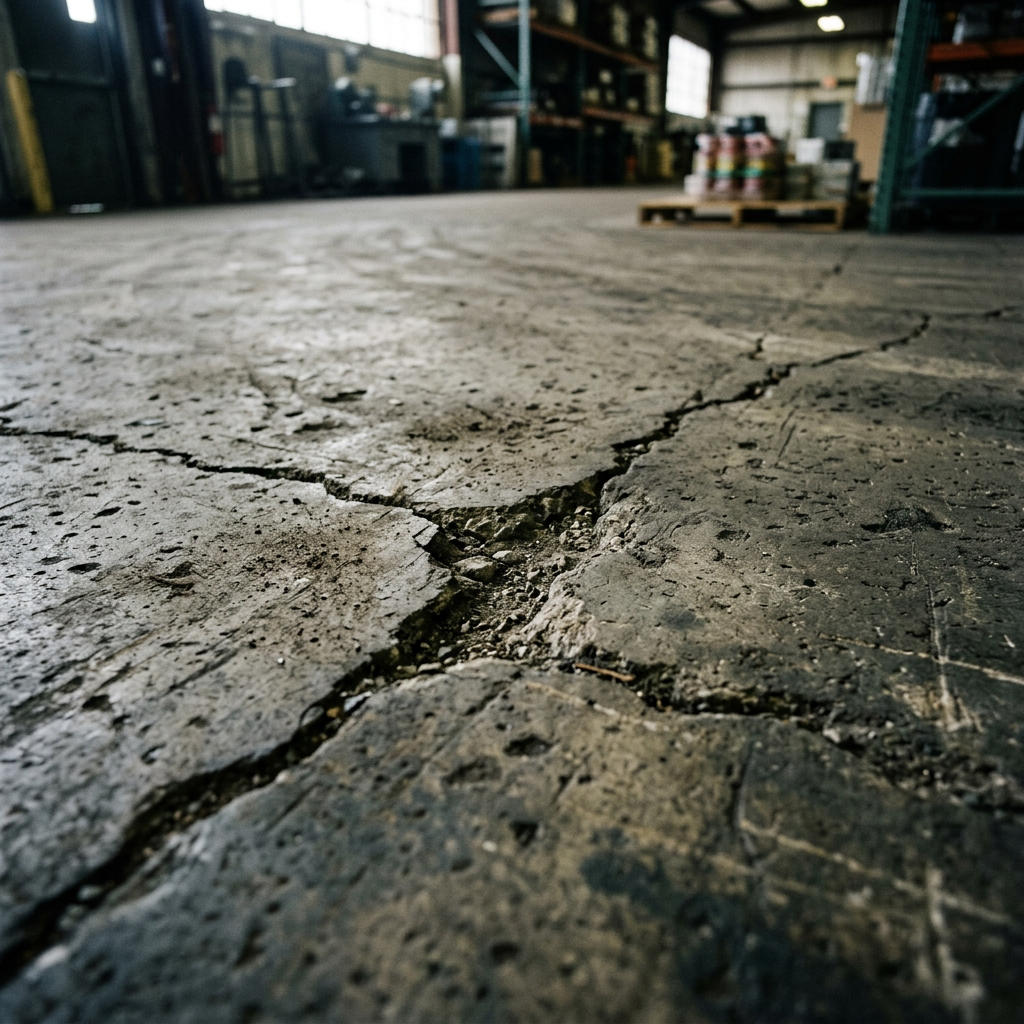
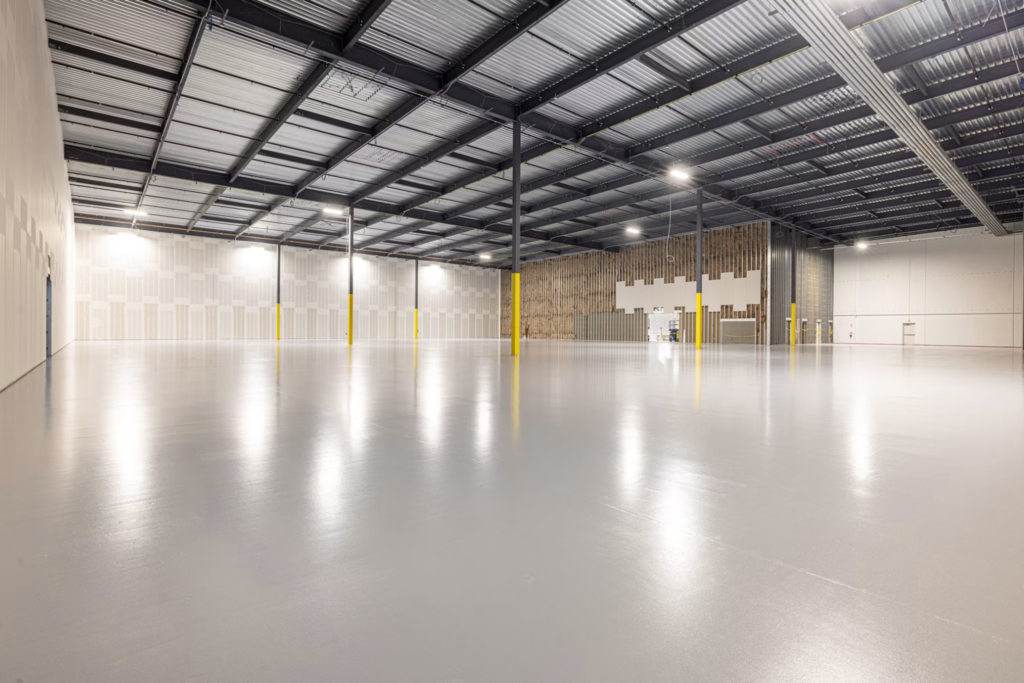
Think about what your floor puts up with in a day. People walk on it, carts roll over it, someone spills coffee and nobody mentions it.
Concrete looks like it can handle that forever. It cannot, and most owners only find out when the surface starts dusting, staining or cracking apart.
A coating is a sacrificial layer that takes the abuse so your slab does not. Here is what it shields your floor from.
Why Bare Slabs Wear Out Faster Than You Think
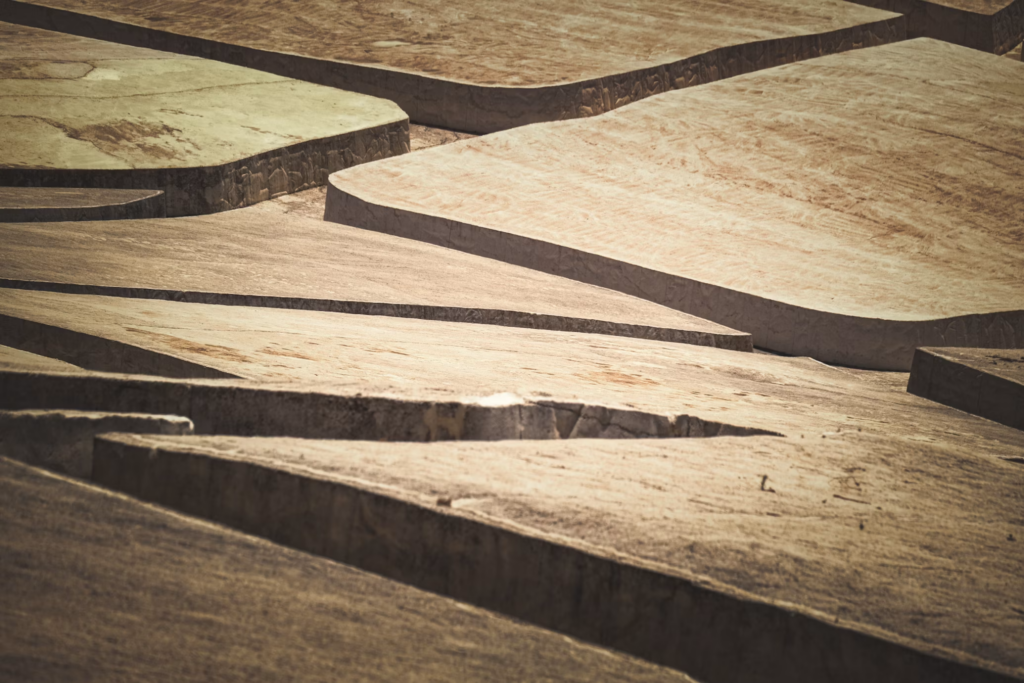
Concrete looks solid, but it is full of tiny pores. Liquid soaks in instead of sitting on top, which is why an old oil stain never really comes out no matter how hard you scrub.
Foot traffic wears it down too. That fine grey dust you sweep up and find again the next morning is your floor slowly giving itself away. It rarely lands on a preventive maintenance schedule, even though it takes more abuse than anything else in the building.
Humid air makes everything worse. Across Florida the water table sits close to the surface and the air stays damp nearly year round, so moisture keeps working on an unprotected slab around the clock.
The Everyday Threats a Protected Floor Holds Off
Moisture Rising Up From the Ground
Water vapor travels up through concrete from the soil underneath. You cannot see it happening, but you can see the result when a finish bubbles, peels or leaves a chalky white residue behind.
A vapor barrier basecoat blocks that moisture before it ever reaches the surface. Skip this step and even an expensive floor system will fail from below within a couple of years.
Spills That Soak In and Stay
Kitchen grease, cleaning chemicals, hydraulic fluid and battery acid all find their way onto commercial floors. On bare concrete they sink in immediately and start eating away at the surface.
A sealed floor keeps spills sitting on top where a mop handles them in seconds. Your cleaning crew stops fighting the floor and just cleans it.
Impact From Equipment and Dropped Loads
Forklifts, pallet jacks, rolling carts and dropped tools all hit the same surface every shift. Each impact chips a little more off an unprotected slab, and those chips turn into craters.
A quartz system handles this best. Quartz aggregate broadcast into the coating builds a dense, thick surface that spreads impact across a wider area, so the floor absorbs the hit rather than breaking under it.
Grit That Sands Down Your Surface
Every person walking in from the parking lot brings sand and grit on their shoes. Underfoot it behaves exactly like sandpaper, working away at your floor hour after hour.
An abrasion resistant topcoat takes that wear instead. Polyaspartic and urethane topcoats hold up several times better than standard finishes in high traffic areas.
[Image 2] Close-up of a flake finish floor showing texture and color detail. Alt text: Close-up of a decorative flake floor coating with a textured surface
Damage That Builds Up Slowly
Cracks Spreading From Joints and Edges
A hairline crack is easy to ignore. Then water gets in, the gap widens, edges start crumbling and suddenly you are looking at a repair bill.
Proper crack and joint filling before any coating goes down stops that cycle early. The repair gets sealed under the new surface instead of sitting exposed.
Sunlight Near Doors and Windows
Roll up doors, storefront glass and loading bays let in a surprising amount of direct sun. Over time that light yellows and fades whatever is on the floor, leaving obvious patches near every opening.
UV stable products hold their color in those spots. Your floor ages evenly instead of looking sunburnt at the entrances.
Stains and Bacteria in Porous Surfaces
For restaurants, clinics, labs and food prep areas this one matters most. Porous concrete gives spills somewhere to hide and gives bacteria somewhere to settle in.
A seamless non porous surface removes both problems. There are no grout lines, no seams and nowhere for anything to collect.
Choosing a System That Fits Your Space
The Layer Everything Else Is Built On
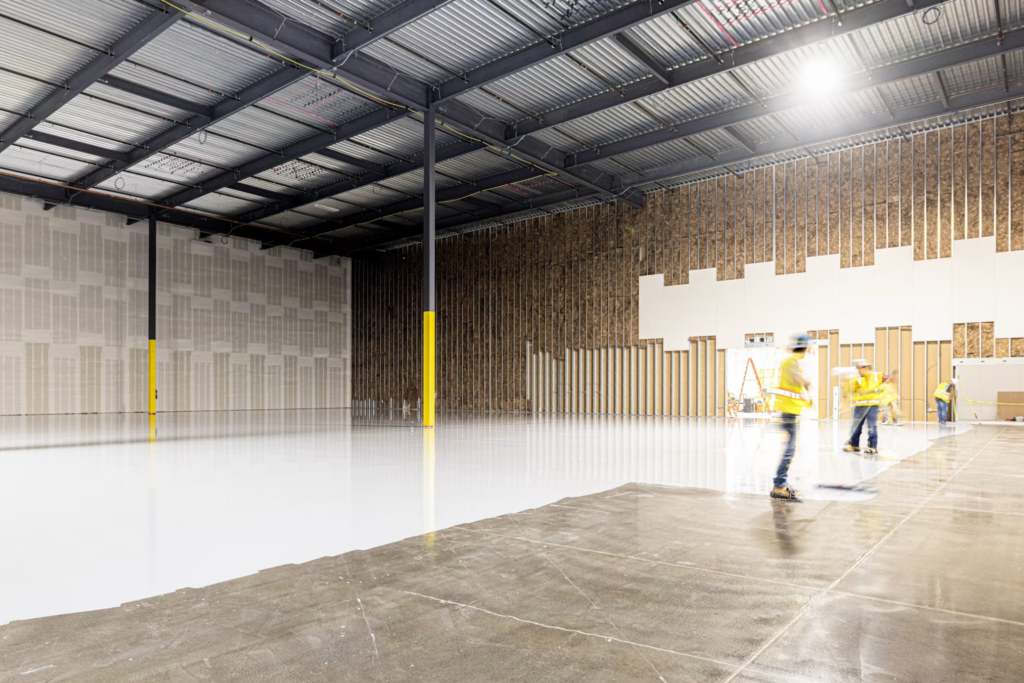
Epoxy is the foundation of most commercial floor systems. It bonds tightly to properly prepared concrete and creates the base that topcoats and decorative layers sit on.
Which build you need depends on traffic, moisture conditions and how the space gets used. Given how much humidity and water table depth vary across the state, most Florida owners get a site assessment from a specialist in commercial concrete coating services in Florida before committing to a build.
Flecked Finishes That Hide Wear
Flake systems broadcast colored chips into the coating for a granite or terrazzo look. The texture adds grip underfoot and does a great job hiding scuffs and traffic patterns between cleanings.
Most flake floors go down in a single day. For showrooms, garages and customer facing spaces, it is the option people choose most often.
Smooth Single Color Surfaces
A solid color floor gives you one clean uninterrupted surface. Spills show up immediately, which sounds like a downside until you realize it is exactly what you want in a kitchen or a lab.
You can get it in non slip, matte or high gloss, with custom color matching if you need to match branding. Offices, retail spaces and medical facilities tend to land here.
[Image 3] Bright retail interior with a solid color epoxy floor reflecting overhead lighting. Alt text: Retail space with a smooth solid color floor coating reflecting ceiling lights
What Better Protection Changes Day to Day
The floor starts looking after itself. No resealing cycles, no scrubbing at stains that will not budge and a shorter cleaning routine at the end of every shift.
It changes how the space reads to anyone who walks in. A bright reflective floor bounces light around and makes the whole room feel newer, cleaner and better maintained.
Safety improves in ways you notice quickly. Non slip finishes give people grip when floors get wet, and a smooth even surface means no more trip hazards from spalling edges or crumbling joints.
Most commercial installs wrap up fast enough that you are not closing for a week. Every day shut is a day of lost revenue.
Final Thoughts
Your floor is going to take damage. The only real question is whether the damage lands on a coating you can renew or on the slab you would have to replace.
Protecting a floor costs a fraction of tearing one out. Once you have seen what a worn out slab costs to fix, the math stops being complicated.
Frequently Asked Questions
How long does a commercial floor coating last?
It depends on traffic and prep quality more than anything else. A properly prepared floor in a light traffic office lasts far longer than one in a busy warehouse, where a topcoat refresh comes sooner.
Can a coating go over concrete that already has cracks?
Yes, as long as the cracks get filled and the surface gets ground down first. Diamond grinding opens the concrete so the coating bonds properly, and skipping that prep is the most common reason floors fail early.
Will a coated floor be slippery when wet?
Not if it is specified correctly. Flake texture and non slip additives give you plenty of grip, and finishes come in matte or textured options for wet areas.
How long will my business need to close during installation?
Many flake systems are completed in a single day. Solid color systems take one to two days and metallic finishes two to three. Most contractors can work in sections to keep part of your space open.
Discover more from The Cameron Journal
Subscribe to get the latest posts sent to your email.