
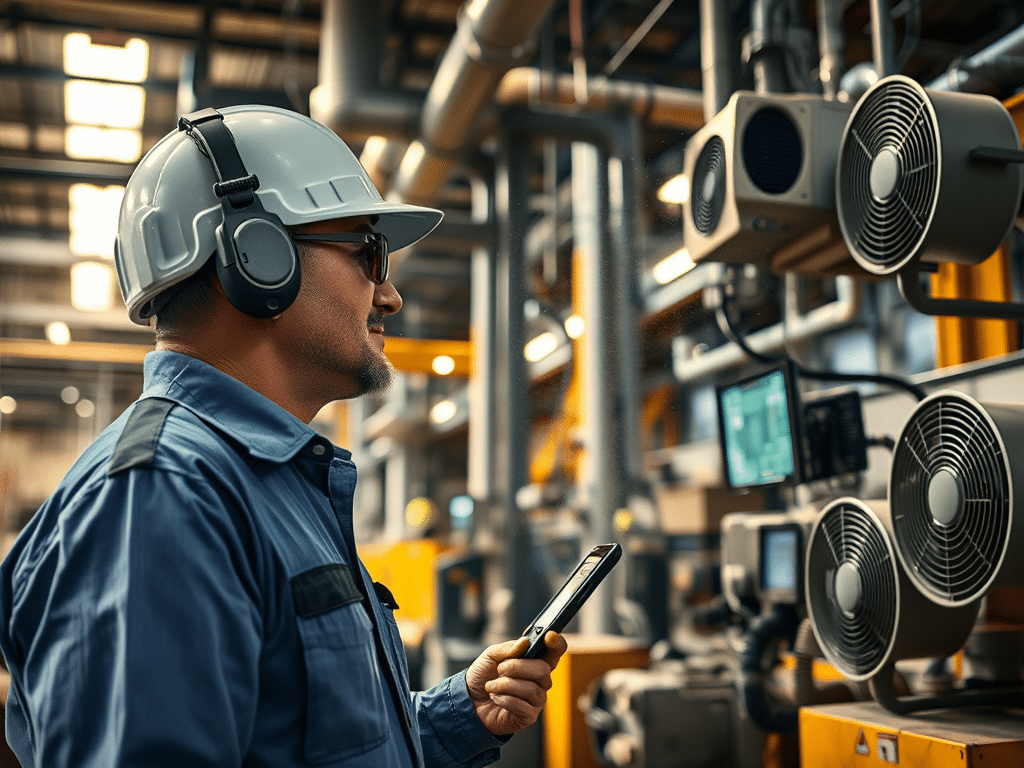

Seriously, nothing derails a workday quite like an unexpected air quality inspection failure. One minute, everything seems fine, and the next, an inspector is rattling off violations, throwing around hefty fines, and hinting that your entire operation might need to shut down until the air is clean. Now you obviously want your warehouse to run smoothly, right? Well, the poor inspection results are pretty much going to put you and your whole team (well, business) in crisis mode and you’re probably going to have to try to figure out how to fix a problem you didn’t even realize you had.
The reality is that most businesses don’t fail air quality inspections because they’re careless, instead, they fail because air quality issues aren’t always obvious. If the air in your workspace looks clear, it’s easy to assume everything’s fine.
But regulatory agencies like OSHA and the EPA don’t go by what looks clean. They go by what’s actually floating in the air, and their sensors don’t miss a thing. But thankfully, most air quality issues are fixable, but only if you know where the real problems are hiding.
How to Stay Ahead of Air Quality Inspections
Nobody likes scrambling at the last minute to fix air quality issues before an inspection. But believe it or not, a lot of businesses are actually guilty of this. But even so, businesses that consistently pass inspections do one thing differently: they treat clean air like a daily priority instead of a once-a-year checklist item.
Actually, regular air quality testing catches problems before inspectors do. And yeah, this can include real-time air monitoring since that alone can track dust and contaminant levels in different parts of your facility, so you’ll know exactly where the trouble spots are before they become violations (a lot of businesses are already doing this, but of course it depends on the industry).
But even upgrading ventilation and improving airflow prevents pollutants from collecting in dead zones. A good chunk of businesses rely on industrial fans and blowers to push airborne contaminants toward filtration systems, keeping air quality in check. So, without proper airflow, dust and fumes don’t leave the building, they just keep circulating like an overplayed song. Seriously, a lot of businesses seem to get that part wrong.
To avoid these common pitfalls, companies often need to look beyond basic ventilation and consider a more comprehensive strategy for their facility. Navigating the complexities of emissions monitoring and regulatory permitting requires a technical understanding of how pollutants behave within a specific industrial environment. Implementing specialized air quality solutions can help identify these hidden risks through detailed dispersion modeling and stack testing. By utilizing professional assessments, management can ensure that their mitigation efforts are actually effective rather than just moving air around. This proactive approach not only satisfies inspectors but also creates a genuinely safer environment for every employee on the floor.
For businesses with multiple locations, maintaining these standards across different regions is a major challenge. Each facility has its own layout and local climate demands. Partnering with a national HVAC provider like Ambient Enterprises helps companies keep their systems running efficiently. They provide custom engineering and field support in over thirty states. This keeps indoor air clean and helps brands meet safety codes everywhere they operate.
Your Air Might Look Clean, But That Doesn’t Mean It Is
One of the biggest reasons businesses fail inspections is because they assume no visible dust means no air pollution. Unfortunately, OSHA doesn’t care if your floors sparkle like a showroom, their tests pick up what you can’t see.
You need to understand that tiny airborne particles, dust, fumes, chemicals, and who-knows-what-else, don’t just disappear. They linger in the air, get circulated by your ventilation system, and settle where you least expect. But the result? Well, contaminant levels creep higher and higher, and by the time an inspector walks in with their air monitor, your workspace is already in violation.
So, if the plan is to grab a broom, wipe down surfaces, and assume that’s enough? Well, you’ll need to just think again.
Your Ventilation Might be Making Things Worse
Airflow should move contaminants out of your workspace, but that’s only if your system is actually doing its job. In reality, a bad ventilation setup can make air quality worse, not better. If air isn’t circulating properly, contaminants get trapped in stagnant zones, turning certain areas into invisible dust traps. That’s why some businesses pass air quality tests in one part of the facility but fail miserably in another.
But then there’s the issue of recycling dirty air. Some ventilation systems just move pollutants around instead of filtering them out, which means every breath your employees take is just a remix of yesterday’s dust and fumes. Not exactly ideal, right?
Running A Dust Collection System Doesn’t Always Work
If the dust collection system is humming along, everything must be fine, right? Well, not necessarily. Over time, dust collectors lose efficiency, for example, filters get clogged, internal components wear down, and before you know it, your once-reliable system is just an expensive noise machine that isn’t actually pulling contaminants from the air. So, by the time an inspector points out that your dust levels are way past acceptable limits, you’ve probably been breathing in weeks, or months of trapped airborne junk. Again, it’s far from ideal, but it’s completely true.
If dust keeps showing up on surfaces right after cleaning, that’s a major red flag (and this really does need to be taken seriously ASAP). It means your collection system isn’t pulling particles in fast enough, and they’re just settling back down where they started. That’s not dust control, rather, you should see this more as dust redistribution.
What About Your Employees?
Okay, so here’s the thing that might be fairly surprising; most air pollution isn’t caused by broken equipment. It’s caused by normal work activities that create way more airborne contaminants than people realize. Depending on what work gets done at your business, this can impact what’s going on with the air quality. So, you’ve got grinding, sanding, cutting, welding, all of these release tiny particles into the air that don’t just vanish.
So if you think about it, if employees aren’t using extraction tools, proper ventilation, or designated dust control areas, they might be making the problem worse without even knowing it. But even small habits like sweeping instead of vacuuming or dumping materials into open bins can send dust flying and push contamination levels past regulatory limits.
So, it’s really going to be the best approach to just go ahead and start educating employees on how their daily tasks affect air quality and making sure they’re using the right tools to keep pollution levels down.
Seasonal Changes Can Mess With Your Air Quality
Now this one definitely gets people by surprise, but air quality isn’t the same all year round, and seasonal changes can throw your entire system off balance. Okay, most people know that when it comes to the outdoors (like hay fever and spring). But yeah, the same can be said for indoors too.
In the winter, businesses often shut doors and windows to keep heat in, which also traps dust, fumes, and pollutants inside. In the summer, increased humidity makes dust stick to surfaces, only for it to get released back into the air as temperatures fluctuate. And spring, well, pollen gets basically everywhere. With that said, if your facility seals up tighter than a vault during cold months, it might be raising your pollutant levels without you realizing it.
Discover more from The Cameron Journal
Subscribe to get the latest posts sent to your email.




