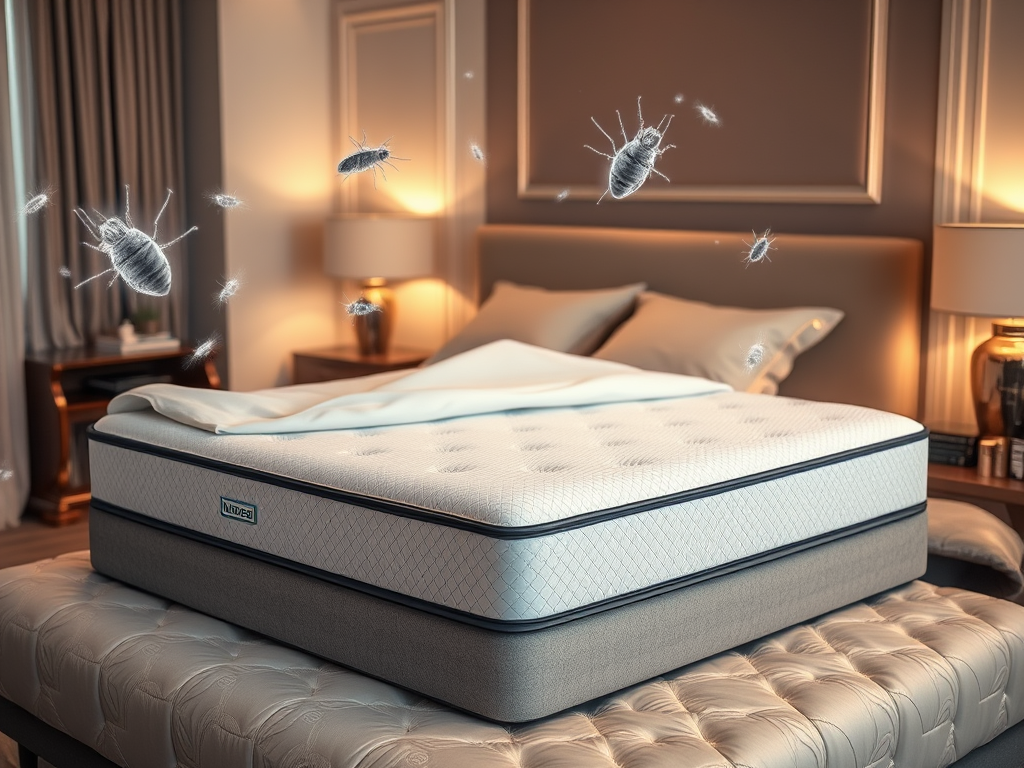
There’s nothing quite like the feeling of purchasing a new mattress. It’s clean, it’s comfortable, it’s assumed to remain like that for ten years or more. That’s why reputable mattress brands and retailers have that warranty—ten years or longer. You set it up, put your sheets on and you’re on your merry way.
But what many people don’t realize is that that warranty comes with stipulations that probably went unread. And even if warranties weren’t an issue, your mattress starts changing from day one and not in ways you notice until it’s too late.
What Your Mattress Goes Through
When you sleep at night, your body sheds dead skin cells. Millions of them. They fall through sheets and into the layers of the mattress below.
Then comes sweat. You likely perspire at least half a pint a night during REM sleep. That’s right—even if you don’t feel like you’re sweaty, your body operates as if it’s at a sauna-like temperature. That moisture soaks through sheets and into the mattress fibers beneath.
Then comes oil—from your body. You transfer whatever your body has on it to whatever you’re sleeping on. The same applies for lotions, hair grease, or night serums that get placed on the face before bedtime. This seeps into the top layer of the mattress.
Dust mites love this environment. They feed on dead skin cells and it’s warm enough and humid enough inside a mattress that they love to multiply. Therefore, within months—even inside a brand new mattress—there’s thousands of dust mites.
The Stains Nobody Talks About
Life happens. Life stains. Whether it’s coffee in bed, accidentally spilling a glass of water, children or pets playing on the beds or unfortunate illness that comes to town—whatever it might be, liquid makes it to the mattress. Once liquid enters the fibers of the mattress, there’s no turning back.
The problem is, a stain occurs on top. But what’s even worse is the moisture beneath it that creates mold and mildew. When a stain absorbs into memory foam or other materials, it gets stuck there until it’s fully dried out—and sometimes, that takes days.
This is where warranties become void. Most every mattress warranty is rendered useless if there’s any type of staining. If there’s a mark—either small or extensive—you’re not getting coverage when something happens to the structure of the mattress.
A protective cover for mattresses can prevent this from happening in the first place. A quality protector prevents anything from reaching the actual coils or foam of the mattress by creating a barrier between the two. Quality mattress protectors are even breathable so you can still sleep without any issues, allowing air to circulate while preventing liquid, allergens and debris from ever reaching the mattress.
How It Works
Water resistant protectors use membranes that repel liquid yet let moisture vapor disperse. Therefore, if something spills on the top of it during sleep, it stays on top, not seeping in like a sponge.
They also trap dust mites and their droppings on the surface level where they can ultimately be laundered away; dust mites aren’t able to dwell in any great capacity deeper in the layers of the mattress so for anyone who suffers from allergies this can make all of the difference.
What It Costs
A decent mattress protector costs anywhere from $50-$150 dollars depending on size and features. It’s a one-and-done purchase that often lasts several years.
A mattress being replaced five years into ownership instead of ten—which is the original expectation—is going to cost someone hundreds to thousands sooner than expected. Professional cleaning of one will cost $100-200 and there are still no guarantees it’ll render a bed clean.
Buying one protector has already saved money.
When Should It Be Done
Where people go wrong is waiting until they’ve owned a mattress for a year or two before putting protection on it; that’s time for degradation to already set in. A new mattress is its cleanest when it first comes out of its packaging—the perfect time to put protection on it.
New protectors are so thin once sheets are placed over them that no one will even notice they’re there. Even more so for households with children or pets or people who happen to eat in bed—protection isn’t even optional!
How Often They Need Maintenance
It’s far easier to laundry a protector every month or so than try to clean an entire mattress on its own. Simple—strip it off and put it in the washing machine. Once it’s clean, put it back on.
In this way, it’s easier to keep the rest of the bed smelling fresher; instead of body oils and sweat building up over months, people are able to reset things to clean every few weeks.
Most mid-level protectors last three to five years; you can tell when they need to be replaced when they lose their protective qualities.
What This Means for the Future
Mattresses cost too much money; protecting them is almost cost effective in terms of keeping them around longer. On top of that—when people sleep at home for a third of their lives, it’s important to keep their environment clean.
The more the materials stay intact and do not break down as quickly as moisture and oils invade, the less yellowing and smell develop and the less likely those materials will be compromised beyond asking for new mattresses because there’s a legitimate reason—like upgrading or just wanting something different as opposed to purely disgusting conditions.
In months, not much difference exists between a protected versus non-protected mattress. However, between one year and two years, it’s glaring; five years shows one mattress looking brand new while another has visible stains, odor and even feel for compromised comfort levels and support.
Your new mattress won’t stay new on its own. Humans are messy and things age. But that’s why we put safeguards in place. When something is used every single night—and costs hundreds to thousands upon purchase—the last thing we should do is spill or wake up dirty and just ignore what happens inside over time.
Discover more from The Cameron Journal
Subscribe to get the latest posts sent to your email.