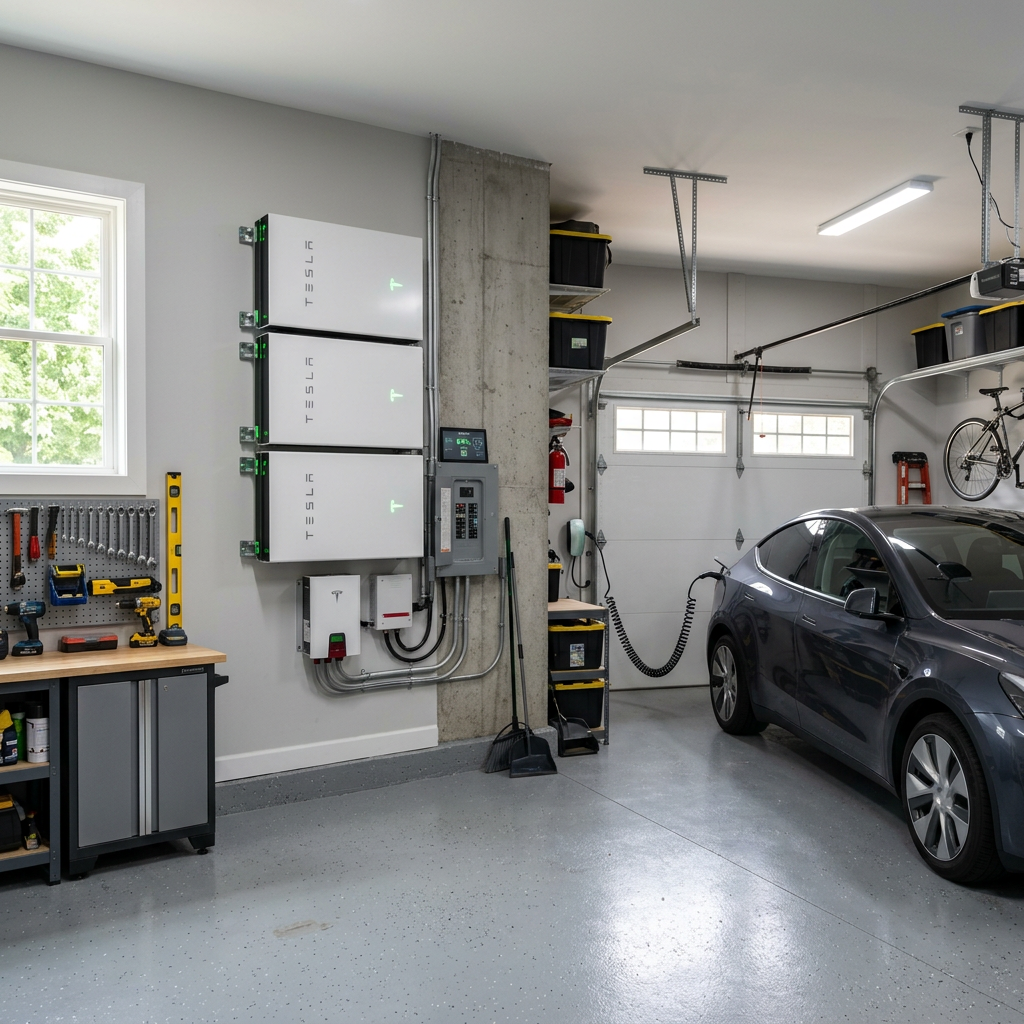
The phrase “whole-home backup” sounds reassuring. It suggests the power goes out and life continues as usual. Sometimes that is possible. But for many homes, critical-load backup is the cleaner and more cost-effective way to use a battery storage system.
Critical-load backup means selected circuits receive battery power during an outage. Whole-home backup means most or all of the electrical panel can be powered, usually with load management to keep demand under control. Both approaches can be smart. The right one depends on expectations.
What critical-load backup does well
Critical-load backup focuses on essentials. Common circuits include the refrigerator, internet equipment, lights, garage door, sump pump, outlets, a well pump, or medical equipment. It does not try to run every large appliance.
That narrower scope can stretch battery runtime. A battery that might last only a few hours with HVAC and cooking loads may last much longer when it is supporting a focused list of circuits. It can also reduce installation complexity because the backup panel is smaller.
FEMA and local emergency planning agencies often encourage households to think in terms of essential needs during outages. A critical-load battery plan follows that same logic. It does not promise normal life in every storm; it protects the functions that matter most.
When whole-home backup makes sense
Whole-home backup is attractive for homeowners who want fewer decisions during an outage. Instead of deciding which outlets work, the system can support the full panel and use controls to limit large loads when needed.
This is especially useful in homes where loads are spread across the house or where multiple appliances may be important at different times. A homeowner may not need the heat pump, oven, dryer, and EV charger all at once, but may want access to different loads throughout a long outage.
That is where products tied to backup management become important. A system designed around whole-home energy storage can be evaluated not only by battery capacity, but also by how it handles load priority, transfer behavior, and future expansion.
Whole-home backup also makes sense when the people in the house do not want to think about circuits during a stressful event. Parents, older relatives, renters, or guests may not know which outlets are backed up. A more seamless system can reduce confusion, as long as the design still protects the battery from large unnecessary loads.
The hidden issue: power output
Capacity tells how long the battery may run. Power output tells what can run at the same time. A whole-home backup system needs enough power output for normal household peaks or smart controls that prevent overload.
For example, a refrigerator and router are easy. A central air conditioner, electric water heater, and induction cooktop can create a much larger combined demand. If those loads start together, the system may trip unless it is properly designed.
According to NREL residential storage cost analysis, backup scope affects both equipment and installation cost. That makes power output a budget issue as well as a technical issue.
Surge power belongs in the same conversation. Some motors need a brief burst of power to start, even if they use less once running. Well pumps, older air conditioners, and some refrigerators can behave this way. A good installer should check startup requirements instead of relying only on the appliance nameplate.
Solar changes the backup conversation
If the home has solar, the next question is whether solar can recharge the battery while the grid is down. Not every solar system can do this automatically. A battery system must be able to operate safely in island mode, which means the home is temporarily separated from the utility grid.
Solar recharge can make both backup styles stronger. A critical-load setup may run essentials for days in good weather. A whole-home setup may recover battery charge during daylight, though heavy loads still need careful management.
Weather should be part of the model. A battery that looks generous on a sunny spring day may feel smaller during a humid summer outage when cooling loads are high and storm clouds reduce solar production. Asking for more than one scenario makes the proposal more believable.
Choose based on outage behavior
Homeowners should imagine a real outage day. Would they be satisfied with internet, cold food, lights, and a few outlets? Or would they expect heating, cooling, cooking, and normal room access? The answer points toward critical-load or whole-home design.
There is no shame in a smaller backup scope. A well-designed critical-load system can be more useful than an oversized whole-home promise that drains quickly. But for homes with frequent outages, all-electric appliances, or comfort requirements, whole-home backup can be worth exploring.
The practical path is to define the outage experience first, then size the battery around it. Homeowners comparing residential platforms can review Sigenergy SigenStor as an example of an integrated system that can support storage, solar input, backup planning, and energy management in one architecture.
Discover more from The Cameron Journal
Subscribe to get the latest posts sent to your email.