
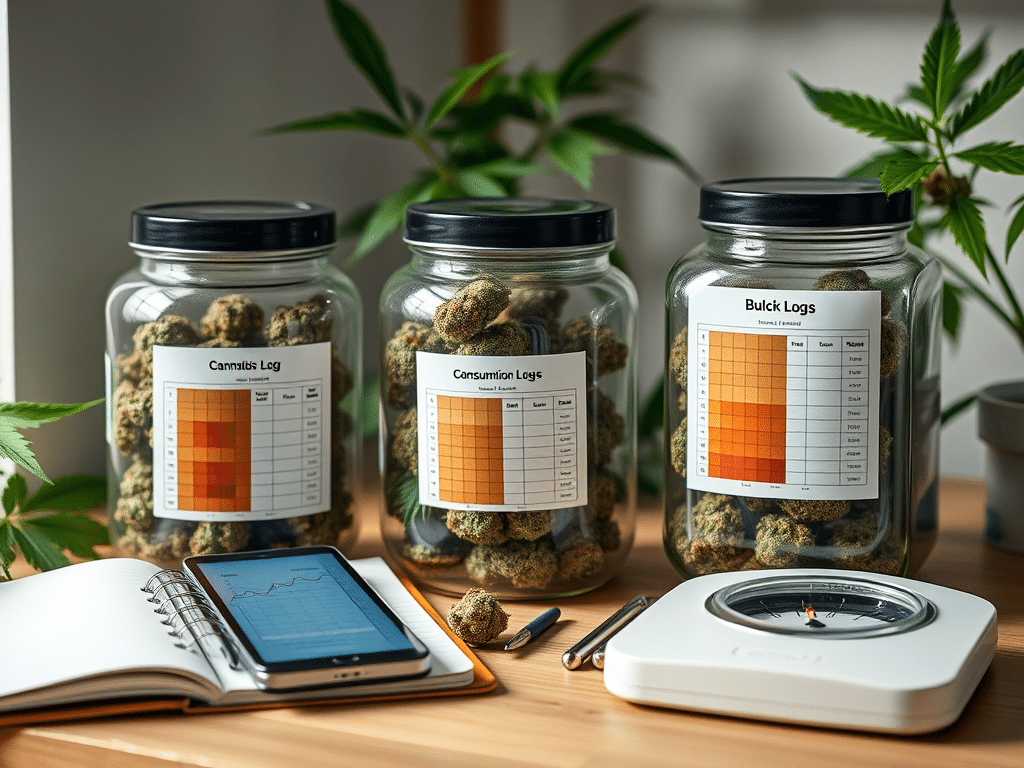
Buying cannabis in larger quantities looks appealing on paper – lower per-gram costs, fewer transactions, less frequent reordering. But the actual money-saving potential depends entirely on purchasing patterns and consumption discipline. People who buy bulk impulsively without planning often end up wasting product or consuming more than intended just because it’s available. Meanwhile, those who approach volume purchasing strategically and track their actual usage can cut their cannabis spending significantly over time. The difference between bulk buying that saves money and bulk buying that just shifts spending around comes down to specific habits and practices that turn volume discounts into real savings.
Understanding these habits means looking at how successful bulk buyers actually operate versus common assumptions about how volume purchasing works. It’s less about simply buying more at once and more about developing systems that make those larger purchases work within realistic consumption patterns.
Tracking Consumption Before Committing to Bulk
The foundation of successful bulk buying is knowing actual consumption rates. Many people guess at how much they use, then buy based on those estimates. The guesses are usually wrong – sometimes high, often low once product is readily available.
Tracking usage for a month or two before making bulk purchases reveals real patterns. How much gets consumed on weekdays versus weekends. Whether consumption stays steady or varies by stress, social plans, or other factors. How much gets wasted or sits unused. This data prevents buying quantities that sound reasonable but don’t match reality.
The tracking doesn’t need to be complicated. A simple log noting daily use provides enough information to calculate weekly and monthly averages. These averages, not optimistic guesses about future consumption, should drive bulk purchase sizing.
Buying at the Right Scale
Bulk doesn’t mean buying the maximum available. It means buying quantities that balance savings against realistic consumption timelines. Cannabis degrades over time even with proper storage. Terpenes fade, potency drops gradually, and eventually the product becomes noticeably stale.
For most regular users, one to three months of supply represents the sweet spot. Long enough to capture meaningful volume discounts. Short enough that the product gets consumed while still fresh. Going beyond this risks degradation that undermines the savings from lower per-unit costs.
This is where resources such as Bulk Cannabis providers become relevant for users ready to purchase at scale – but only after establishing their actual consumption rates and storage capabilities. Jumping straight to large volumes without this groundwork often leads to product sitting around until quality suffers.
Different product types have different storage timelines too. Flower stays fresh for shorter periods than properly stored concentrates. Edibles have expiration dates. Matching bulk purchase sizes to product-specific degradation timelines prevents buying more than can reasonably be used while maintaining quality.
Strategic Timing of Purchases
Bulk buyers who save the most don’t buy randomly whenever they run low. They watch for seasonal patterns, promotional periods, and harvest timing that affect pricing. Cannabis prices fluctuate based on supply cycles, with outdoor harvest seasons typically bringing lower prices.
Planning bulk purchases around these cycles maximizes savings. Buying during gluts when prices drop makes the volume discount even more significant. Conversely, buying bulk during supply shortages when prices peak wastes the advantage of volume purchasing.
This requires some forward planning and cash flow management. Having funds available when prices drop means being able to take advantage of timing. Running out of supply and needing to buy regardless of current pricing eliminates this strategic advantage.
Proper Storage That Maintains Value
Bulk purchasing only saves money if the product stays usable. Poor storage degrades quality quickly, turning savings into waste. Proper storage requires attention to several factors.
Temperature stability matters most. Cannabis stored in fluctuating temperatures degrades faster than product kept consistently cool. Ideal storage sits around 60-70°F. Avoid attics, garages, or anywhere that gets hot.
Light degrades cannabinoids and terpenes. Dark storage – opaque containers in dark spaces – preserves quality much better than clear jars on shelves. UV exposure particularly damages compounds quickly.
Humidity control prevents both excessive drying and moisture that promotes mold. 55-62% relative humidity keeps cannabis at optimal moisture levels. Humidity control packs maintain this range in sealed containers.
Air exposure oxidizes cannabinoids and evaporates terpenes. Sealed containers with minimal air space preserve product better than loosely covered jars or bags. Vacuum sealing works even better for long-term storage.
Investing in proper storage – quality containers, humidity packs, dark cool locations – protects the money spent on bulk purchases. Cheap storage that lets product degrade wastes the savings from volume discounts.
Avoiding Consumption Creep
Here’s what catches people off guard with bulk buying – having more product available often increases consumption unconsciously. The “it’s right there” factor leads to using more simply because supply isn’t limited. This consumption creep can completely eliminate savings from bulk pricing.
Preventing this requires intentional consumption management. Some people portion bulk purchases into smaller containers, keeping most supply in storage and only keeping a small amount readily accessible. This creates the same supply limitations as buying smaller quantities more frequently, preventing the overconsumption that excess availability triggers.
Setting consumption targets based on the tracked usage data helps too. If tracking showed average daily use, maintaining that average after bulk buying ensures the volume discount translates to actual savings rather than just funding higher consumption.
The psychology matters here. Bulk buying should change purchasing patterns, not consumption patterns. When consumption increases to match supply, bulk buying just maintains costs at a higher usage level rather than reducing costs at a consistent usage level.
Diversifying Smart Versus Diversifying Wastefully
One temptation with bulk buying is using the purchase as an opportunity to try multiple products. The volume discount makes experimentation feel affordable. But buying bulk quantities of products that turn out not to suit preferences creates waste that eliminates savings.
Successful bulk buyers stick primarily to known products they use consistently. The bulk purchase focuses on the strains, formats, or products they know work for them. Experimentation happens in small quantities outside the bulk purchase, not as part of it.
This requires some discipline. Resisting the urge to bulk buy the new product that sounds interesting. Focusing purchases on proven favorites rather than variety for variety’s sake. Treating bulk buying as cost reduction for regular use, not as entertainment or experimentation funding.
Small variety within bulk purchases makes sense – maybe two or three familiar strains instead of just one. But buying eight different strains in bulk quantities risks having multiple products sit around while preferences gravitate to one or two favorites.
Calculating True Savings
Bulk buying saves money when the math works out over the full lifecycle. This means factoring in several elements beyond just the per-unit price difference.
Start with the price difference. If buying an ounce versus buying eight eighths, what’s the actual savings per gram? This is the baseline benefit.
Then subtract storage costs. Humidity packs, quality containers, any equipment needed to store properly. These are one-time or occasional costs but they reduce net savings from volume purchasing.
Factor in product degradation. If 10% of bulk purchase degrades before use, that lost value reduces effective savings. Track actual waste to know this number.
Consider opportunity cost of cash. Money spent on bulk purchases isn’t available for other uses. This matters more for larger purchases that tie up significant funds for months.
The calculation shows whether bulk buying actually saves money or just feels like it saves money. Successful bulk buyers run these numbers and buy volumes where the math clearly works in their favor.
Building the Discipline
These habits don’t develop overnight. Most people who save money through bulk buying refined their approach over time through trial and error. Early bulk purchases might have been too large, leading to degradation. Or storage wasn’t quite right, causing quality issues. Or consumption increased, eliminating savings.
Learning from these experiences and adjusting builds the discipline that makes bulk buying actually save money long-term. It’s less about perfect execution from the start and more about developing systems that match individual consumption patterns and storage capabilities.
The habits that work vary by person. Someone consuming regularly in consistent amounts can bulk buy more aggressively than someone with variable usage. People with ideal storage spaces can buy larger quantities than those limited to less-than-perfect storage. The key is developing habits that match personal circumstances rather than following generic bulk buying advice.
Done right, bulk cannabis purchasing reduces costs significantly over months and years. Done carelessly, it just shifts spending patterns without actual savings. The habits that separate successful bulk buyers from unsuccessful ones focus on planning, tracking, proper storage, and consumption discipline that turns volume discounts into real money saved rather than just different spending patterns.
Discover more from The Cameron Journal
Subscribe to get the latest posts sent to your email.




