
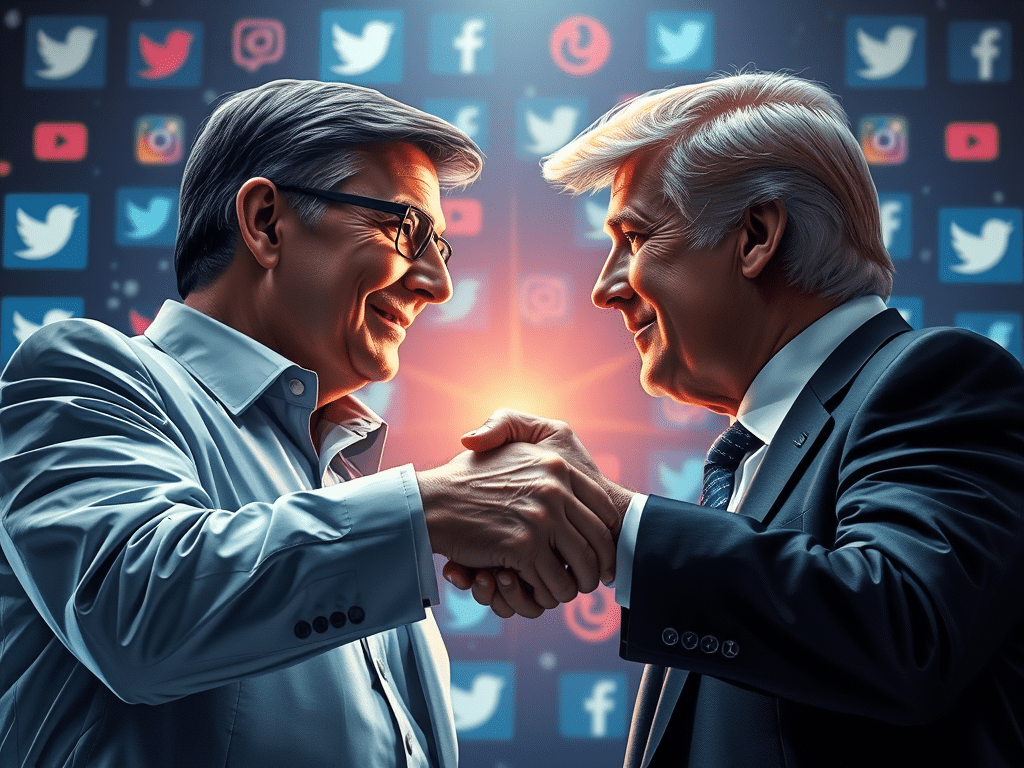
We find ourselves at a crossroads where the worlds of technology and politics are colliding with unprecedented force. The recent $10 million settlement between Elon Musk’s X platform and former President Donald Trump is more than just a legal footnote; it’s a stark reminder of the growing influence tech billionaires wield in our political landscape.
Let’s consider the facts. Trump, banned from major social media platforms following the January 6 Capitol riots, sued X (then Twitter) for what he claimed was censorship. A federal judge initially dismissed the case, ruling that Twitter, as a private company, had the right to enforce its content policies. Yet, here we are, with a multimillion-dollar settlement that raises more questions than it answers.
The Blurring Lines of Power
We can’t ignore the elephant in the room. Musk, now a significant Trump supporter and campaign contributor, has been tapped to lead the Department of Government Efficiency. This appointment, coupled with the lawsuit settlement, paints a picture of a relationship that goes beyond mere political alignment.
The implications are profound. When a tech mogul with control over a major communication platform aligns so closely with a political figure, we must ask: What does this mean for the future of public discourse? For the integrity of our democratic processes?
A Historical Perspective
This isn’t the first time business and politics have intertwined, of course. From the robber barons of the Gilded Age to the media moguls of the 20th century, wealthy individuals have long sought to influence the political sphere. But the scale and speed at which today’s tech billionaires can shape public opinion are unprecedented.
We’re witnessing a new chapter in this long-standing narrative. The difference? The tools at their disposal are more powerful than ever before.
The Double-Edged Sword of Platform Power
Social media platforms like X have become the modern public square. They’re where news breaks, opinions form, and movements begin. This power to shape discourse comes with immense responsibility – a responsibility that becomes complicated when platform owners have clear political allegiances.
We must grapple with some uncomfortable questions. Can a platform truly be neutral when its owner is deeply involved in partisan politics? How do we ensure that the digital spaces where we debate and decide the future of our society remain fair and open?
Looking Ahead: The Need for New Frameworks
As we navigate this new terrain, it’s clear that our current regulatory frameworks are ill-equipped to handle these challenges. We need a serious conversation about how to balance free speech, platform rights, and the public good in the digital age.
This isn’t just about Musk and Trump. It’s about setting precedents for how we manage the intersection of tech, media, and politics in the years to come. We need to consider new models of platform governance, stricter rules around conflicts of interest, and perhaps even a reimagining of how we approach digital public spaces.
A Call to Action
The settlement between X and Trump might seem like just another headline, but it’s a wake-up call. We’re entering an era where the lines between tech innovator, media mogul, and political powerbroker are increasingly blurred.
As citizens, we must remain vigilant. We need to demand transparency, question motives, and hold both our political leaders and tech giants accountable. The future of our democratic discourse depends on it.
In the end, the true test will be whether we can harness the innovative power of technology while safeguarding the integrity of our political processes. It’s a balancing act that will define the coming decades. And make no mistake – we’re all part of this high-stakes performance.
Discover more from The Cameron Journal
Subscribe to get the latest posts sent to your email.




