Key Takeaways
- Small, repeatable actions often build confidence more effectively than pushing for a breakthrough.
- Comfort, balance, strength, energy management, and emotional health all affect daily mobility.
- Rehabilitation goals should reflect the person’s home, work, health, interests, and support system.
- Regular communication with therapists, prosthetists, and medical providers can prevent small issues from becoming larger setbacks.
Confidence after limb loss is rarely built through one dramatic milestone. It grows through safe practice, honest communication, and small successes that make daily life feel more manageable. For people adjusting to upper-leg limb loss, above-the-knee prosthetics from Orthopedic Appliance Company, Inc. offer customized transfemoral, knee, and hip-disarticulation solutions focused on comfort, stability, mobility, and personal goals. Its experienced team serves Asheville, North Carolina, and works with patients to create upper-leg prosthetic options suited to their lifestyle and rehabilitation needs.
Why Confidence Can Feel Hard After Limb Loss
Limb loss can change how a person moves through the home, returns to work, participates in hobbies, and feels in social situations. Grief, frustration, worry, and changes in body image may appear at different stages of recovery. Confidence does not mean never feeling afraid. It can mean knowing how to prepare, use support, ask questions, and make a safe adjustment when a day does not go as planned.
Start With a Clear Picture of Daily Needs
Before setting rehabilitation goals, consider what a normal day requires. Think about getting out of bed, bathing, cooking, using stairs or ramps, getting into a vehicle, managing fatigue, and taking part in family events. A goal such as “walk farther” becomes more useful when connected to a real need, such as walking safely from the parking lot to a favorite store or standing long enough to prepare lunch.
Build a Step-by-Step Rehabilitation Plan
A gradual plan is often safer and easier to sustain than trying to do too much too soon. The 2025 VA/DoD lower-limb amputation rehabilitation guideline reinforces the value of coordinated care that addresses mobility, pain, mental health, primary care, and prosthetic support.
- Choose one short-term task, such as a safe transfer or a walk across one room.
- Practice it in a controlled setting with the recommended aid or support surface.
- Track comfort, balance, energy level, and confidence afterward.
- Discuss concerns with the physical therapist and prosthetic care team.
- Increase the challenge only when the current step feels controlled and steady.
Not every mobility need involves a prosthesis. People in western North Carolina who need ankle and foot support can also explore AFO braces Hickory NC services for custom-fitted orthotic support intended to improve stability and comfort for appropriate conditions.
Make Comfort Part of the Plan
Discomfort should not be accepted as an unavoidable part of everyday life. Rubbing, pressure, skin redness, swelling, loose components, or a noticeable change in fit should be reported promptly. Fit and alignment can affect balance, energy use, and willingness to remain active. A brief daily note about when discomfort starts, which activity was involved, and how long it lasts can provide the care team with helpful details.
Use Small Goals to Create Momentum
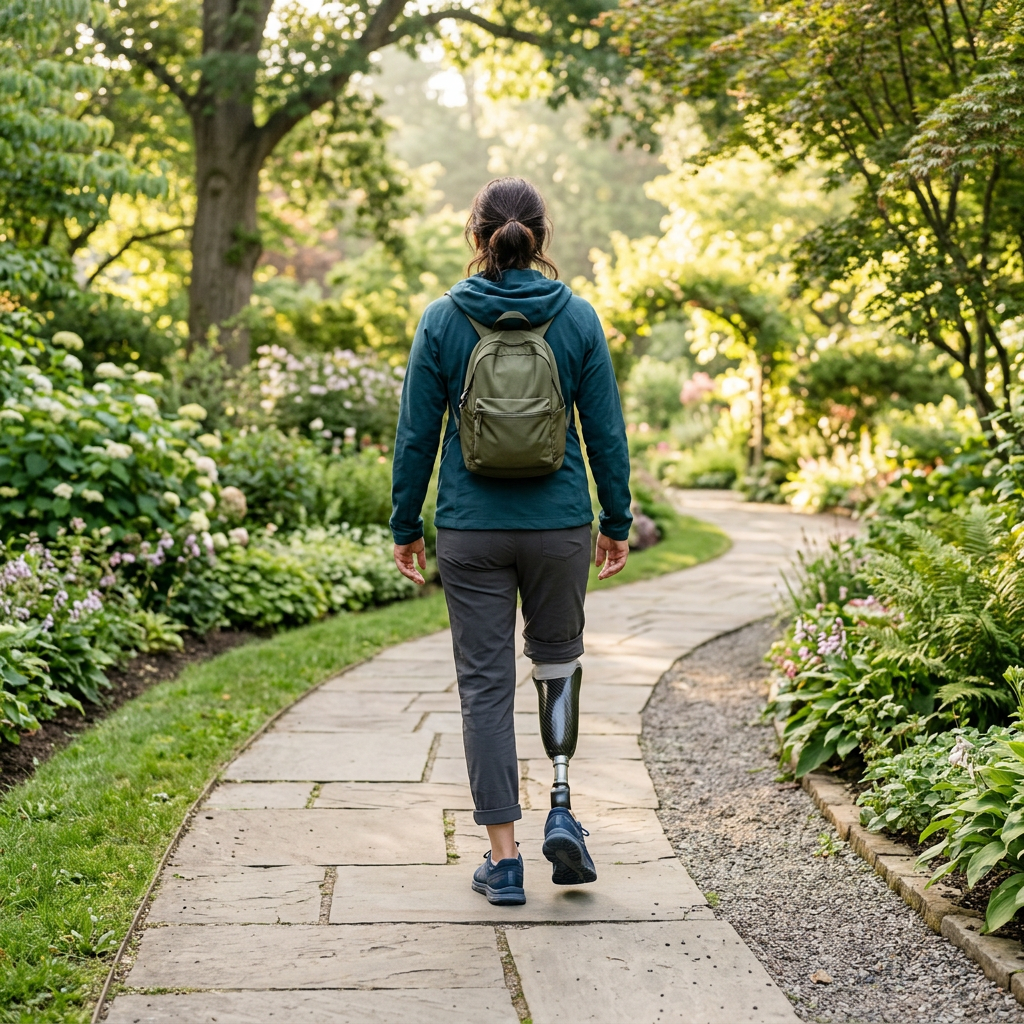
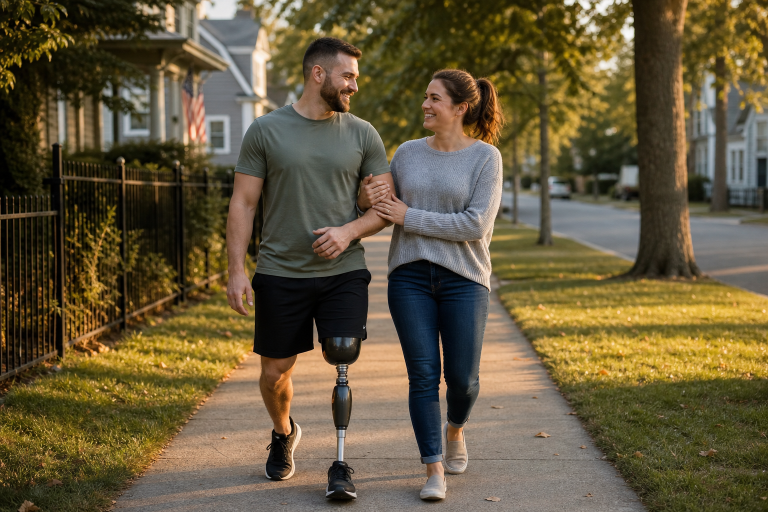
Good goals are specific, realistic, and meaningful. They may include standing for two minutes while holding a stable surface, preparing a simple meal with planned rest breaks, practicing a vehicle transfer, visiting a quiet park, or returning to a modified hobby. Measure progress by control, consistency, and comfort, not only by speed or distance.
Care for the Residual Limb and Device
Daily visual checks and cleaning routines should follow the instructions provided by the medical and prosthetic team. Keep follow-up appointments even after walking begins to feel easier. Changes in body weight, swelling, activity level, medication, or overall health can alter fit over time. Reporting worn liners, damaged parts, or skin changes early may help protect mobility and avoid a longer interruption in activity.
Strengthen Balance and Manage Energy
Above-knee limb loss can create added balance and energy demands because the natural knee joint is no longer present. A physical therapist can tailor a program that may include approved hip and core strengthening, weight shifting, safe turning, curb practice, and strategies for uneven ground. Planned breaks, supportive footwear, good lighting, and stable walking surfaces can also make daily movement more manageable.
Address Fear of Falling
Fear of falling can lead people to move less, which may gradually reduce strength and confidence. Improve safety by removing loose rugs and clutter, adding lighting in hallways and bathrooms, using grab bars or rails when needed, and carrying a phone or alert device during independent activity. Repeated falls or near-falls are important information for the care team and should not be minimized.
Give Emotional Health the Same Attention
Counseling, peer support, and mental health care are normal parts of recovery, not signs of weakness. A provider can help with grief, anxiety, depression, trauma symptoms, body image concerns, or changes in sleep and motivation. Anyone experiencing thoughts of self-harm should call or text the 988 Suicide & Crisis Lifeline in the United States, contact emergency services, or seek immediate support from a trusted person.
Find Support That Fits the Person
Family and friends can help with transportation, encouragement, and practice. Physical therapists teach movement and safety skills, while prosthetists review fit, alignment, and function. Occupational therapists can help adapt a home, workplace, or routine. Peer mentors and support groups can offer practical insight from people who understand the everyday realities of limb loss.
Questions to Ask at the Next Appointment
- Is the current fit still appropriate for my activity level?
- Could alignment or comfort be affecting my balance or energy?
- What skin changes should I report right away?
- Which exercises are safe for me to practice at home?
- Would counseling, occupational therapy, or peer support help with my next goal?
Common Questions About Building Confidence After Limb Loss
How long does it take to feel confident?
There is no single timeline. Healing, overall health, fit, therapy, support, and personal goals all affect progress.
Should goals focus only on walking?
No. Useful goals may involve cooking, driving, working, caring for family, exercising, traveling, or returning to social activities.
What if progress feels slow?
Bring that concern to the care team. A slower pace may mean the goal needs to be adjusted rather than abandoned.
Conclusion
Daily confidence after limb loss is built through patience, preparation, and steady support. Small gains in comfort, safety, and control can lead to greater independence over time. With realistic goals and a coordinated care team, each person can create a path forward that fits the life they want to live.
Discover more from The Cameron Journal
Subscribe to get the latest posts sent to your email.