Ricky Sayegh MD is an interventional pain management physician based in Bergen County, New Jersey, whose clinical work addresses many of the chronic pain conditions now affecting tens of millions of Americans. He holds a physician executive MBA from the University of Tennessee, with concentrations in population health, informatics, and health care finance, and completed medical training at Mount Sinai School of Medicine and New York Medical College. Board certified in internal medicine and advanced trauma and life support, he applies modalities such as neck and back injections and vein treatments while emphasizing comprehensive, preventive evaluations. Dr. Sayegh previously served as chief medical officer for Con Edison, supporting employee wellness, and as senior medical director at Centene/Fidelis, reviewing medical necessity and cost efficiency. He remains active with organizations including the American College of Physicians and has volunteered with Doctors Without Borders.
An estimated 60 million adults in the US experience chronic pain, an increase of about 10 million people since 2016, according to the Centers for Disease Control and Prevention (CDC). This includes more than 20 million Americans who live with high-impact chronic pain, a condition that impacts their daily lives and restricts their ability to work.
Chronic pain is more common in America than diabetes, high blood pressure, and depression combined. The National Institutes of Health (NIH) defines chronic pain as prolonged pain that persists for at least three months.
Chronic pain differs from acute pain, which serves as the body’s way of alerting a person to potential harm. If chronic pain is not treated, the condition can have a lasting impact on the nervous system.
Humans can suffer from several distinct forms of chronic pain, including neuropathic pain, which results from nerve damage or an underlying condition that affects the nervous system. Neuropathic pain often manifests as a burning, shooting sensation, though patients may also describe the pain as “electric” or “stabbing.” A few common conditions that cause neuropathic pain include diabetic neuropathy, post herpetic neuralgia following shingles, and various nerve compression syndromes.
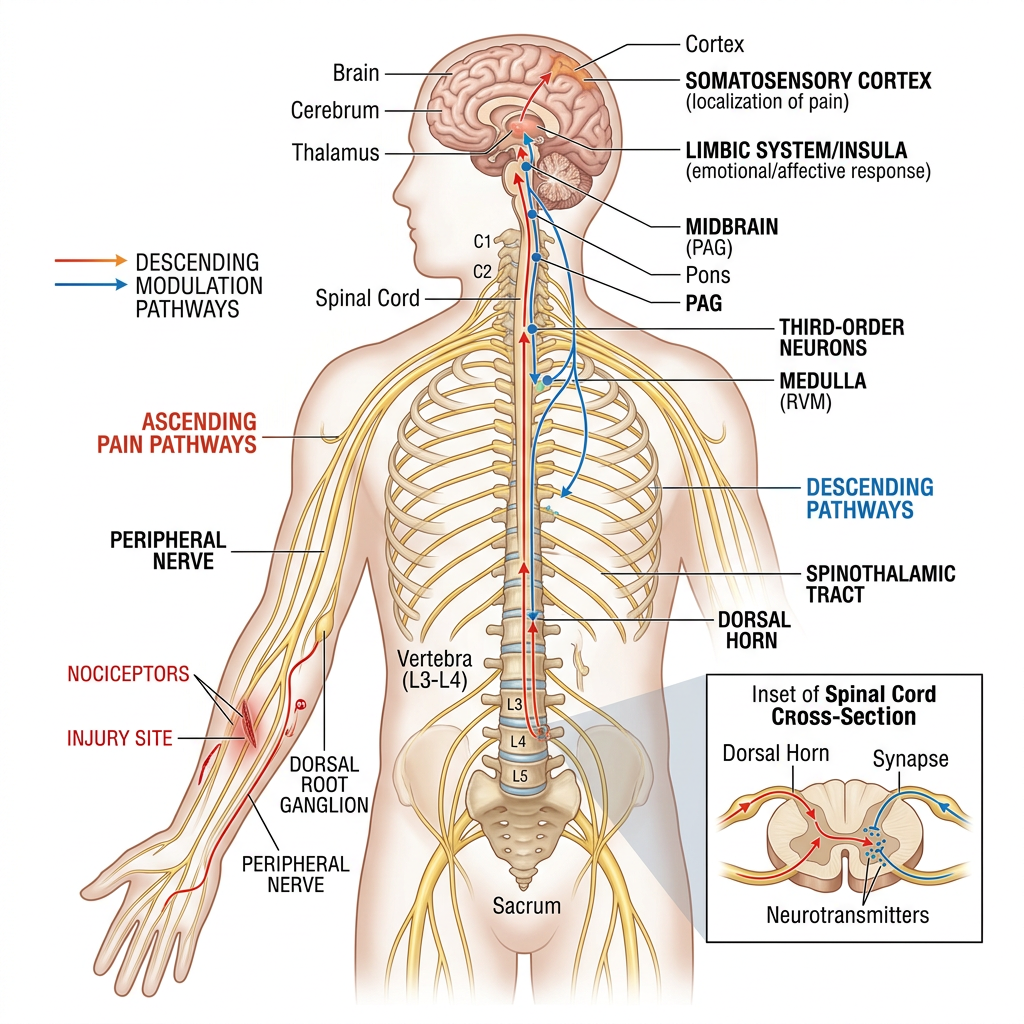
Neuropathic pain perfectly exemplifies the “pain loop” that underpins all cases of chronic pain. In individuals living with chronic pain, the nervous system and brain become overstimulated, and they continue issuing warning signals throughout the body even after the injury or illness has healed.
Nociceptive pain is another type of chronic pain. It originates after a tissue injury or from inflammation. Compared to neuropathic pain, patients usually describe the condition as dull and throbbing, like a consistent ache coming from deep within their body.
Doctors associate nociceptive pain with some of the most common health problems in the nation, including arthritis, which impacts roughly 60 million American adults, and migraines, which impact about 40 million people each year. Muscle injuries and non-arthritic joint conditions are other common sources of nociceptive pain.
Complex regional pain syndrome (CRPS) is one of the most specific and rarest types of chronic pain. CRPS is also one of the most severe forms of chronic pain. The condition sometimes develops after an injury or medical operation.
Individuals living with CRPS experience intense burning pain that causes swelling and other skin changes, as well as muscle weakness and extreme sensitivity. CRPS demands immediate medical attention for effective symptom management.
Chronic back pain ranks among the most prevalent forms of chronic pain in the US. NIH reports that roughly 65 million Americans experience back pain in a given year, and 80 percent of the population will have back pain at some point in their lives.
Chronic back pain, meanwhile, impacts about 16 million people, or nearly 10 percent of the adult population.
Diagnosis and treatment strategies for chronic pain vary considerably depending on the nature, severity, and location. Individuals experiencing pain that has persisted long after an injury or illness has healed should discuss their symptoms with a knowledgeable interventional pain management professional.
Anti-inflammatory and nerve-related medications, physical therapy, and various lifestyle adjustments, such as improving posture and becoming more physically active, are among the more common treatment options.
About Ricky Sayegh MD
Ricky Sayegh MD is a board-certified interventional pain management physician serving patients in Bergen County, New Jersey, with additional experience in emergency, primary, and intensive care medicine. He earned his MD in 2000, completed residency training at NYU/Mount Sinai Medical Center, and later obtained a physician executive MBA from the University of Tennessee, focusing on population health, informatics, and health care finance. Dr. Sayegh has held leadership roles including chief medical officer with Con Edison and senior medical director at Centene/Fidelis, and he volunteers with Doctors Without Borders and local reentry programs.
Discover more from The Cameron Journal
Subscribe to get the latest posts sent to your email.