Key Takeaways
- Designing an outdoor kitchen boosts your backyard’s usability and visual appeal.
- Materials matter. Choose those that offer both endurance and aesthetic value for long-lasting beauty.
- Smart zoning creates fluid spaces for cooking, entertaining, and relaxing.
Table of Contents
- Designing for Functionality and Style
- Choosing Durable and Stylish Materials
- Incorporating Multifunctional Appliances
- Creating Defined Cooking and Social Zones
- Enhancing Year-Round Usability
- Integrating Natural Elements
- Budget-Friendly Solutions
- Conclusion
Transforming your backyard into a culinary haven is now within reach for homeowners seeking both practicality and an inviting atmosphere. By integrating the latest trends in outdoor kitchen design, you can create a space that blends function and style. Whether entertaining family and friends or maximizing your cooking experience, hiring an outdoor kitchen contractor in North Richland Hills ensures professional results and expert craftsmanship. As more people invest in their outdoor living spaces, it has become clear that thoughtful design elevates the overall utility and charm of your backyard. Planning an outdoor kitchen with the right balance of durable materials, innovative appliances, and practical zoning can turn even a simple patio into a culinary destination. Emphasizing natural elements and year-round usability unlocks the full potential of these spaces in any season.
Designing for Functionality and Style
Outdoor kitchens are no longer an afterthought. They are now designed as an extension of your lifestyle, aligning with how you cook, entertain, and relax. Begin by evaluating your culinary habits and entertaining needs. For example, prioritizing a grill, prep station, and compact refrigerator works for many modern households who want an easy, minimalist approach. This doesn’t mean sacrificing style. Streamlined cabinetry, modern lighting, and coordinated surfaces can transform the space into an elegant focal point.
Choosing Durable and Stylish Materials
Material selection is critical for longevity and curb appeal. Outdoor kitchens are exposed to the elements year-round, so it pays to invest in countertops, cabinetry, and flooring that can handle rain, sun, and temperature fluctuations. Options like stone, stainless steel, and weather-resistant woods combine durability and elegance. Large porcelain tiles and ceramic surfaces offer a high-end look with straightforward maintenance, making them a top choice for trend-forward designers. To learn more about material choices and how they are reshaping outdoor kitchens, check out Livingetc.
Incorporating Multifunctional Appliances
Modern outdoor kitchens now feature appliances designed to save space and offer versatile cooking methods. The newest models, such as combination grills, smokers, and pizza ovens, let you prepare a feast with just one or two compact units. For instance, the Ninja FlexFlame grilling system combines grilling, smoking, roasting, griddling, and even pizza baking in one sleek appliance. Compact fridges and ice makers for beverages or desserts further extend functionality while maintaining a tidy, unobtrusive look.
Creating Defined Cooking and Social Zones
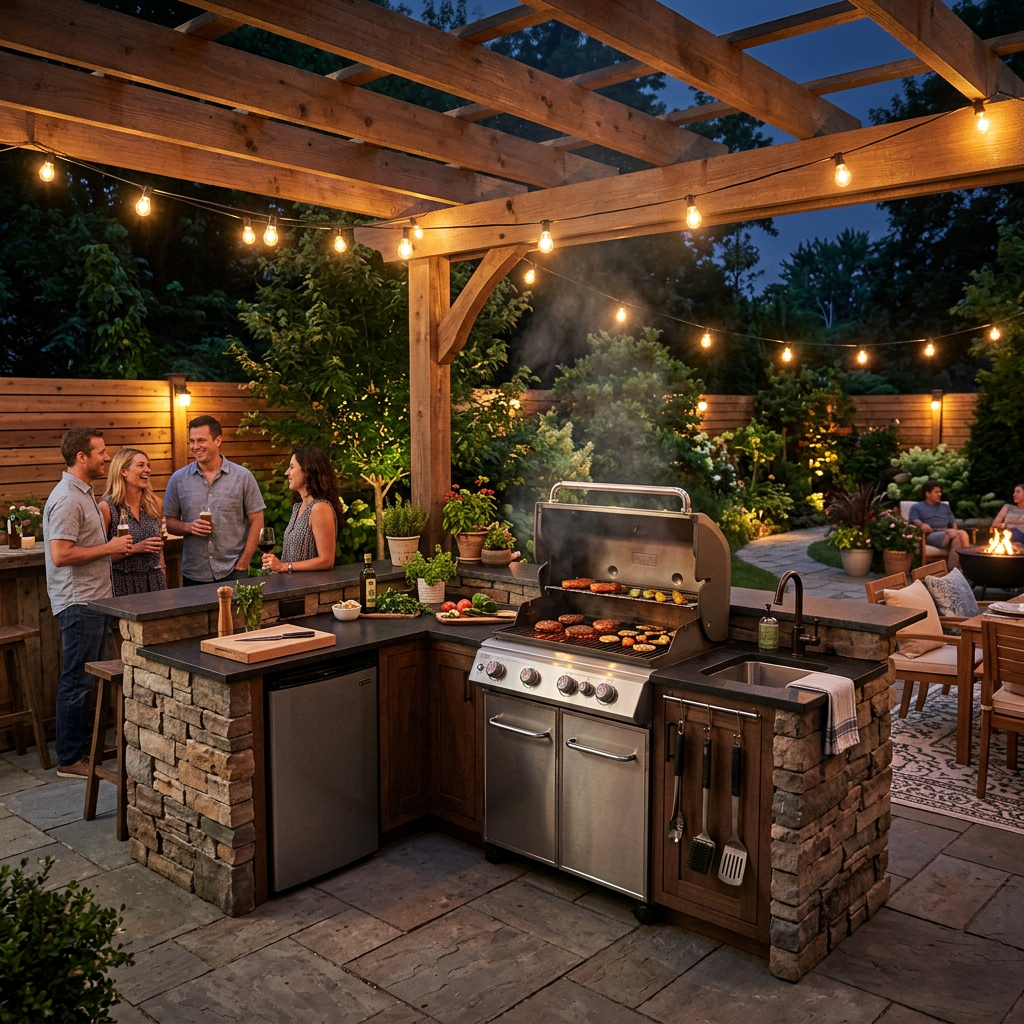
Successful outdoor kitchens seamlessly integrate designated areas for food prep, cooking, and socializing. Functional zoning ensures that while one person prepares meals, others can relax nearby and interact without crowding the cook. This flow can be achieved by planning L-shaped layouts, kitchen islands, or incorporating separate counters and surfaces for guests. Stylish outdoor furniture and lighting further delineate the entertainment area without creating barriers or disrupting the visual harmony.

Enhancing Year-Round Usability
All-season features help extend your outdoor kitchen’s use from sunny lunches to cozy winter gatherings. Adding a pergola, retractable roof, or partial enclosure provides shelter from rain and shields from direct sun. Built-in patio heaters, fire pits, or outdoor fireplaces take comfort to the next level on chilly evenings. For those who want maximum flexibility, glass walls or screens can create an enclosed space that still feels open and connected to the garden.
Integrating Natural Elements
The most inviting outdoor kitchens pair natural beauty with thoughtful design. Greenery helps soften hardscaping and provides a lush backdrop for culinary activities. Installing raised herb beds or container gardens brings fresh ingredients within arm’s reach and adds vibrant color. Using organic materials like wood, stone, and untreated metals further anchors the kitchen in its natural setting, ensuring it feels like an organic extension of your backyard.
Budget-Friendly Solutions
Building a stylish outdoor kitchen doesn’t have to cost a lot. By selecting modular cabinetry systems and cost-effective surfaces, you can craft an impressive setup for less. Explore DIY kits or solutions from retailers like IKEA, which offer weather-resistant woods and practical stainless steel countertops. These smart and flexible options make it easy to upgrade your setup as your budget and needs change.
Conclusion
An outdoor kitchen, skillfully designed with durability, functionality, and beauty in mind, becomes the heart of your backyard. Prioritizing materials that withstand the elements, choosing innovative appliances, and planning multi-use zones ensures a welcoming environment for cooking and entertaining all year long. With guidance from industry resources and the expertise of local professionals, your dream culinary retreat is just a few design choices away.
Discover more from The Cameron Journal
Subscribe to get the latest posts sent to your email.