
You’d think that worrying about cybersecurity and hackers in the 21st century would be enough, but no, no, it’s not. There’s still all the physical aspects of security for your business you’re having to worry about, too. Actually, what’s getting more and more common (as unfortunate as it all is) is that crime rates are still bad, and it’s not exactly like criminals are getting more clever, like they’re pulling off some Splinter Cell operation, or the example that recently happened in the Louvre. Instead, it’s far more chaotic.
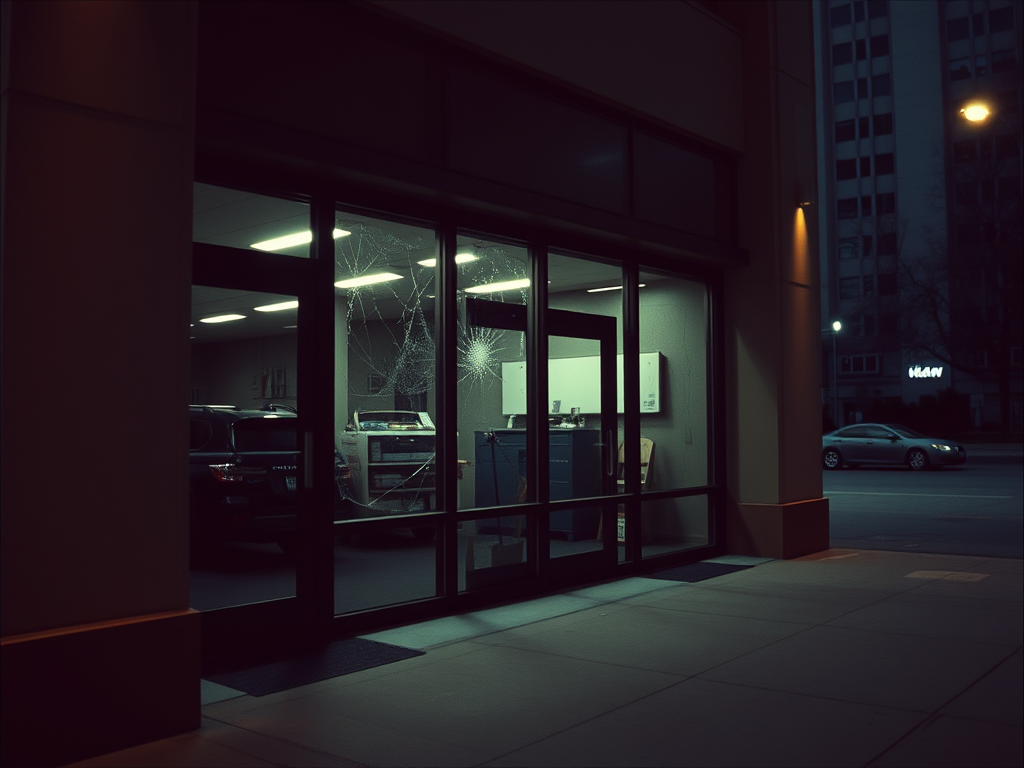
What’s at least getting more and more common is ram raids, smash-and-grabs, those night-time “in and out in two minutes” hits, they’re not just big city problems anymore, or luxury brand oriented either. For a lot of business owners, it feels a bit unreal until it happens close by. Then the questions start. Could that happen here? How easy would it be for someone to hit these doors, these windows, this forecourt? And if it did happen, how long would the place actually be out of action?
Which, honestly, all of these are all reasonable questions too. Now, with that part said, this doesn’t have to turn into a full-on doom spiral. It just means the outside of the building needs the same kind of thought that already goes into alarms, cameras, and insurance.
Why Do these Crimes Hit so Hard?
Well, it all really depends on the crime itself and what’s going on. Like, in some areas where there are no cars present (like the walkable car-free places), organized crime can still happen, be it in broad daylight (which is fairly rare), but usually at night when the business is closed down. Like, maybe the windows are smashed, and a group comes in. But it’s just as bad, well, if not worse, when a car is involved. Sure, a couple of people with a crowbar is one thing, but a car is a whole new level.
A stolen car hitting the frontage is another level entirely. Doors get ripped out of frames, shutters bend, glass shatters, and the building stops being a barrier at all. The speed’s the next problem. It doesn’t take long for a crew that knows what they’re doing to reverse in, grab high-value items, and disappear before anyone even finishes processing the noise.
Like, a lot of businesses know to put security shutters down when closing, even putting locks and bars on windows, but most don’t even think about security bollards, well, if they’re even able to do that (as it might not always be allowed either).
What’s the Cost of these Incidents?
Well, on paper, it all sounds like “insurance will cover it.” But it doesn’t really work like that in real life, though. In real life, the cost goes way beyond a claim number. There’s the obvious stock loss, and that alone can be brutal if the shelves are stacked with high-ticket items. And then there’s damage to doors, shutters, frames, windows, flooring, fittings, and sometimes even the structure itself.
You can basically count on downtime, and almost always, the insurance premiums are going to rise, too. This is just a giant simplification, but it’s not just “one bad night,” it’s a long, irritating tail of cost and admin that drags on afterward.
Can You Fortify Your Premise?
If you’re able to, you absolutely should. Now, some businesses just can’t, like if they’re renting the premises, then they’re basically at the mercy of their landlord (granted it would be the property manager’s best interest to better secure the business). Technically, some ordinances might not allow certain things, like bollards, as it might come off as “unwelcoming”. But if you have complete and utter control to better secure your business, it’s absolutely going to be worth it.
Discover more from The Cameron Journal
Subscribe to get the latest posts sent to your email.




