Table of Contents
- Why A Missing Front Tooth Needs Careful Planning
- What Makes A Replacement Tooth Look Natural?
- Compare The Main Replacement Options
- How Bone And Gum Health Affect The Result
- The Consultation And Planning Process
- Questions To Ask Before Choosing Treatment
- What The Healing Period May Involve
- How To Protect The Final Result
- Focus On Fit, Health, And Long-Term Care
A missing front tooth can affect more than the appearance of a smile. It may change the way a person speaks, bites into food, and feels in social settings. Because front teeth are highly visible, replacing one successfully requires attention to the empty space, the neighboring teeth, the gumline, and the way the tooth functions in the bite.
Patients considering dental implants for missing front teeth can review how Advanced Implant Dentistry And Oral Restoration approaches implants in the aesthetic zone, the visible smile area. Based in Cedarhurst, New York, the practice presents front-tooth replacement as a detailed planning process involving implant position, crown design, gum appearance, and modern imaging, making it a relevant resource for New York area patients exploring implant and oral restoration care.
Why A Missing Front Tooth Needs Careful Planning
A replacement tooth must look like it belongs in the smile, but appearance is only one part of the plan. The new tooth should work with the opposing teeth, allow comfortable speech, and avoid placing unwanted pressure on the surrounding teeth. Small differences in angle, length, or position can be especially noticeable near the center of the smile.
The dentist also considers the condition of nearby teeth, the thickness and shape of the gums, the amount of jawbone available, and the patient’s overall oral health. A plan that works well for one person may not be appropriate for another, even when the missing tooth is in a similar location.
What Makes A Replacement Tooth Look Natural?
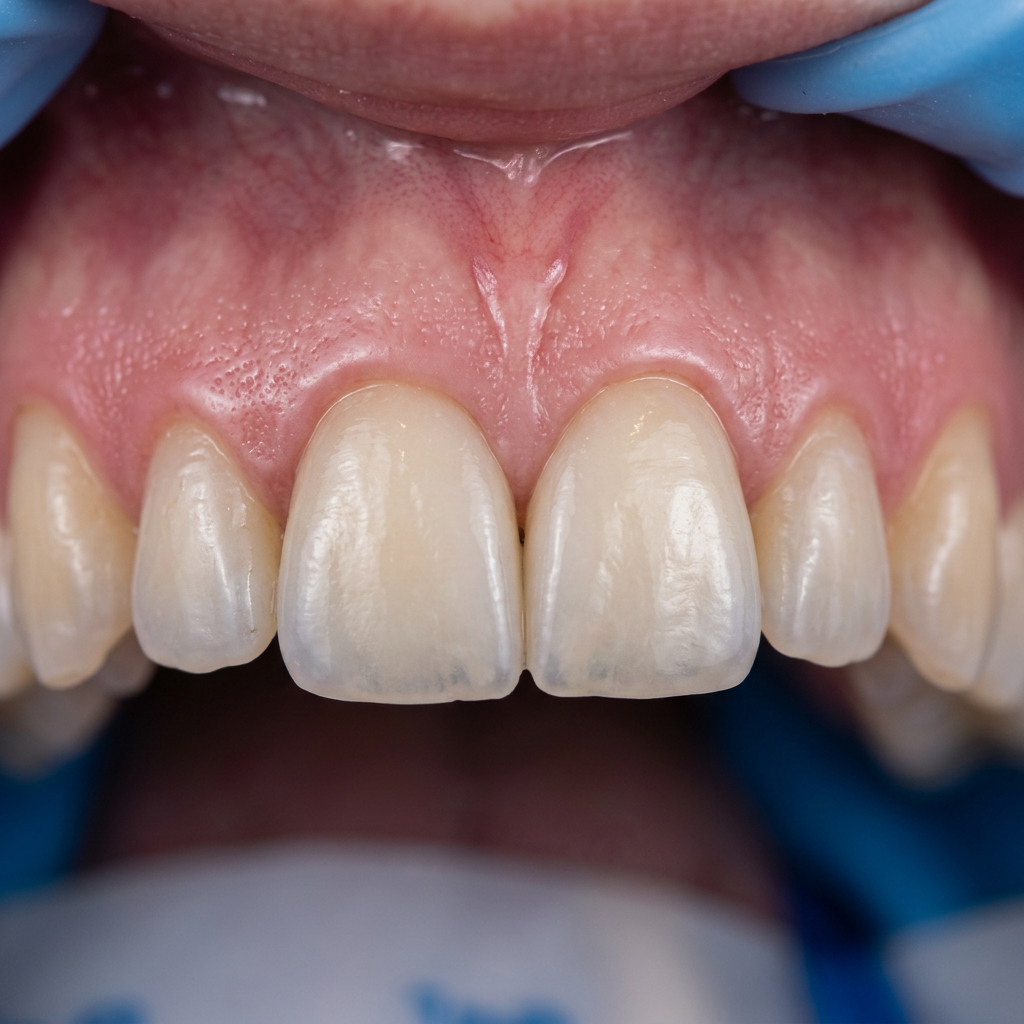
Natural-looking dentistry is about detail. A front-tooth crown or bridge should be designed to complement, rather than perfectly duplicate, the teeth around it. Natural teeth have small variations in shape, surface texture, and how they reflect light.
- Shade and translucency: A crown may need subtle color variation to blend with neighboring enamel.
- Shape and proportion: The width, length, edges, and contours should suit the adjacent teeth and overall smile.
- Gumline contour: The height and curve of the gum around the replacement can strongly influence the result.
- Spacing: The contacts and small spaces between teeth should support both appearance and cleanability.
- Light reflection: Surface texture and material selection affect whether a restoration appears flat, opaque, or lifelike.
The gumline deserves as much attention as the visible crown. Even a well-made crown may stand out if gum tissue recedes, appears uneven, or does not frame the tooth in a balanced way.

Compare The Main Replacement Options
Dental Implant And Crown
An implant is a post placed in the jawbone to replace a missing tooth root, followed by a connector and custom crown. It can replace one tooth without reshaping healthy teeth next to the gap. However, it involves surgery and may require a healing period before the final crown is placed.
Traditional Dental Bridge
A traditional bridge uses crowns on teeth beside the gap to support a replacement tooth between them. It is fixed in place and may be an option when the supporting teeth already need crowns or when an implant is not suitable. The health and strength of those supporting teeth must be assessed carefully.
Maryland Bridge
A Maryland bridge typically attaches a replacement tooth to the back of nearby teeth with a bonded framework. It can be conservative because it may require less alteration of neighboring teeth. It is generally considered for selected front-tooth situations where the bite and tooth position allow it.
Removable Temporary Tooth
A removable temporary appliance, often called a flipper, can conceal a visible space while an extraction site heals or a permanent restoration is being made. It is also useful when the final plan depends on how the gums and bone respond over time.
How Bone And Gum Health Affect The Result
After tooth loss, the bone that once supported the tooth can change over time. Thin bone or a reduced ridge may affect implant placement and the support available for the gum tissue. Gum thickness, gum health, and the position of the lip can also influence how visible a restoration will be when smiling.
A clinician may recommend bone grafting, gum treatment, or a staged approach before placing a final tooth. Immediate implant placement can be appropriate in some situations, but it is not automatically the best choice for every front-tooth case.
The Consultation And Planning Process
- Review health history: Discuss gum disease, diabetes, tobacco use, medications, previous dental work, and any injury that caused the tooth loss.
- Examine teeth and gums: Evaluate the bite, space, neighboring teeth, gumline, and signs of infection or inflammation.
- Use imaging when needed: X-rays or three-dimensional scans can help assess roots, bone volume, and nearby structures.
- Plan a temporary tooth: Ask how the visible space will be managed during healing and fabrication.
- Design the final restoration: Discuss shade, shape, gum contours, and contact with opposing teeth.
- Review timing, risks, and costs: Understand alternatives, possible added procedures, maintenance needs, and the expected sequence of care.
Questions To Ask Before Choosing Treatment
- Which options fit the condition of my neighboring teeth and gums?
- Could I need bone grafting or gum treatment?
- What temporary tooth will I wear, if any?
- How will the shade, shape, and gumline be matched?
- How long might the full process take in my situation?
- What changes would require an adjustment to the final crown or bridge?
- How should I clean and maintain the completed restoration?
What The Healing Period May Involve
Healing varies according to the procedure, the condition of the extraction site, whether grafting was performed, and individual health factors. Tenderness, swelling, and temporary dietary changes can occur after surgery. Follow-up appointments allow the dental team to monitor healing, guide hygiene, and determine when the final restoration can be placed.
For a plain-language overview of implant stages, temporary teeth, and candidacy, the American Dental Association explains the role of dental implants in replacing missing teeth. General timelines are useful for discussion, but a treating clinician should provide guidance tailored to the specific procedure and healing progress.
How To Protect The Final Result
- Brush twice daily with a soft-bristled toothbrush.
- Clean carefully along the gumline and beneath bridge areas when applicable.
- Maintain regular examinations and professional cleanings.
- Avoid opening packages or biting hard objects with front teeth.
- Use a custom mouthguard for contact sports if recommended.
- Report pain, swelling, bleeding, looseness, or bite changes promptly.
Additional information about implant components, healing, and possible eligibility factors is available in Cleveland Clinic’s overview of dental implant treatment. Consistent home care and routine professional monitoring help protect both the restoration and the tissues around it.
Focus On Fit, Health, And Long-Term Care
A natural-looking front-tooth replacement depends on much more than selecting a crown. Healthy gums, adequate bone, thoughtful tooth design, stable bite function, and reliable oral hygiene all contribute to the final result. Comparing the available options with a qualified dental professional can help patients choose a plan that supports both appearance and long-term oral health.
Discover more from The Cameron Journal
Subscribe to get the latest posts sent to your email.