Key Takeaways
- Calculate your home’s needs to select equipment with the right cooling capacity.
- Familiarize yourself with the main types of air conditioners and their ideal applications.
- Favor models with high energy efficiency to keep costs and environmental impact down.
- Examine noise output, installation standards, and required upkeep before making a final decision.
- Consider smart controls, air purification, and other advanced features for improved comfort and convenience.
Ensuring your home stays cool and comfortable during the warmer months requires selecting the right air conditioner for your unique needs. From the unit’s size and type to its efficiency and advanced features, each factor plays a vital role in both your comfort and long-term savings. Exploring your options early and seeking professional advice will help you avoid costly mistakes and ensure a seamless installation. For GTA residents seeking a reliable air conditioner installation in Toronto, it is important to choose experienced technicians who can recommend the right solution for your space.
The process of choosing an air conditioner is not just about immediate relief from the heat; it is also about ensuring efficient operation, ease of maintenance, and overall value for your household. Proper planning now can help you stay cool without causing your energy bill to soar or compromising on healthy indoor air quality.
Assess Your Home’s Size and Layout
The performance of your air conditioner largely depends on whether it is appropriately sized for your living space. A unit that is too small will run continuously without fully cooling the area. At the same time, a unit that is too large may cycle on and off too often, resulting in uneven cooling, excess humidity, and higher operating costs. It is helpful to use an online BTU calculator or schedule a professional assessment to evaluate the square footage, ceiling height, sun exposure, and room configuration, ensuring the system matches your requirements. More guidance is available from larger consumer resources such as Consumer Reports.
Understand Different Types of Air Conditioners
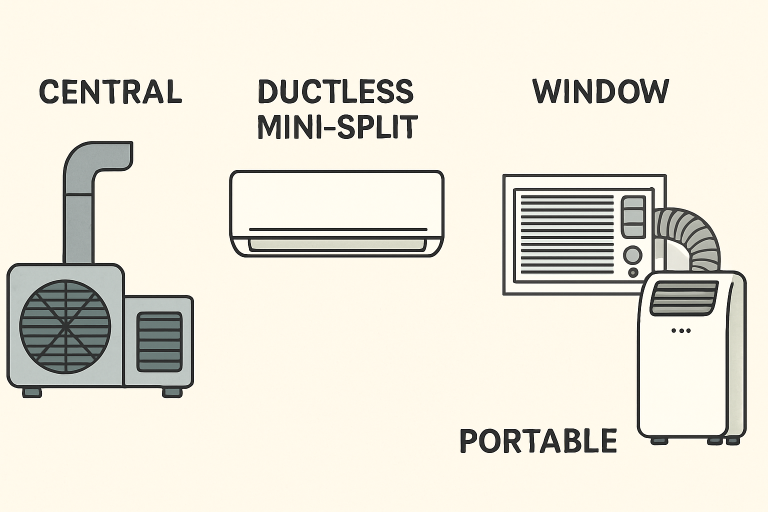
Understanding the differences between air conditioning systems is crucial for making an informed investment. The most common types include:
- Central Air Conditioning: Best for whole-home cooling, these systems require ductwork but provide strong airflow and consistent comfort. They are most suitable for houses with existing duct systems.
- Ductless Mini-Split Systems: An ideal solution for homes without ducts, or for zone cooling specific rooms. Each indoor unit can be controlled independently, making it perfect for customized comfort and high efficiency.
- Window Units: Popular for single rooms or small apartments, window units are easy to install but may not suit every window style or offer full-home climate control.
- Portable Units: A flexible choice that does not require permanent installation. These are easy to move between rooms, but they are usually less efficient and can be much louder compared to other systems.
Prioritize Energy Efficiency
Modern air conditioning units feature energy-saving features and labels that help reduce operating costs and environmental impact. The SEER rating (Seasonal Energy Efficiency Ratio) measures the cooling output per unit of energy used through a typical season. Higher SEER ratings are linked to more efficient units. The ENERGY STAR certification designates models that meet strict energy-saving criteria set by the Environmental Protection Agency. Additionally, units with inverter technology can adjust compressor speed for steadier, quieter operation and greatly reduced electricity consumption compared to traditional on-off designs. Detailed information about energy-efficient choices can be found on the ENERGY STAR official website.
Consider Noise Levels
The noise from an air conditioner can affect sleep quality and comfort, especially if the unit is close to bedrooms or living areas. Units display noise output in decibels (dB), and most manufacturers publish these numbers in product specifications. Generally, ductless mini-splits and modern central systems operate more quietly than window or portable units. Always check reviews and noise ratings, especially if you value a quieter indoor environment.
Evaluate Installation and Maintenance Requirements
Whether choosing a central, ductless, or window unit, professional installation is key for safety, efficiency, and system longevity. Certified HVAC technicians ensure your AC is sized and installed correctly and that refrigerants are properly handled. Regular maintenance, such as filter replacement, coil cleaning, and refrigerant topping, is vital to keeping your system running smoothly. Neglecting maintenance can lead to inefficient operation and higher energy bills.
Explore Additional Features
Today’s air conditioners come equipped with a range of features that go beyond basic cooling.
- Smart Controls: Options like Wi-Fi-enabled thermostats and app-based controls let you adjust temperature settings from your smartphone at any time.
- Air Purification: Many units feature advanced filtration or even UV sterilization to help remove dust, pollen, bacteria, and viruses from the air, contributing to healthier indoor environments.
- Humidity Control: Select models can regulate humidity levels as well as temperature, which is especially important in damp or humid climates.
Budget and Brand Considerations
Setting a realistic budget up front helps you factor in the property costs of equipment and recurring energy expenses. Include the price of installation and ongoing maintenance when evaluating the overall value. Well-regarded brands are often preferred for their reliability, support, and warranty coverage. Lennox, for example, is known for its efficient and innovative systems. For up-to-date ratings and comprehensive reviews of popular brands, Forbes Home is an excellent resource.
Conclusion
Carefully selecting the right air conditioner means assessing your home’s specific needs, researching available technologies, and evaluating factors such as efficiency, noise, maintenance, and modern features. Investing in a professionally installed, high-quality AC system will provide years of comfort, energy savings, and peace of mind.
Discover more from The Cameron Journal
Subscribe to get the latest posts sent to your email.