Key Takeaways
- Labeling problems often start with weak data control, unclear ownership, and manual handoffs.
- A controlled source of product information reduces the number of conflicting label versions.
- Formal review and change control should cover label content, artwork, and production readiness.
- Training should address the real points where mix-ups and outdated materials can enter the process.
- For medical device manufacturers, 2026 quality system expectations make complete, accessible records especially important.
Labeling errors can create costly rework, delayed releases, product mix-ups, and compliance concerns. Whether a company manages medical devices, consumer health products, or pharma labeling, the most reliable prevention strategy is a connected process that controls data, artwork, approvals, printing, and production use. Most mistakes do not begin with one careless action. They develop when teams rely on disconnected spreadsheets, old artwork files, informal email approvals, or manual data entry. Closing those gaps helps manufacturers prevent errors before labels reach packaging lines or customers.
Why Labeling Errors Happen
Labels sit at the intersection of regulatory, quality, design, supply chain, and production work. A product change may start in one system, move through several people, and end in a print file without a reliable record of what changed or who approved it. By the time a discrepancy is noticed, the wrong version may already be in inventory or on the line. Common causes include multiple teams using different product data, current and obsolete artwork stored together, copied text or codes, unclear approval responsibilities, and weak controls during line setup or changeover. Treating labeling as a full workflow, rather than a final artwork task, makes these risks easier to identify.
What Changed in 2026
Medical device manufacturers should account for the fact that the FDA’s Quality Management System Regulation became effective on February 2, 2026. The QMSR replaced the former Quality System Regulation framework in 21 CFR Part 820 and incorporates ISO 13485:2016 by reference. Labeling is not a separate quality island, so records for artwork, change control, training, production, and corrective action should be clearly connected.
Common Risk Points in Labeling Workflows
- Product data entry: Incorrect names, model numbers, storage conditions, or expiration rules can propagate to every subsequent file.
- Artwork creation: A designer may begin with an outdated template or omit a required change.
- Translation: Market-specific text can drift from the approved source content.
- Review and approval: Approvers may review the wrong version or lack the context needed to spot a mismatch.
- Printing and packaging: The wrong file, label stock, printer setting, or roll can be selected during setup.
A Practical Process for Fewer Errors
A useful improvement effort begins by mapping the current workflow from product-data creation through label application. List every system, file, person, approval, and transfer point involved. This exercise often reveals hidden dependencies, such as a spreadsheet that feeds artwork or an email that acts as an unofficial release record.
- Find manual handoffs, including copied values, shared folders, and email attachments.
- Assign one accountable owner for each label change.
- Define which changes need standard review and which require deeper risk-based review.
- Record the final decision, including the approved version, approvers, and effective date.
- Retire or restrict access to obsolete files and materials when the new version is released.
How Better Data Control Helps
When product and regulatory information lives in disconnected files, people must repeatedly retype details that should remain consistent. A controlled source of approved data reduces avoidable differences in identifiers, warnings, dates, symbols, and market-specific statements. It also gives reviewers a clear reference point when comparing a proposed label with approved content. Data that commonly needs control includes product names, model numbers, lot and serial number rules, expiration formats, storage conditions, instructions, warning statements, approved translations, and destination-market requirements. The goal is not simply to centralize files. It is to ensure that users know which information is authoritative and up to date.
Building a Strong Review and Approval Process
Effective review checks both content and context. A label may contain correct words but still fail if text is unreadable, a barcode cannot be scanned, a symbol is missing, or the artwork is linked to the wrong product. Reviewers should verify the intended product, market, packaging configuration, and change record before release. A practical checklist asks whether the content matches the approved source record, required warnings and symbols are present, translations are approved, codes can be read, and the final artwork is connected to the correct approval history. High-risk changes, such as revised warnings, identifiers, or expiration logic, should receive additional scrutiny.
Checks Before Labels Reach the Production Floor
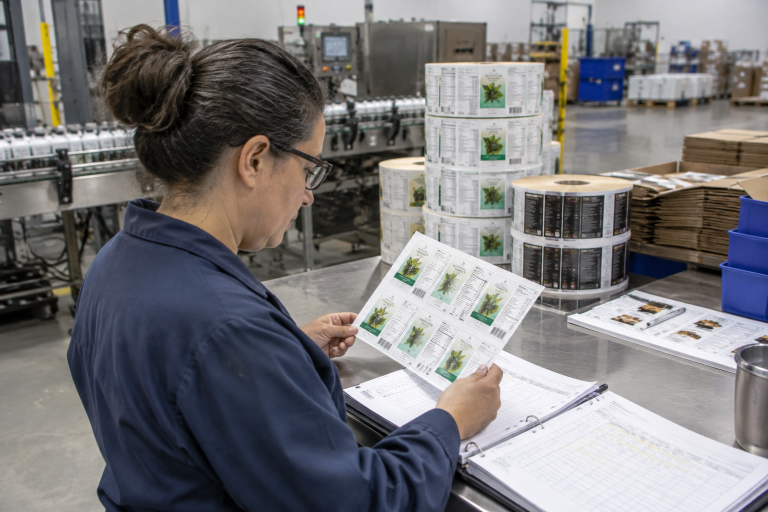
The final gap between approval and use deserves its own controls. Before a run begins, remove labels and materials left from the prior operation, confirm the production order against the approved version, and inspect the first printed label. Staff should also confirm the product code, destination market, and variable data before full production proceeds. Line clearance, controlled storage, segregation of similar labels, and documented handling of unused or rejected materials help reduce the risk of mix-ups. These measures are especially valuable during frequent product changes, short runs, or packaging operations with closely related products.
Metrics That Show Whether Controls Work
Do not wait for a recall or major deviation to judge the process. Useful leading indicators include label-related deviations per production cycle, right-first-time approval rates, artwork rework, obsolete materials found during inspections, approval cycle time, training completion, and the time required to retrieve a complete label history for an audit. Review trends rather than isolated events. Repeated proofreading corrections, delayed approvals, or recurring line-clearance findings may point to unclear procedures, poor source data, or insufficient training.
Common Questions
Who should own labeling quality?
Many functions contribute, including regulatory, quality, engineering, design, production, and supply chain. However, each workflow should have a single named process owner who coordinates responsibilities and ensures handoffs are defined.
Should every label change receive the same review?
No. A risk-based approach is more practical. Changes to warnings, product identifiers, use instructions, market requirements, or variable data generally warrant more review than minor formatting changes. The quality system should clearly define those distinctions.
Can automation remove all labeling errors?
Automation can reduce manual transcription and make approved data easier to reuse. It cannot correct weak source information, unclear rules, or inadequate review. An automated workflow can quickly propagate an error if the input data is incorrect.
Conclusion
Fewer labeling errors result from a connected, well-managed process rather than from relying on a final inspection to catch every problem. Manufacturers can make meaningful progress by controlling source data, reducing manual handoffs, defining clear ownership, reviewing artwork in the context of current product and regulatory requirements, and verifying production line readiness before each run. Establishing consistent approval procedures also helps ensure that label changes are reviewed, documented, and communicated to the appropriate teams before reaching production. In addition, routine checks, employee training, and complete version-controlled records can make it easier to identify discrepancies and trace issues when they occur. These practices help prevent avoidable mistakes, improve coordination between departments, and support more consistent labeling throughout the manufacturing process. Together, they contribute to safer day-to-day operations, better quality control, and stronger inspection readiness in 2026.
Discover more from The Cameron Journal
Subscribe to get the latest posts sent to your email.