
Table of Contents
- Why Nitrogen Matters Around the Home
- How Nitrogen Travels Through Onsite Wastewater
- What Makes Nitrogen-Reducing Systems Different
- Key Components That Support Nitrogen Removal
- Choosing, Installing, and Maintaining a System
- Daily Habits and Common Mistakes
- Questions to Ask Before an Upgrade
- Conclusion
Household wastewater does more than leave the home through a drain. In properties served by on-site systems, it passes through tanks, treatment equipment, soil, and sometimes groundwater before reaching the wider environment. Understanding how nitrogen-reducing septic systems work can help homeowners make informed decisions about wastewater treatment, maintenance, and water protection.
Nitrogen management is especially important near wells, springs, lakes, rivers, bays, and coastal waters. A properly planned system cannot eliminate every nutrient concern, but it can reduce the amount of nitrogen that leaves the treatment process and enters sensitive areas.
Why Nitrogen Matters Around the Home
Wastewater from toilets, sinks, showers, laundry, and kitchens contains nutrients from human waste, food residue, and some cleaning products. The U.S. Environmental Protection Agency notes that approximately 20 percent of U.S. homes use septic systems, and poorly managed systems can release nitrogen and phosphorus into groundwater or nearby water bodies. Its overview of wastewater nutrient pollution explains why nutrient control is a water-quality concern.
When too much nitrogen reaches surface water, it can encourage excessive algae growth. As algae die and decompose, oxygen levels may decline, placing stress on fish and other aquatic life. Groundwater matters, too, particularly where private drinking-water wells or shallow water tables are present.
Equipment selection is only one part of the process. Homeowners evaluating tanks, treatment components, or replacement needs may need to consult a qualified installer, designer, or septic tank supplier after the site conditions and local approval requirements are understood.
How Nitrogen Travels Through Onsite Wastewater
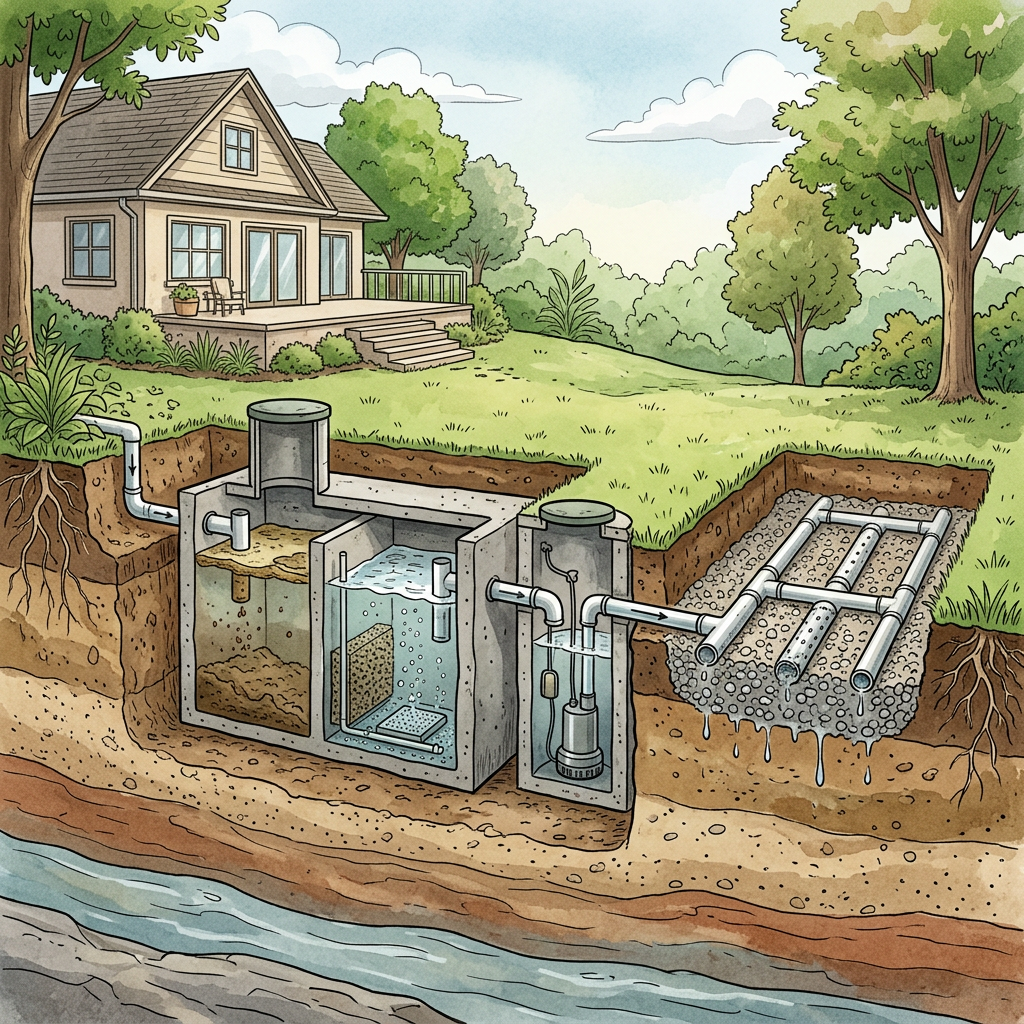
In a typical onsite system, wastewater first enters a primary tank. Heavier solids settle to the bottom as sludge, while oils and floating material form a scum layer near the top. Liquid wastewater flows onward to a treatment area and, in many designs, eventually to a drainfield where soil provides further treatment.
Nitrogen changes form along this path. Organic nitrogen in waste can be converted to ammonia. With oxygen and the right microorganisms, ammonia can be converted to nitrite and then nitrate, a process called nitrification. Nitrate is highly mobile in water, so it may travel through certain soils and groundwater more readily than other forms of nitrogen.
A conventional septic tank is effective at separating solids, but it may not provide sufficient treatment to remove nitrogen in sensitive local conditions. Household demand also matters. A full-time household with frequent laundry, long showers, and multiple occupants generally places a different load on a system than a home used only on weekends.

What Makes Nitrogen-Reducing Systems Different
Nitrogen-reducing designs add treatment steps beyond basic settling. Many use an aerobic stage in which oxygen supports microorganisms that convert ammonia into nitrate. A separate low-oxygen stage may then support denitrification, in which other microorganisms convert nitrate into nitrogen gas that can safely return to the atmosphere.
Because treatment occurs in multiple stages, these systems may include pumps, blowers, timed controls, floats, alarms, and filters. Some depend on electricity, so homeowners should understand what happens during a power outage and how the system signals a malfunction. The right design depends on wastewater flow, lot size, soil characteristics, groundwater depth, available space, and local regulations.
Key Components That Support Nitrogen Removal
No single equipment layout is right for every property, but a nitrogen-focused system may include several of the following components:
- Primary tank: Separates solids and floating material from wastewater.
- Aeration chamber: Introduces oxygen to support aerobic treatment.
- Media or filter area: Provides surface area where beneficial microorganisms can grow.
- Pumps and floats: Move wastewater between stages when gravity flow alone is insufficient.
- Control panel and alarm: Help monitor operating conditions and alert the owner to faults.
- Disinfection equipment: Adds another treatment step when required by the approved design.
- Drainfield: Disperses treated effluent and allows final soil-based treatment.
Choosing, Installing, and Maintaining a System
Start With the Property, Not the Equipment
Before choosing a system, confirm whether the property is in a nitrogen-sensitive area. Review the site evaluation, soil report, seasonal water table, drainage patterns, setbacks, and future access for pumping or repairs. Permits and approval processes vary by state, county, and local health authority, so current requirements should be verified before construction begins.
Compare the expected power use, service needs, alarm features, replacement parts, and availability of trained service providers. A lower initial price does not always mean lower long-term cost. A system that can be inspected, maintained, and repaired without difficulty may offer better value over its useful life.
Schedule Routine Care
Advanced treatment systems usually require more regular attention than simple gravity systems. Follow the approved service plan, arrange inspections at the recommended interval, and have the tank pumped when solids levels warrant it. Service visits may include checking filters, pumps, floats, blowers, access covers, alarms, and control-panel settings.
Keep written records of inspections, pump-outs, repairs, warranties, and test results. Respond promptly to slow drains, sewage odors, wet areas, alarms, or unusually lush grass near the drainfield. Waiting for a backup can turn a manageable issue into a costly repair.
Daily Habits and Common Mistakes
Daily water use and disposal habits affect treatment performance. The EPA recommends steps such as using water efficiently, repairing leaking fixtures, avoiding septic additives, and keeping stormwater away from the system. These practical home water-protection habits can reduce unnecessary loading on an onsite system.
- Repair leaking toilets and faucets as soon as possible.
- Spread laundry loads over several days instead of doing many loads at once.
- Keep grease, wipes, medications, solvents, and hazardous chemicals out of drains.
- Limit garbage disposal use because added solids increase tank loading.
- Direct roof runoff, sump-pump discharge, and stormwater away from the drainfield.
- Plant grass over the drainfield and avoid trees or shrubs with aggressive roots.
- Never drive, park, or store heavy equipment over tanks, pipes, or the drainfield.
- Do not alter approved components or ignore a high-water alarm.
Questions to Ask Before an Upgrade
- What nitrogen-reduction target is the proposed system designed to meet?
- Which permits, inspections, and approvals are required?
- How often will the system need to be inspected and pumped?
- What power, replacement parts, and routine service does it require?
- What happens if the blower, pump, float, or control panel fails?
- Who can provide qualified service after installation?
- Which records should be retained for future owners?
Conclusion
Reducing nitrogen from onsite wastewater begins with a sound site evaluation and an appropriate treatment design. It continues through careful installation, routine maintenance, water-conscious household habits, and quick responses to alarms or warning signs. With those steps in place, homeowners can support reliable wastewater treatment while helping protect groundwater and nearby waterways.
Discover more from The Cameron Journal
Subscribe to get the latest posts sent to your email.




