
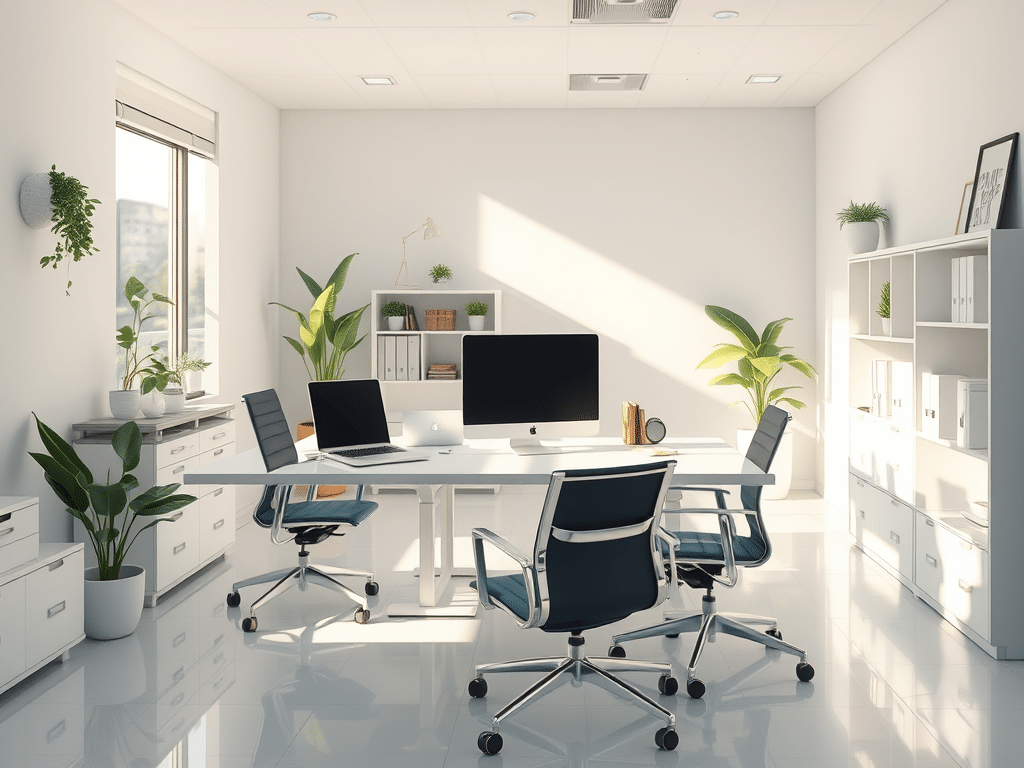
Most advice you’ll read about getting more done still includes a lot about personal discipline. Wake up earlier, plan your day the night before, avoid social media, use the right app. It’s not bad advice, but it does ignore the role of the space around you. Productivity isn’t just about effort, it’s about conditions too. Whether it’s an office or a home workspace, the environment does a lot of the work. And when it isn’t right, even simple tasks take longer than they should.
How the space affects focus
If you sit down somewhere quiet with decent lighting and a clear desk you’ll find that your brain behaves differently. You might stop switching tabs and focus better into the task. It’s not about motivation, it’s more that nothing is pulling your attention away. That’s partly why shared offices and hotdesking can make things harder. Some offices are noisy, some are cluttered and some have lighting that makes it feel like you’re working underground even when it’s sunny outside. These details might not seem like a big deal on their own, but together they do take a toll on how clearly you think and how long you can stick with something.
Why clean space matters
People focus better in clean, organised space, that’s not just a personal preference, it’s something researchers have looked at in detail. One study from Princeton University’s Neuroscience Institute found that clutter in your surroundings competes for your attention, making it harder to concentrate and process information. Put simply, the messier the space, the more your brain has to work just to stay on track. You don’t need to read a study to know that though. Most people have tried working in a room that feels slightly chaotic and ended up avoiding the task altogether. That half finished pile of papers, the dust layer that’s built up along the monitor stand, the rubbish that no one’s emptied; it doesn’t feel like a space where work gets done. You’ll probably start to procrastinate without even realising why. In shared offices, this is often more noticeable as it’s not always clear who’s responsible for keeping things tidy, so people leave things for someone else. Over time, the whole space can feel neglected. That low level mess affects how people behave, they’re less likely to stay on task, more likely to zone out, and less inclined to treat the space with care. That’s why many workplaces now treat cleaning as part of productivity, not just hygiene. Regular commercial cleaning keeps surfaces clear, floors clean, bins emptied, and the environment feeling functional. It’s not about deep-cleaning every day. It’s about setting a baseline that makes it easier for people to focus.
Temperature and light
Temperature causes more problems in offices than almost anything else. If it’s too cold, people are distracted or moving around just to stay comfortable. If it’s too warm, focus drifts and work slows down. Most research shows the ideal range is around 21 or 22 degrees, but many places are set much lower. Usually because someone in charge prefers it that way.
Light is the same. People work better with natural daylight, but a lot of rooms still rely on flickering ceiling bulbs or harsh overhead panels. Artificial light that’s too bright or too dim can cause eye strain and headaches. It also messes with energy levels across the day.
If your workspace has windows, keep them clear. If not, good quality desk lamps or daylight bulbs can help. Small changes like these have more impact than you’d expect.
Simple beats trend, a productive space doesn’t necessarily need to look impressive, it needs to be practical. Clean surfaces, decent light, working ventilation, a chair that doesn’t give you backache. These are the basics, and they matter more than anything else.
A lot of the time, offices try to create something stylish or quirky instead. You end up with unusual furniture, bright colours, or open lounges that look fun but aren’t made for getting work done. Meanwhile the heating doesn’t work properly and the sockets are in the wrong place. It’s easy to focus on what looks good in a photo. But when you spend eight hours a day somewhere, comfort and function matter a lot more.
Habits depend on surroundings
It’s hard to build any routine in a space that isn’t set up for it. If your desk is full of distractions then you’ll more than likely find ways to keep putting things off. If you can’t get comfortable, you’ll keep standing up. If your screen reflects the overhead lights, you’ll avoid using it for long. This isn’t about laziness or a lack of discipline. It’s about friction. When the physical space is awkward, everything takes more energy. And that energy runs out by mid afternoon. At home, people can often fix these problems themselves. In shared offices, it’s a bit harder. But even small changes make a difference. A monitor stand. A desk lamp. A clean surface. Being able to focus for an hour without needing to move.
Shared spaces need shared responsibility
In any shared environment, the condition of the space is always going to affect how people treat it. If the bins are always full and the carpets haven’t been vacuumed in weeks then no one is going to take much pride in their workspace. On the other hand, a well maintained space encourages people to do their part. That’s why cleaning is more than just ticking a box, when it’s done properly, it changes the whole atmosphere. A lot of offices rely on professional cleaning services or hire a commercial janitorial company for this exact reason, the aim isn’t just to keep things tidy. It’s to make the space feel like somewhere that matters.
Good work needs good conditions
People work better when they’re not constantly distracted or uncomfortable. That’s not about pushing harder, it’s about removing what gets in the way. Don’t overlook this as a business owner if you want to improve productivity and do better for your employees.
Discover more from The Cameron Journal
Subscribe to get the latest posts sent to your email.




