Key Takeaways
- System type, sizing, duct condition, and installation quality all influence comfort.
- Heat pumps can provide both cooling and heating with one system.
- Ductless mini-splits can be useful for additions, garages, offices, and stubborn hot rooms.
- A Manual J load calculation is more reliable than choosing equipment by square footage alone.
- Sealed ducts, clean filters, insulation, and shade can reduce strain on HVAC equipment.
Choosing an HVAC system for a hot-climate home involves more than selecting an air conditioner with enough cooling capacity. Home size, insulation, window placement, humidity, ductwork, energy use, and daily routines can all affect how well a system performs. A properly sized and configured setup can provide more consistent indoor temperatures while supporting reasonable operating costs and long-term comfort.
Homeowners should also consider maintenance needs, airflow, zoning, and the condition of existing equipment before making a decision. Working with a qualified provider such as Dynamic Comfort can help homeowners evaluate these factors and determine which HVAC setup best fits their home’s layout and local climate. Taking time to compare system options and installation requirements can make the investment more practical and help maintain a comfortable indoor environment throughout hot weather.
Why Hot Climates Put More Stress On HVAC Systems
Long cooling seasons, intense sun, hot attics, and high outdoor temperatures can keep an air conditioner running for extended periods. Rooms with west-facing windows or limited attic insulation may gain more heat than shaded areas. Dust, pollen, and smoke can also load filters more quickly, reducing airflow when they are not checked regularly.
Not every comfort problem means the air conditioner has failed. Air leaks, dirty coils, blocked filters, weak airflow, inadequate insulation, and poorly balanced ducts can all cause warm rooms or higher utility bills. Addressing these underlying conditions can improve the performance of an existing system and help prevent repeat problems.
The Main HVAC Options
Central Air Conditioning
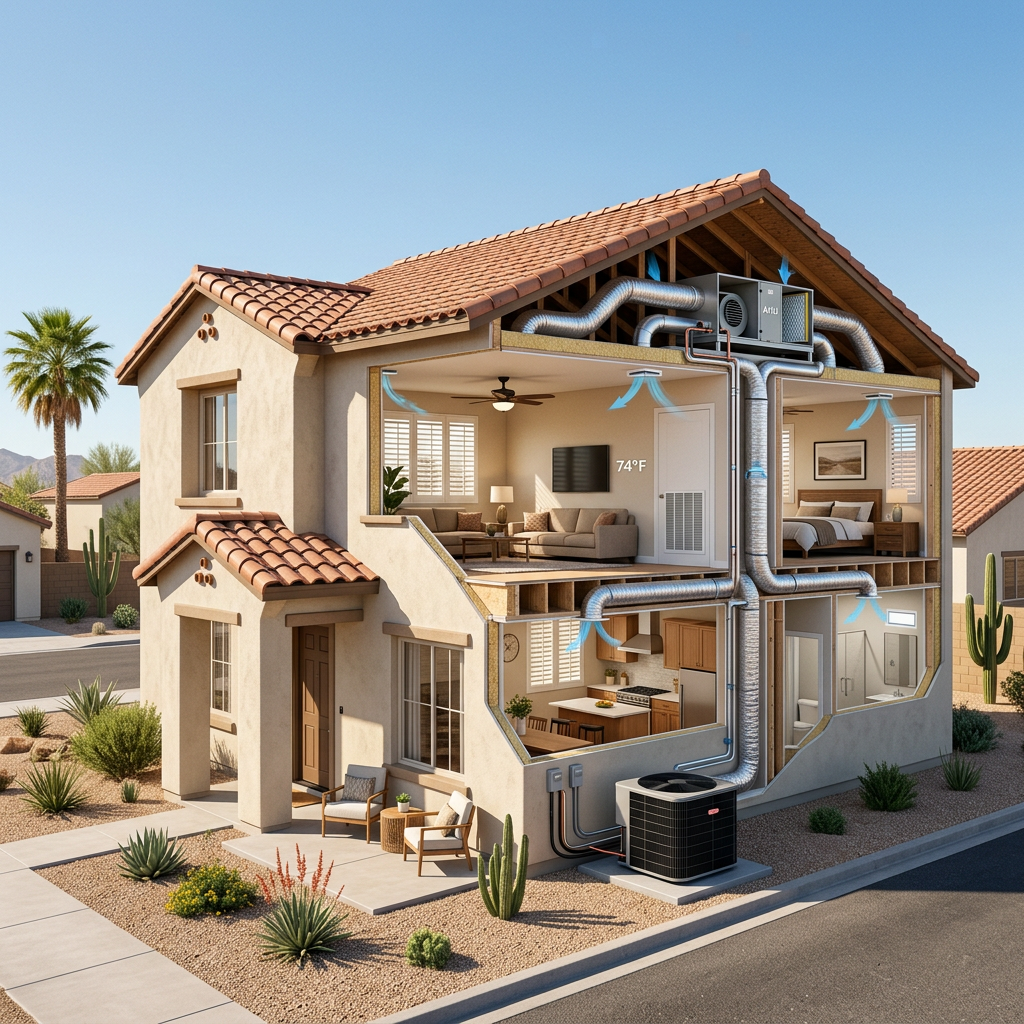
Central air conditioning remains a practical whole-home option where usable ductwork is already in place. It distributes conditioned air through supply registers and returns, but its success depends on ducts that are properly sized, sealed, insulated, and balanced.
Air-Source Heat Pumps
Air-source heat pumps cool a home by moving indoor heat outdoors, then reverse that process when heating is needed. The Department of Energy explains that heat pumps transfer heat rather than create it, which is why they can provide both cooling and heating from the same equipment.
When a system stops producing cool air, makes unusual noises, cycles too short, or delivers weak airflow, timely AC repair services can help determine whether the issue involves airflow, controls, drainage, electrical components, or the refrigeration system before a replacement decision is made.
Packaged Systems
Packaged systems combine major components into a single outdoor cabinet. They may suit homes with limited indoor mechanical space or properties designed around rooftop or ground-level packaged equipment. As with split systems, airflow and correct sizing still determine much of the final comfort.

When A Heat Pump Makes Sense
A heat pump can be a strong option for homeowners who want one system for heating and cooling, have mild winters, or are replacing both an older air conditioner and heating equipment. The operating cost comparison depends on local utility rates, the efficiency of the current equipment, the selected model, and the quality of the new system’s installation. Heat pumps can be ducted or ductless, so the home’s existing distribution system should guide the design.
Where Ductless Mini-Splits Work Best
Ductless mini-splits are often useful in room additions, converted garages, guest rooms, home offices, detached workshops, and older homes without practical duct routes. ENERGY STAR identifies additions, outbuildings, and homes without ductwork, as well as persistent hot or cold spots, as common ductless applications.
These systems offer independent zone control and reduce dependence on long duct runs. However, indoor wall or ceiling units remain visible, filters need routine cleaning, and multi-zone designs need careful planning. A single indoor head also cannot reliably condition every closed-off room around it.
Why Proper Sizing Comes First
Bigger is not always better. An oversized system may cool the thermostat area quickly and cycle on and off too often, while an undersized system may run for long periods without meeting demand. A contractor should evaluate window direction, insulation, ceiling height, air leakage, occupancy, appliances, local design temperatures, and duct capacity.
A Manual J load calculation helps estimate the heating and cooling needs of the specific home. Square footage alone cannot account for attic conditions, glass exposure, room layout, or the amount of heat entering through the building envelope.
How Ductwork Affects Comfort And Energy Use
Leaky, crushed, undersized, or poorly insulated ducts can restrict airflow and allow conditioned air to pick up heat before it reaches living spaces. During a major HVAC project, ask whether the ducts will be inspected, sealed, insulated, and balanced. A high-efficiency outdoor unit cannot fully overcome serious distribution problems.
Which Efficiency Ratings Matter
- SEER2: A seasonal cooling efficiency rating. Higher ratings may reduce electricity use, particularly where cooling demand is substantial.
- EER2: A useful measure of efficiency under steady, high-demand cooling conditions.
- HSPF2: A heat-pump heating efficiency rating that matters most when the system supplies heat for much of the year.
Ratings only tell part of the story. Correct equipment matching, refrigerant charge, airflow, controls, drainage, and startup testing are essential for real-world performance.
Indoor Air Quality In Warm Regions
Because homes are often closed up during long cooling seasons, filtration and ventilation deserve attention. Replace or clean filters on schedule, keep return grilles clear, and avoid selecting a highly restrictive filter unless you confirm the system can maintain proper airflow. Source control also matters: reduce dust, smoke, strong odors, and chemical pollutants at the source.
What A Quality Installation And Maintenance Plan Should Include
- Review the home, existing equipment, ductwork, electrical service, and drainage.
- Complete a load calculation and match compatible indoor and outdoor components.
- Verify airflow, refrigerant charge, thermostat operation, and safety controls at startup.
- Explain filter access, routine cleaning, and recommended professional service intervals.
Between service visits, homeowners should check filters, keep outdoor equipment clear of debris, watch for water near indoor equipment, and pay attention to new noises, odors, or changes in airflow. Scheduling maintenance before peak cooling weather can help uncover developing issues.
A Step-By-Step HVAC Decision Guide
- List current concerns, including uneven temperatures, repair frequency, noise, and rising energy use.
- Review additions, garages, closed rooms, attic conditions, windows, and areas without ducts.
- Compare central air, heat pumps, ductless systems, and packaged equipment based on the home’s needs.
- Request a Manual J calculation and written proposals that include model numbers, efficiency ratings, warranty terms, permit information, and ductwork scope.
- Confirm that commissioning, drainage checks, airflow verification, and homeowner instruction are included.
Final Thoughts
The right HVAC setup is not necessarily the most expensive option. It is the one that fits the home, climate, ductwork, budget, and everyday comfort needs. Careful sizing, sound installation, practical maintenance, and attention to the building envelope can help a well-chosen system deliver more dependable comfort in hot weather.
Discover more from The Cameron Journal
Subscribe to get the latest posts sent to your email.