Table Of Contents
- What Myrtle Beach Sellers Face In 2026
- How A Cash Offer Works
- How A Traditional Listing Works
- Comparing Sale Timelines
- Why Property Condition Matters
- When Each Option May Fit
- How To Review A Cash Buyer
- A Simple Seller Checklist
Selling a home in Myrtle Beach is not only about choosing the highest number on an offer. The best route depends on your deadline, the home’s condition, your expected costs, and how much certainty you need before moving forward.
For owners facing a quick relocation, inherited property, major repairs, or a changing financial situation, it can help to explore options to sell property fast in Myrtle Beach, SC, while also considering what a traditional listing could bring. Comparing both paths can make the decision clearer.
What Myrtle Beach Sellers Face In 2026
Local market conditions can influence how quickly a home sells and how much negotiation may be required. Buyer demand, available inventory, mortgage rates, seasonality, and the number of comparable homes for sale all matter. Still, broad market averages cannot predict the result for one particular property.
Homeowners should avoid focusing only on a listing price or a cash offer amount. A higher offer can lose its advantage if it requires expensive repairs, seller concessions, extended holding costs, or a delayed closing. A lower offer may be worth considering when it removes costs and uncertainty that would otherwise fall on the seller.
Homeowners researching their options can find additional local information at https://www.theturnerhometeam.com/. Any estimate should be viewed alongside the property’s location, condition, ownership situation, and the seller’s personal timeline.
How A Cash Offer Works
A cash offer means the buyer intends to purchase the property without relying on mortgage approval for the purchase funds. That can reduce the risk of a loan denial late in the transaction, but it does not eliminate the need for a proper contract, title work, disclosures, and careful document review.

A typical cash sale often follows these steps:
- The seller provides basic details about the home, its condition, and the desired closing date.
- The buyer reviews the property, nearby sales, repair needs, and title-related information.
- The buyer submits a written offer outlining price, deposit, contingencies, and closing terms.
- The seller compares the offer with other available options and decides whether to accept, reject, or negotiate.
- A title company or attorney prepares for closing and confirms that ownership can be transferred properly.
Cash does not automatically mean “as is,” nor does it guarantee an immediate closing. The agreement should clearly state inspection rights, repair expectations, fees, and the planned closing date.
How A Traditional Listing Works
A traditional listing usually begins with setting an asking price based on recent comparable sales. The seller may clean, repair, stage, and photograph the property before it is marketed to a broad group of buyers through local listing channels.
Offers can come from cash buyers or buyers using financing. A financed transaction commonly includes inspections, an appraisal, lender underwriting, and negotiations over repair requests or seller credits. This route may produce stronger competition for a well-prepared home, but it can also require more time, showings, and flexibility.
Comparing Sale Timelines
Each path has different timing considerations:
- Buyer financing: Cash sales generally do not depend on a mortgage. Traditional sales often do.
- Showings: A direct cash transaction may involve limited access to the home. A listing can require repeated showings and open houses.
- Appraisals: Mortgage buyers commonly need an appraisal. A cash buyer may choose not to require one.
- Closing date: Cash closings can sometimes be scheduled more flexibly, while loan processing can add time to a traditional sale.
Either route can be delayed by liens, probate, unpaid taxes, title defects, missing documents, or disagreements about inspections. Sellers should gather important records early and avoid assuming that cash removes every possible obstacle.
Why Property Condition Matters
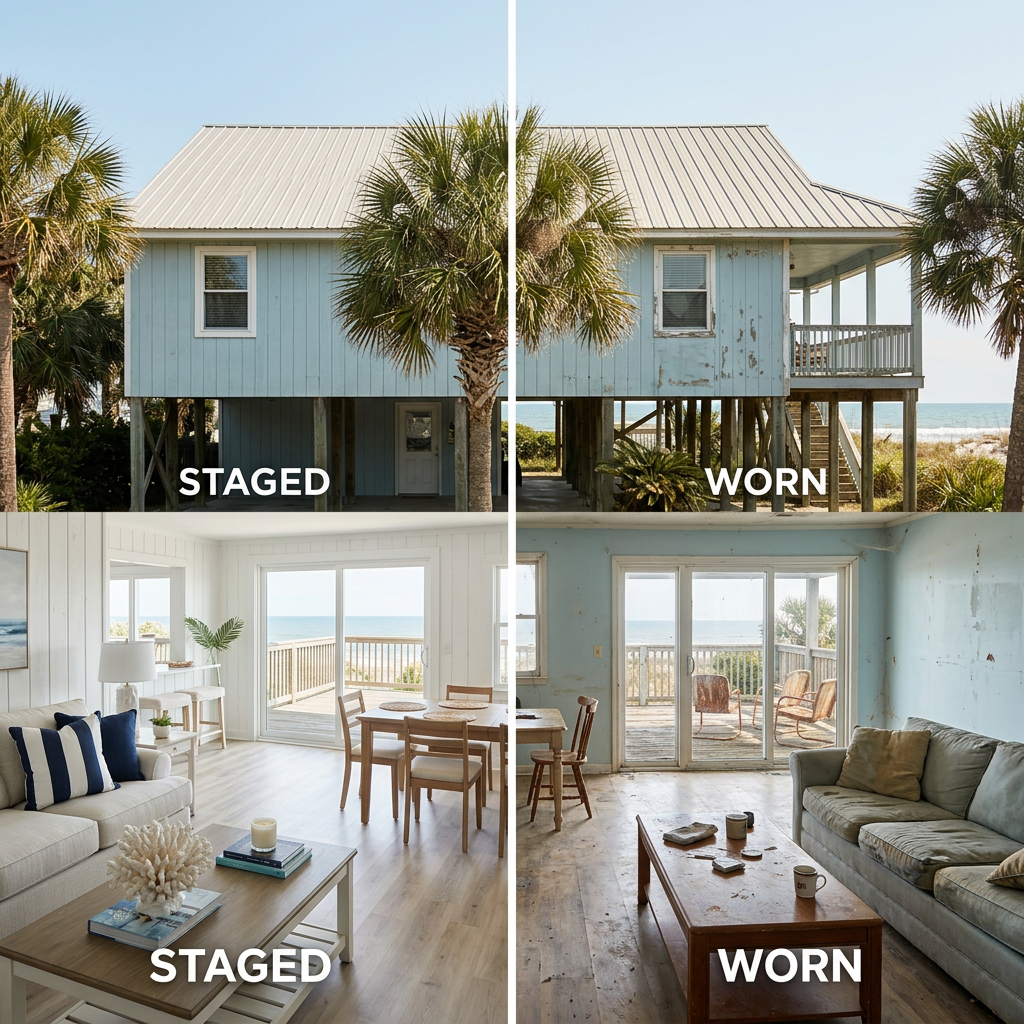
Condition can strongly influence which route makes sense. Roof concerns, water damage, mold, foundation issues, outdated kitchens, storm damage, deferred maintenance, and large amounts of belongings can make a conventional listing more difficult. Tenant-occupied, inherited, vacant, or probate properties may also require added coordination.
Listing a property in poor condition may still be appropriate, but the seller should estimate the likely cost and time required to prepare it. A direct sale can reduce that work, though the offer should be weighed against realistic repair expenses and the cost of keeping the property longer.
When Each Option May Fit
A Traditional Listing May Fit When:
- The home is move-in ready and likely to appeal to retail buyers.
- The seller has time for preparation, showings, and negotiations.
- Comparable sales support a strong asking price.
- Broad buyer exposure is a primary goal.
A Cash Sale May Fit When:
- The home needs substantial repairs or cleanup.
- The seller has a firm moving or financial deadline.
- The property is inherited, vacant, tenant-occupied, or hard to manage.
- The seller values speed, fewer showings, and reduced financing uncertainty.
How To Review A Cash Buyer
Before accepting a cash offer, ask for proof of available funds and request a written agreement with clear terms. Confirm the buyer’s legal name, whether the contract can be assigned, who will handle the title search, and whether any fees or repair deductions will be taken from the sale proceeds.
Do not sign under pressure. A complete agreement should identify the purchase price, earnest-money deposit, inspection terms, closing date, cancellation rights, and responsibilities of each party. Independent legal advice can be valuable for transactions involving foreclosure, divorce, probate, tenants, liens, or tax concerns.
A Simple Seller Checklist
- Write down your ideal closing date and your latest acceptable date.
- Gather mortgage statements, tax information, title records, and repair documents.
- List the urgent repairs and estimate their cost.
- Request a market analysis or independent valuation.
- Compare at least one traditional sale estimate with each cash offer.
- Calculate expected net proceeds for every option.
- Read the contract carefully before accepting anything.
- Use a trusted title company or attorney for closing.
The Consumer Financial Protection Bureau offers guidance on preparing for a real estate closing, including reviewing documents and watching for closing-related scams. Taking time to verify every detail can protect the seller regardless of which path is chosen.
Final Thoughts
Neither a cash offer nor a traditional listing is automatically the better choice. The right decision depends on the property’s condition, the seller’s financial goals, the desired closing timeline, and the true amount expected after costs. A careful comparison of net proceeds, terms, and certainty can help Myrtle Beach homeowners choose a path that fits their situation.
Discover more from The Cameron Journal
Subscribe to get the latest posts sent to your email.