
Key Takeaways
- Sydney homeowners should confirm a benchtop’s composition and suitability before ordering, especially following Australia’s engineered stone ban.
- Euro Marble offers natural stone options, including marble, granite, onyx, limestone, quartzite, and travertine, along with fabrication and installation services.
- Choose a surface based on daily use, maintenance needs, heat tolerance, stain resistance, and repair requirements.
- View full slabs where possible to assess natural patterns, colors, and vein placement.
- Confirm edges, cut-outs, joins, overhangs, and installation requirements before fabrication.
- Professional handling is essential when cutting or modifying stone and other materials that may contain crystalline silica.
- Compare the full project cost, including delivery, installation, sealing, maintenance, and potential repairs.
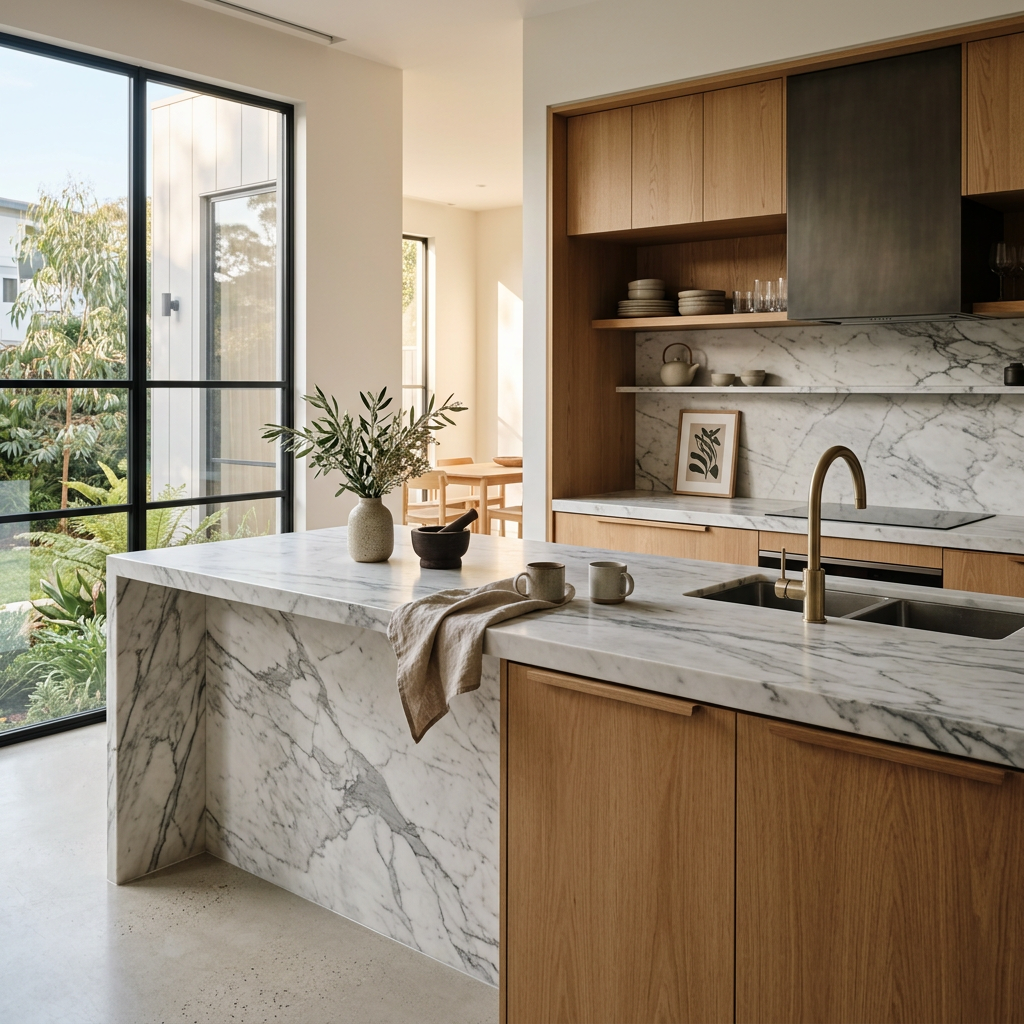
Choosing a new kitchen benchtop in Sydney now involves more than comparing colors and price tags. Since the rules around engineered stone changed, homeowners need to consider product composition, safe fabrication, daily maintenance, and how a surface will suit their household for years to come. For projects that call for specialist guidance, natural stone suppliers Sydney such as Euro Marble can provide useful perspective. Euro Marble is a Sydney stone supplier and fabricator offering materials including marble, granite, onyx, limestone, quartzite and travertine, alongside design, engineering, fabrication and installation services. Whether you are renovating a terrace in the Inner West, updating a coastal kitchen near the Eastern Suburbs or planning a family-focused space in the Hills District, the right benchtop should support the way you cook, clean and entertain. A beautiful surface is important, but it also needs to work with the practical demands of your home.
Why Benchtop Choices Look Different
Australia’s engineered stone ban has reshaped the kitchen renovation market. From 1 July 2024, the manufacture, supply, processing and installation of covered engineered stone benchtops, panels and slabs became prohibited. The definition is specific, so a stone-look product should never be assumed to be permitted or prohibited based on appearance alone. Natural stone remains available, and porcelain or sintered stone products may fall outside the definition when they meet the relevant criteria, including the resin exclusions. Before paying a deposit, ask for the exact product name, technical information, and composition. The current engineered stone guidance explains the national definition and exclusions in detail.
Start with the Way Your Kitchen Will Be Used
Begin with real-life use rather than a mood board. Consider how often you cook from scratch, whether children use the island for homework, how frequently you entertain, and whether the benchtop will receive hot pans, wine spills, knives, or heavy cookware. A busy family may decide that a forgiving, lower-maintenance finish is more valuable than a highly delicate pale surface. Conversely, a household that loves the organic character of stone and is comfortable with regular care may happily choose a more expressive material. There is no universal best option, only the best fit for the kitchen’s daily demands.
Natural Stone for Character and Variation
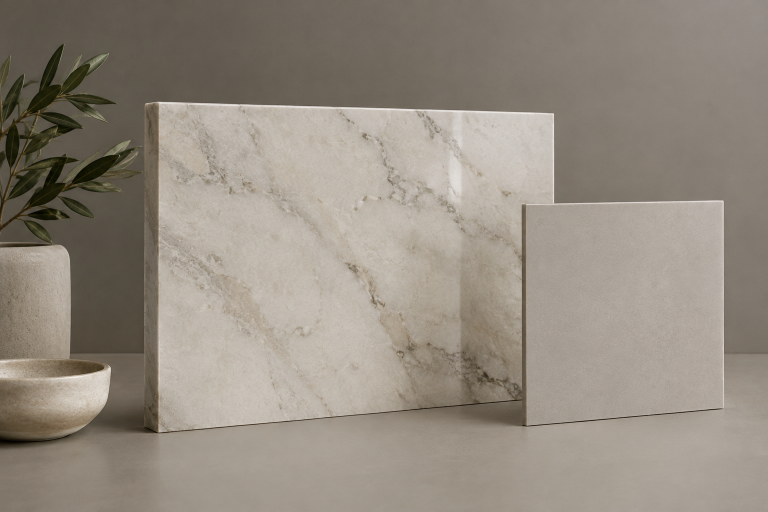
Marble, granite, quartzite, limestone and travertine all bring a different look and performance profile. Because geological processes form natural stone, slabs can vary in veining, movement, tone and markings. That individuality is often the appeal, especially for a Sydney kitchen island intended to become a focal point. Marble, limestone and travertine generally require more careful handling around acidic foods and drinks, while granite and quartzite are often chosen for their hard-wearing qualities. Sealing may be recommended depending on the stone and finish, and daily cleaning should follow the supplier’s care advice. Avoid harsh cleaners and do not assume every natural stone reacts the same way.
Why full-slab viewing matters
A small sample cannot show the complete pattern of a natural slab. Viewing the full slab helps you assess color variation and decide where the most dramatic veining should sit, particularly around a large island, splashback, or waterfall end.
Porcelain and Sintered Stone Options
Porcelain and sintered stone are now prominent choices for homeowners seeking a clean, contemporary finish. They are commonly valued for their low porosity, heat resistance, and a wide selection of colors and stone-inspired patterns. However, product composition still matters. A material that looks like stone is not necessarily the same type of product as another stone-look slab. Large-format, thinner materials require careful handling from the template through to cutting, transport, and installation. Support beneath overhangs, precise cut-outs, and correct installation methods are important considerations. Ask the supplier how the specific product will be fabricated and supported in your design.
Other Surfaces Worth Comparing
- Timber: Adds warmth and can often be refinished, but needs protection from standing water and regular maintenance.
- Stainless steel: Offers a hygienic, professional-kitchen feel and handles heat well, but can show scratches and fingerprints.
- Recycled glass: Can create a distinctive finish with recycled content, but pattern and chip resistance vary by product.
- Acrylic-based surfaces: Allow integrated-looking details and repair options in some cases, but may be less tolerant of high heat.
- Laminate: Is available in many designs and can suit tighter budgets, but edges and joints need protection from moisture.
Compare the entire life cycle of the surface, including cleaning, repairs, refinishing, and replacement, rather than focusing only on the initial quote.
Match the Material to the Kitchen Design
Your benchtop should work with cabinetry, flooring, handles, lighting and splashbacks. A quiet surface can balance detailed joinery or patterned floor tiles, while strong veining can give a simple island a sculptural presence. If you want book-matching, splashback continuity or a waterfall end, raise it early in the design process. Bold slabs may require more material to keep veins flowing in the preferred direction. Planning before fabrication also helps identify where joins will be least noticeable and whether the layout makes the best use of the chosen slab.
Edges, Cut-Outs and Support Are Part of the Decision
Details can change both the appearance and cost of a benchtop. An eased or pencil-round edge gives a simple, contemporary finish, while beveled, bullnose, mitered, and waterfall treatments can create a more defined look. The selected edge should be comfortable to use, easy to clean and appropriate for the material. Confirm sink and cooktop cut-outs, tap holes, drainage grooves, overhangs, joins and island support before the slab is cut. Late changes can be difficult or impossible once fabrication has begun.
Questions to Ask Before Ordering
- What is the exact product name and composition?
- Is it suitable for the intended kitchen use and current requirements?
- What cleaning, sealing, or maintenance does it need? Beveled, bullnose, mitered
- How many slabs are required, and where will joins be placed?
- Which edge profile, cut-outs and installation items are included?
- What warranty, repair support, and aftercare information are available?
Safety Still Matters
A permitted material still needs professional handling. Some stone and alternative materials can contain crystalline silica, so cutting, drilling, grinding and polishing must be managed appropriately by experienced trades. Homeowners should not attempt DIY alterations to stone benchtops. This also applies to older engineered stone installations, where limited repair, modification, or removal work requires suitable controls.
A Simple Final Checklist
- Set a realistic budget and identify the kitchen’s daily demands.
- Confirm the product’s composition and suitability before ordering.
- Compare maintenance, heat tolerance, stain resistance and repair needs.
- View full slabs where possible, especially for natural stone.
- Approve the layout, vein direction, joins, edges and cut-outs in writing.
- Review the full scope of delivery, installation, sealing and disposal before fabrication starts.
The strongest benchtop decision balances style with practical use, safety and skilled installation. By asking clear questions early, Sydney homeowners can choose a surface that suits their design vision and remains enjoyable long after the renovation is complete.
Conclusion
Choosing the right kitchen benchtop means balancing appearance, durability, maintenance, safety, and budget. By understanding the differences between natural stone and alternative surfaces, Sydney homeowners can select a material that suits their kitchen design and everyday needs. Euro Marble offers a range of stone materials and services to support the selection, fabrication, and installation process. Before committing, confirm the product’s composition, review care requirements, and finalize details such as joins, edges, and cut-outs. Careful planning and professional installation can help create a functional, attractive benchtop that remains suitable for the household over time.
Discover more from The Cameron Journal
Subscribe to get the latest posts sent to your email.




