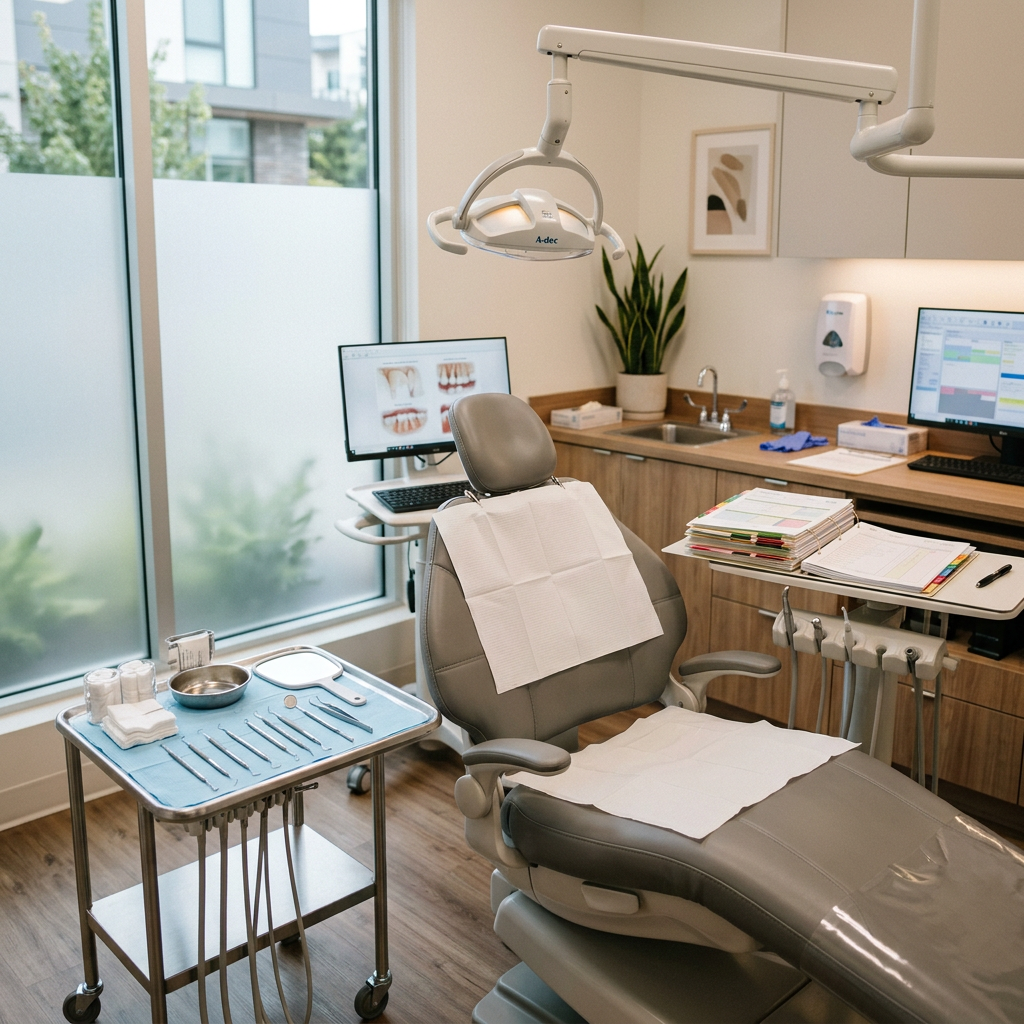
If you’ve just been told to see a periodontist, it’s normal to assume the worst. Many first-time patients picture surgery on day one and a lecture about brushing. The reality is usually calmer: the first visit is diagnostic, treatment rarely happens that day, and catching problems early can help keep surgery off the table.
What a periodontist actually does
A periodontist is a dentist who has completed about three extra years of accredited specialist training in gum disease and dental implants. That training focuses on the tissues holding teeth in place, namely the gums and bone. It’s dentistry at specialist depth. While a general dentist handles check-ups, fillings, crowns and early gum inflammation, a periodontist works mainly with complex gum and implant care.
Think of it as a division of labour. Your general dentist can treat gingivitis, the early and reversible form in which gums bleed but no bone has been lost. If inflammation has moved deeper and started damaging bone, known as periodontitis, your dentist may suggest a specialist opinion. This usually comes as a referral, although most practices let you book directly if you have concerns.
A periodontist also places dental implants and looks after the gum and bone around them. Healthy surrounding tissue matters as much as the implant itself. You won’t lose your general dentist during this process. After specialist treatment, you return to your dentist for routine care while the periodontist and dental hygienist share the gum maintenance.
Many people arrive thinking they did something wrong. You didn’t. Gum disease is common, develops slowly and can be easy to miss when life is busy.
Signs you need that first visit
You don’t need to be in pain to need an appointment. Gums can break down quietly for years without a toothache to warn you.
Bleeding when you brush or floss is the most common early warning sign. Healthy gums don’t bleed with gentle cleaning. If you see pink in the sink most days, it may indicate gingivitis or early periodontitis. Don’t stop cleaning because of it. Keep things gentle and arrange a check.
Look for gums that seem lower than they used to be, with more tooth showing or roots that feel sensitive to cold. This is gum recession, although it doesn’t automatically mean you’ll need graft surgery. It means the seal around the tooth has slipped and should be measured. Photos from a year or two ago may help you spot a change.
Persistent bad breath is another reason people book. This means halitosis that doesn’t improve after brushing, tongue cleaning and drinking water. It may come from deep pockets where bacteria collect beyond the reach of a toothbrush. It can feel awkward to mention, but dental teams discuss it regularly and won’t judge you.
Loose teeth are never normal.
If a tooth feels mobile, or your bite feels different when you close, don’t wait. Mobility means the supporting bone has reduced. Changes in how teeth fit together can indicate bite trauma, where heavy contact on one or two teeth speeds up breakdown, or teeth may have drifted as bone thinned. A family history of early tooth loss or dentures also raises your risk, so mention it even if your gums currently look fine.
How to find the right specialist
Knowing you need help and finding the right person aren’t the same thing. Look for a practice that does this work every day, explains it plainly and allows time for questions.
Check for accredited specialist training in periodontics and a regular caseload covering gum treatment and implants. A team in which the periodontist works with a dental hygienist for maintenance is a good sign. Clear imaging and charting should be standard, along with a written plan and fees. You shouldn’t feel rushed into surgery at the first meeting.
Location and follow-up matter more than many people expect. Gum care involves review visits, so choose somewhere you can return to without stress. Once you need specialist input, find a practice where you feel heard. Patients in the area often start with periodontists melbourne when looking for a credentialed team for an initial assessment.
Ask how the practice supports anxious patients when you call. Numbing options, breaks during probing and a frank conversation about cost can tell you a lot. If the front desk can’t answer basic questions about visit length and what to bring, consider looking elsewhere.
What happens at your first appointment
The first appointment is about gathering facts rather than providing treatment. Allow 60 to 90 minutes, with most of that time spent talking and measuring. You can eat beforehand and drive yourself home afterwards. The examination shouldn’t leave you numb or sore for hours.
It starts with your health history. Expect questions about diabetes and blood-sugar control, heart conditions, smoking, pregnancy and medications that dry the mouth or thin the blood. These details affect how gums heal and how care is planned. Bring a list of prescriptions and mention any health changes since your last dental visit.
Then comes periodontal charting, when you’ll hear numbers called out. Using a thin probe, the clinician gently measures the groove between each tooth and gum at six points per tooth. They also record recession, plaque levels, bleeding points and tooth mobility. It should feel like pressure rather than a jab, and they can pause if an area is tender. The resulting full-mouth map allows the disease to be staged accurately.
X-rays come next and are considered alongside the probing results. Dental radiographs show bone height around roots, hidden infection and calculus below the gum line. Probing shows current pocket depth and inflammation, while X-rays reveal bone lost over time. Both are needed for an accurate picture. Most practices also screen the cheeks, tongue, floor of the mouth and throat for oral cancer during the first examination.
You should leave with a plain-language summary. It should explain the current stage of your gum health, whether the issue is gingivitis or periodontitis and which path makes sense next. There should be no drills, surgery or pressure to decide immediately. Taking time to think or speak with your dentist is normal.
How to read your probe numbers and X-rays
Those numbers aren’t grades. They are millimetre readings of pocket depth, and pocket depth is the metric that drives decisions about the next steps.
Healthy grooves usually measure 1 to 3 mm without bleeding. A 4 mm reading with bleeding suggests inflammation has created space where plaque can collect. Readings of 5 mm and above indicate disease in areas where home brushing can’t reach the pocket base. One deep spot doesn’t define your whole mouth. The periodontist considers the overall pattern alongside bleeding, recession and bone levels.
X-rays provide the history. In a healthy film, bone sits high between teeth and has crisp peaks. With periodontitis, these peaks may look flattened or scooped out, and more root length may be exposed. Dark areas around root tips can indicate infection from another source requiring a dentist’s input. Heavy contact on certain teeth may also cause widened ligament spaces or unusual wear associated with occlusion stress.
Bite trauma deserves attention because first-time patients rarely hear about it. Teeth are designed to share the load. If one tooth hits first or slides sideways under force, its surrounding ligament and bone take extra strain. The strain doesn’t cause infection by itself, but it can accelerate breakdown where plaque is already present. Small bite adjustments are sometimes included in treatment for this reason.
Don’t panic if a few numbers sound high. Staging is about gaining control. A clear map allows treatment to target the worst sites while stable areas remain on maintenance.
What treatment can look like
Treatment ranges from light-touch care to surgery, and most new patients begin with the less invasive options. The aim is to calm infection, reduce pocket depth and make home care effective again.
It starts with home care and professional cleaning above the gum line. This includes daily interdental cleaning alongside brushing, with technique changes suited to your hands and teeth. For many adults, interdental brushes clean wider spaces more effectively than string floss alone, while picks can help around implants. Your hygienist can size them and demonstrate how to use them without damaging your gums.
If pockets persist, the standard next step is scaling and root planing. This is deep cleaning under local anaesthetic, during which hard deposits are removed and root surfaces smoothed so the gums can reattach. Although people often expect pain, with numbing it is usually experienced as pressure and vibration. It may be paired with antimicrobial therapy, such as a short course of medicated rinse or a local antibiotic placed in a stubborn pocket. Healing is checked after six to eight weeks to see which sites have tightened.
Surgical choices are available for sites that don’t respond. Flap surgery lifts the gum to allow direct cleaning and reshaping where instruments can’t reach. Bone grafting and regeneration techniques can rebuild some defects using donor material and membranes that hold space for new bone, while gum grafts can cover exposed roots and thicken thin tissue. Laser periodontal therapy, often called LANAP, is a less invasive option offered by some practices for selected cases and may involve less downtime. A plan can combine four types of care: cleaning, deep cleaning, grafting and implant support, with surgery used only where measurements show it is needed.
Gum health doesn’t exist in isolation. People with diabetes may find blood-sugar control harder when gum inflammation is active. Studies also show links with cardiovascular risk and pregnancy complications. Severe periodontal disease affects about 19% of the adult population worldwide (WHO). This isn’t meant to scare you. It shows that gum disease is a common inflammatory condition rather than a personal failure, and managing it benefits more than your smile.
What to ask and what comes next
Leave your consultation with written answers. Good questions keep the plan clear and reduce the chance of surprises later.
Ask what stage your gum disease has reached and whether it remains gingivitis or has become periodontitis. Find out whether non-surgical treatment comes first and how many visits it may require. Ask about long-term maintenance and how responsibilities are divided between your dentist, periodontist and hygienist. Request item codes, check what your dental insurance covers and ask what happens if treatment is paused or delayed.
Expect maintenance visits to be more frequent than a normal recall. Periodontal patients often need professional cleaning every 3 to 4 months rather than the standard 6-month interval. That schedule isn’t simply upselling. Plaque hardens quickly in deep grooves, and three months is about how long harmful colonies take to rebuild where pockets used to be.
Home habits contribute heavily to the result. Daily interdental cleaning is non-negotiable, and bleeding that returns after settling is a reason to call rather than wait for the next recall. Smoking slows healing in a way no rinse can offset, so mention it if you smoke and want help cutting back. If you grind your teeth at night, say so, as a guard can protect your gums and restorations.
There’s no pass or fail. Periodontal disease is controlled, not cured, which may sound blunt but is good news. Control means no bleeding, stable numbers, fresh breath and teeth that remain in place with consistent care.
Seeing a periodontist for the first time is less about bravery and more about getting a clear map. Once you understand your numbers, treatment options and maintenance schedule, the appointment usually feels much less daunting.
Discover more from The Cameron Journal
Subscribe to get the latest posts sent to your email.