
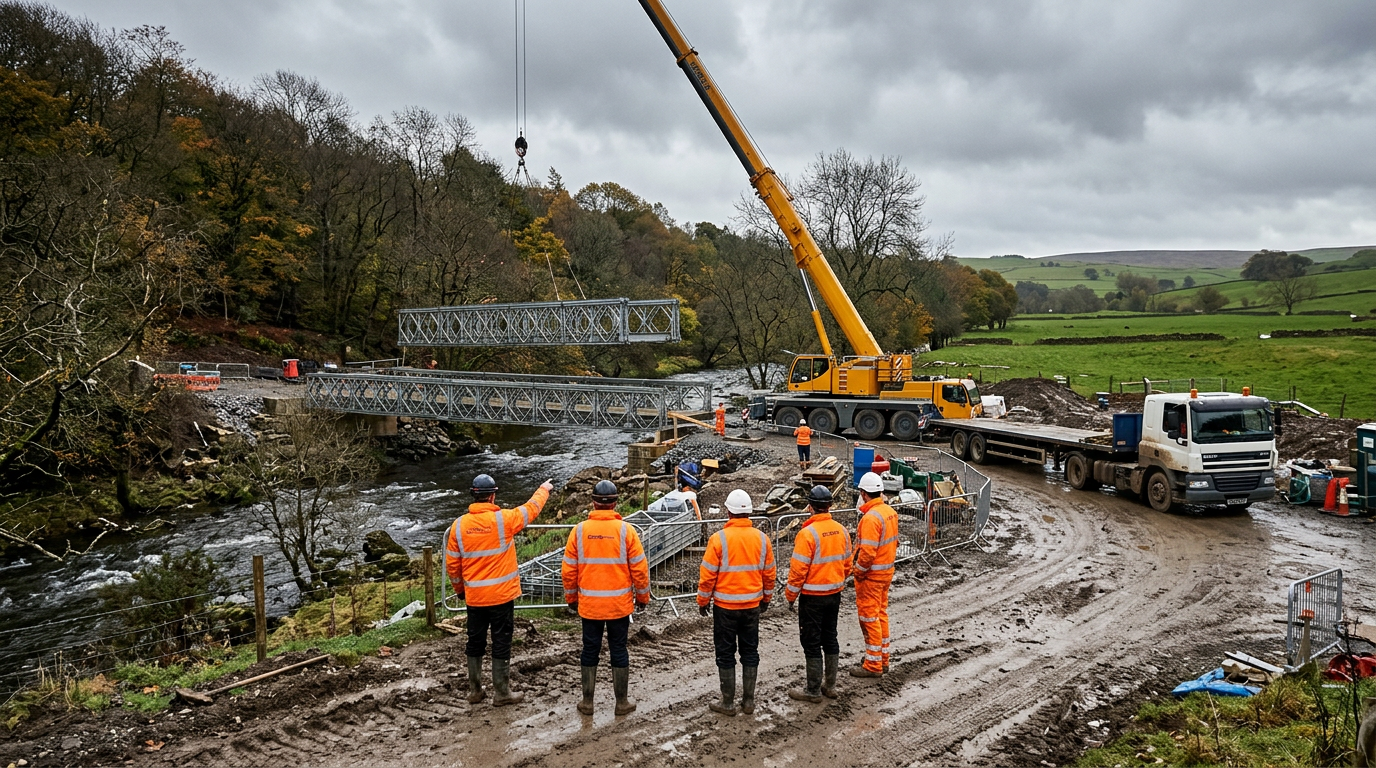
A temporary bridge hire sits within temporary works, so the paperwork matters as much as the steel. Gathering the right information before the order is placed helps avoid delays and disputes later. This checklist runs through what to settle, in roughly the order a site manager will need it.
Start with the users and the vehicles
The engineer who designs the scheme can only work from the information supplied. The first job is a precise description of what will cross. List every vehicle type, the heaviest gross weights, axle configurations and how often each will use the bridge. Include the largest items of plant, such as 360-degree excavators or mobile cranes, and flag any abnormal loads.
With those figures, the engineer can assess the loading for the proposed crossing. The site manager supplies the data; sizing the structure is the engineer’s job. If the traffic changes mid-project, tell the provider before anything new crosses. The original assessment may no longer cover it.
Record the physical constraints at the same time: the clear span needed, deck width, clearance over water and around existing services, and whether pedestrians need a segregated route.
Pull the site information together early
The foundations and abutments carry the whole scheme, and their design depends on ground conditions. Commission a geotechnical survey early and give the provider’s engineer full access to the results. The design itself, whether concrete pads, steel grillages, piles or a combination, belongs with the engineer.
Note anything that constrains the work: buried services, overhead lines, soft verges, trees and the state of the banks. Photographs and a simple marked-up plan can save a return visit later.
If the crossing spans a watercourse, identify early which authority is responsible for that site and watercourse, as this varies across the UK, and confirm any consent it requires before scheduling the work. Applications of this kind can take weeks. Raise the question at the front of the program.
Confirm delivery access and the lift
Modular panel bridges arrive on articulated vehicles, and the components are heavy. Walk the delivery route and confirm gate widths, turning space and whether the ground will carry a loaded truck. If it won’t, plan the hardstanding before the delivery date is fixed.
Installation usually involves a mobile crane working from firm, level ground under a documented lift plan. Settle who provides the craneage and who plans the lift, because both need booking well ahead. If the bridge is to be assembled and lifted in one operation, leave room for the assembly near the final position.
Settle the split of responsibilities in writing
A quoted price can cover very different scopes. Each responsibility needs a name against it before signing. Confirm who produces the design, who arranges any independent design check, who applies for consents and who builds the abutments. Also settle who installs the bridge and who inspects and maintains it during the hire.
When requesting quotes for temporary bridge rental, ask each provider to state in writing which of these items sits inside the quoted figure. A response time for call-outs is worth fixing at the same stage, since a bridge under live traffic can’t wait for a diary to open.
The hire terms deserve the same attention. A short minimum hire with a fixed extension rate favors the customer, while automatic renewal at a revised rate favors the provider. Both are normal commercial terms; the point is to know which version is on the table and to agree the notice needed to off-hire.
Agree the program and the handover
Build the program backward from the date the crossing is needed. Allow for design time, consent lead times, delivery, installation and the handover itself, and share those dates with everyone named in the responsibilities split.
Most UK projects run temporary works under BS 5975 procedures, and a Temporary Works Coordinator (TWC) leads the checks. At handover, the TWC reviews the documentation and authorizes the bridge for loading, often through a permit-to-load. The handover pack should include the load rating, any signage requirements and the drawings the site will need for the rest of the hire. Keep the pack somewhere the night shift can find it.
Plan ongoing care and removal now
Agree the inspection regime at handover rather than after the first month. Set the intervals, list what each visit covers and record the results in one place. Typical checks look at bolt tightness, signs of abutment movement, deck wear and any impact damage.
Removal needs the same early attention. Off-hire notice, the condition the bridge should be returned in, crane access for the lift out and making good the abutments are all easier to agree before the hire starts than at the end. Agree ground reinstatement and its cost before the hire starts, as it is awkward to price late.
The site manager doesn’t need to become a bridge engineer. What’s needed is a complete brief, the responsibilities split in writing and the consent questions at the front of the program. The vehicle list and the ground survey are the two items to get right first.
Discover more from The Cameron Journal
Subscribe to get the latest posts sent to your email.



