Image credit Unsplash
An empty home may look clean and spacious in person, yet those same rooms often appear cold, small, or confusing in listing photos. Since many buyers first encounter a property on a phone screen, that weak first impression can reduce showing requests before anyone steps through the door.
Staging gives each room a clear purpose and provides the visual context buyers need. For sellers, that can translate into stronger interest, fewer days on the market, and a fast home sale when offers arrive.
Why vacant rooms can work against a listing
Empty rooms force buyers to estimate scale without useful reference points. A 12-by-14-foot bedroom may sound comfortable on paper, but without a bed and nightstands, some buyers will wonder whether their furniture fits. An open living and dining area can create even more uncertainty because buyers must decide where one space ends and the other begins.
Vacancy also draws attention to every physical detail. Buyers may fixate on a scratched floorboard, an oddly placed outlet, or minor wall discoloration because there is little else to catch the eye. Furniture and decor don’t hide material defects, nor should they. They create a complete visual composition so ordinary wear doesn’t dominate the room. Property owners seeking to maximize their income often wonder if room rentals are eligible before uploading their properties to the platform.
Online presentation compounds the issue. Empty rooms often produce listing photos with large expanses of flooring and blank walls. Those images can appear flat, especially as small thumbnails. Furnished spaces add depth, color, and recognizable proportions, helping buyers understand the home more quickly.
Opendoor’s overview of furnished home listings explains that furniture can help buyers visualize how they would use a space. That ability matters when competing listings are only a swipe away. If one property feels welcoming and another requires mental work, many buyers will explore the easier option first.
Staging sells a way to live
Buyers evaluate square footage, condition, and location, but emotion often shapes which properties they remember. Staging supports that emotional response by showing a believable version of daily life in the home.
Consider a bonus room with no furniture. One buyer may see an undersized bedroom while another may dismiss it as unusable leftover space. Set it up as a quiet office with a desk, chair, and lamp, and its purpose becomes clear. A small patio equipped with two appropriately scaled chairs can suggest a pleasant place for morning coffee instead of an empty concrete slab.
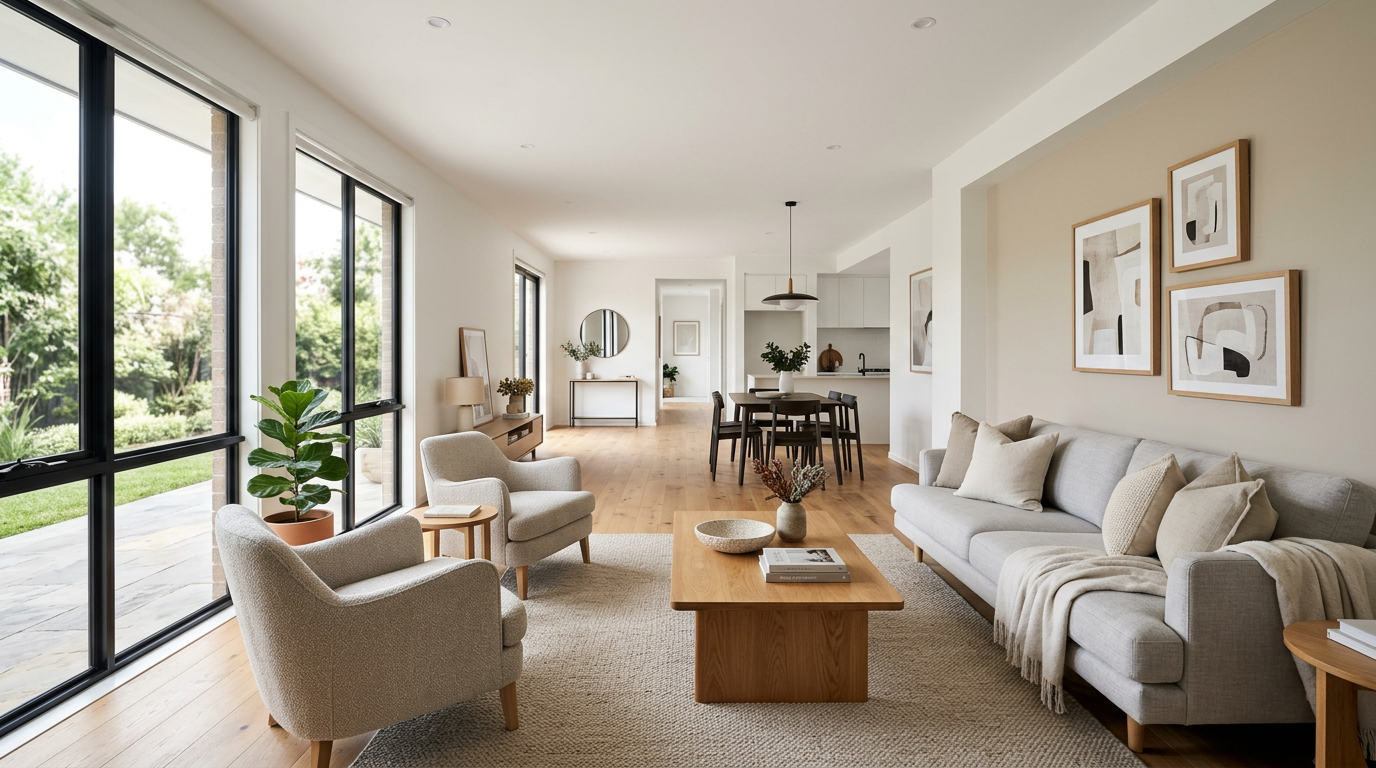
Good staging also guides movement. Furniture placement shows how people can walk through a room without bumping into a sofa or squeezing around a dining table. In an open floor plan, rugs and grouped furniture define separate activity zones without physical walls.
The result should still feel attainable. Rooms packed with decorative objects, oversized seating, or highly personal design choices can distract buyers. Effective staging edits the home, giving viewers enough detail to imagine living there while leaving space for their own preferences. Neutral colors are common because they photograph well and appeal to a broad audience, though small touches of color can keep the listing from feeling generic.
Time on market affects more than the calendar
A longer sale can create direct and indirect costs. Mortgage payments, insurance, utilities, maintenance and association fees may continue for every extra month a seller owns the property. If carrying costs total $3,500 a month, a six-week delay could add more than $5,000 to the seller’s expenses.
Time also changes how buyers perceive a listing. A newly listed home can generate urgency because interested buyers know other people may be scheduling tours. After several weeks, shoppers may start wondering what is wrong with the property. That assumption can appear even when the home is structurally sound, and the original problem was weak presentation or ambitious pricing.
Price reductions can revive attention, but they also become part of the listing history. A buyer who sees multiple cuts may expect further flexibility and submit a lower offer. Sellers can then lose money in two places: ongoing ownership expenses and reduced negotiating strength.
The National Association of Realtors staging report found that 29% of real estate agents reported a 1% to 10% increase in the dollar value offered for staged homes compared with similar unstaged properties. Nearly half of sellers’ agents also reported that staging reduced time on market. Those figures don’t guarantee a particular result, but they show why presentation deserves attention before a listing goes live.
Where staging delivers the most value
A seller doesn’t always need to furnish every room. Focus first on the spaces that influence a buyer’s overall impression: the living room, kitchen, primary bedroom, and dining area. If the home has an unusual layout, stage the area most likely to cause confusion.
Scale is especially important. A massive sectional can make a modest living room appear cramped, while tiny furniture may make a large room look awkward and unfinished. Well-proportioned pieces show what the space can comfortably hold. Sellers who have already moved out can use quality rental furniture to create that sense of proportion without buying pieces solely for the listing period.
A practical staging plan usually starts with these questions:
- Which rooms are difficult to understand when empty?
- Which spaces will appear most often in listing photos?
- Does the home’s price point create higher expectations for presentation?
- Are there architectural features that furniture placement could highlight?
- Will the expected listing period justify a whole-home installation or a targeted plan?
Luxury homes often benefit from broader staging because buyers expect the design to feel cohesive from one room to the next. In a smaller property, furnishing three or four key spaces may be enough. The decision should reflect the home’s layout, likely buyer and local competition, not an arbitrary rule about how many rooms must be completed.
Staging and pricing need to work together
Staging can improve presentation, but it can’t repair a pricing strategy that ignores comparable sales. Buyers and their agents still examine recent transactions, property condition and location. A beautifully furnished house listed far above similar homes may receive attention without producing credible offers.
The strongest launch combines accurate pricing, thoughtful staging and polished marketing. Complete repairs and touch-ups before furniture arrives so the finished rooms look intentional. Clean floors, windows, fixtures and baseboards. Replace burnt-out bulbs and use consistent light temperatures, since a mixture of blue-white and yellow lighting can make photos look uneven.
Schedule professional photography after staging is complete. Ask the photographer to capture room connections and useful features, not only wide corner shots. Redfin’s home staging guide also recommends decluttering and depersonalizing so buyers can picture themselves in the property.
Once the listing is active, monitor showing volume and feedback during the first one to two weeks. Limited traffic may point to price, marketing reach, or poor initial photos. Frequent showings with no offers could reveal concerns about condition, layout, or value. Avoid assuming staging alone caused either outcome. The listing works as a package, and each part affects how buyers respond.
A vacant home can sell successfully, particularly in a fast-moving market or when the property needs renovation. Still, emptiness creates an extra task for buyers who must imagine dimensions, functions, and flow on their own. Before listing, compare the staging expense with one month of carrying costs and the financial effect of a possible price reduction. That calculation often makes the true cost of empty rooms much clearer.
Discover more from The Cameron Journal
Subscribe to get the latest posts sent to your email.