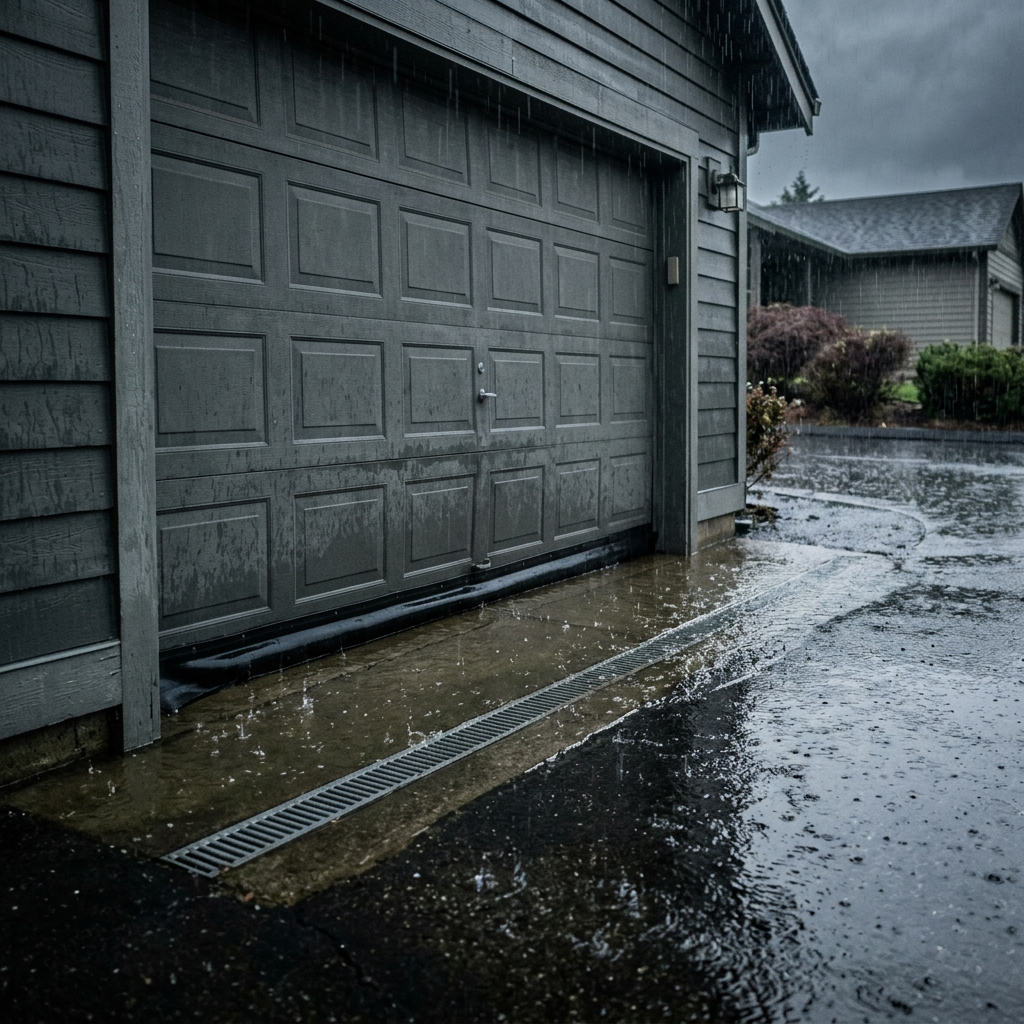
Homeowners preparing for flooding often focus on their front doors and windows, but an expert warns that another entrance could leave their property vulnerable: the garage.
With its wide opening, low threshold and potential gaps around the door, a garage can become an easy route for water during heavy rainfall.
And the damage might not stop at a wet garage floor. Floodwater can damage vehicles, electrical equipment and stored belongings, while potentially spreading into the rest of the house through connecting doorways.
Cui Guanhong, Flood Barrier Product Specialist at Eudore, says garages deserve more attention when homeowners assess their flood risk.
“Homeowners should consider the garage as part of their overall flood-prevention plan, rather than focusing only on front doors and windows,” Cui says.
“The condition of the garage door seal, the height of the threshold and the way water moves across the driveway can all affect how vulnerable the entrance may be.”
Why Your Garage Door Could Be a Flood Risk
Unlike a standard exterior door, garage doors often span a wide opening close to ground level.
If water collects against the entrance, worn seals and gaps around the door can allow it to flow inside.
Cui highlights five common problems:
- Worn bottom seals: Rubber seals can crack, flatten or deteriorate, leaving openings beneath the door.
- Gaps around the edges: Poorly fitting panels or damaged weatherstripping can allow water through.
- Sloping driveways: Driveways that slope towards the garage can direct rainwater straight to the entrance.
- Low thresholds: Garage entrances below surrounding ground level may be more exposed to surface water.
- Blocked drains: Leaves, mud and debris can prevent water draining away during heavy rainfall.
“Pay attention to what happens around the garage during heavy rain,” Cui says. “If water repeatedly pools near the door, that is a sign that the drainage or the way the driveway directs water is worth investigating.”
The Hidden Risks Inside Your Garage
Floodwater entering a garage can create more problems than damaged belongings.
Cui says electrical equipment should be a particular concern.
“The electrical risk comes first,” he explains. “Sockets, extension leads, freezers, chargers or other equipment can become dangerous if floodwater reaches them.”
Garages frequently contain power tools, appliances, chargers and other electrical equipment, alongside items such as paints, fuels and cleaning products.
If floodwater reaches these items, it can create electrical hazards and potentially contaminate the water.
Homeowners should never enter floodwater to reach electrical equipment or attempt to operate a breaker while standing in water.
Cui also warns that the damage could spread beyond the garage itself.
“If a garage opens directly into a hallway, laundry room, mudroom or kitchen, water entering the garage could potentially spread further into the property,” he says. “That connection should be part of any flood-risk assessment.”
Floor drains can create another problem if overwhelmed drainage systems cause water to back up.
“Whether a backwater valve is appropriate depends on how the property’s drainage is configured,” Cui explains. “That is something a qualified plumbing professional should assess rather than something homeowners should guess.”
Five Ways to Reduce Your Garage Flood Risk
1. Check the Garage Door Seal
Inspect the bottom seal and surrounding weatherstripping for cracks, gaps or visible wear.
Close the door and check whether there are openings along the bottom or sides.
Replacing damaged seals may help keep out ordinary rainwater and debris, but Cui warns that a standard garage door seal shouldn’t be treated as a flood barrier.
2. Check Your Driveway and Drainage
Watch where rainwater flows during heavy rainfall.
If water repeatedly collects near the garage entrance, blocked drains, poor drainage or the driveway’s slope could be contributing to the problem.
Keep drainage channels clear of leaves and debris, and consider professional advice if pooling is persistent.
Any drainage improvements should avoid redirecting water towards neighbouring properties.
3. Consider a Suitable Flood Barrier
For homes with a known flood risk, a purpose-built garage flood barrier may offer additional protection.
However, homeowners should check the width of the opening, the surfaces where the barrier will sit and the product’s rated water depth before choosing a system.
“Knowing how quickly the barrier can be fitted is important too,” Cui says. “If it takes too long to find or install when heavy rain arrives, it is much less useful.”
Barriers should be stored somewhere accessible, and homeowners should practise installation before severe weather.
4. Keep Valuable Belongings Off the Floor
Where possible, move valuable tools, electronics and important belongings onto suitable shelving or raised storage.
This may help protect items from shallow flooding.
Paints, fuels and cleaning products should also be stored securely according to their labels.
For electrical equipment, heating systems or other utilities at risk of flooding, professional advice may be needed.
5. Check Where Water Could Enter the House
If your garage connects directly to the home, consider whether water entering the garage could travel through the internal doorway.
Check the threshold, surrounding walls and adjoining rooms for potential vulnerabilities.
For properties that have flooded before, a qualified flood-mitigation or building professional may be able to recommend suitable protective measures.
When Should Homeowners Prepare?
Cui says the biggest mistake is waiting until a flood warning arrives before checking vulnerable areas.
By then, there may be little time to inspect drainage, install barriers or move valuable belongings.
“Preparation starts with understanding your own property,” Cui says. “Look at where water is likely to travel, deal with obvious maintenance issues and decide in advance what you would need to move if flooding became likely.”
Homeowners should also check local flood risks using FEMA’s official flood maps and monitor weather alerts.
It’s worth reviewing insurance arrangements too, as standard US homeowners insurance policies generally don’t cover flood damage.
Separate flood insurance may be available through the National Flood Insurance Program or private insurers.
Don’t Overlook the Garage When Preparing for Flooding
A garage’s wide opening, ground-level position and possible connection to the house make it an important area to inspect before heavy rainfall.
Worn seals, blocked drainage and belongings stored at floor level are all potential problems homeowners can address before flooding occurs.
Simple maintenance, sensible storage and appropriate flood protection can help reduce vulnerability, although no seal or barrier can guarantee complete protection.
The most effective approach depends on the property, its surroundings and the type of flooding it may face.
Sources & Resources
- Eudore – Flood barriers and home flood protection products.
- Ready.gov – Floods – Official flood safety and preparedness guidance.
- FEMA Flood Map Service Center – Official US flood hazard information.
- FloodSmart – National Flood Insurance Program information, flood insurance and coverage.
- This content is licensed under the Creative Commons Attribution 4.0 International Licence (CC BY 4.0). You may use, share and adapt the material for any purpose, including commercial use, provided you credit Eudore as the source of this commentary and include a link to them.
Discover more from The Cameron Journal
Subscribe to get the latest posts sent to your email.