Table Of Contents
- Why Storage Rooms Stop Working
- Set A Clear Goal Before Moving Anything
- Sort Items With A Simple Decision System
- Create Zones That Match Daily Habits
- Choose Storage That Fits The Room
- Protect Walkways, Shelves, And Exits
- Label Bins And Build A Simple Inventory
- Store Seasonal Items Without Losing Track
- Create A Maintenance Routine
- Common Storage Room Questions
An overloaded storage room can make everyday life harder than it needs to be. When boxes, tools, seasonal items, and household extras all land in one place without a plan, it becomes difficult to find what you own or move through the room safely. A thoughtful reset can create space for the things that matter and make the room easier to maintain.
Whether the space is a basement room, utility closet, shed, or garage, the goal is not to make it look like a showroom. It is to give every category a reliable home. For households with a crowded garage, professional garage organization can also help create a layout that supports daily routines and long-term storage needs.
Why Storage Rooms Stop Working
Storage rooms usually fail slowly. Items enter faster than they leave, similar belongings get scattered across several corners, and frequently used supplies disappear behind rarely used boxes. A family may begin by storing holiday decorations in one area, then add tools, sports gear, paint, and paper goods until the room becomes a catch-all space with no clear system.
The problem is rarely a lack of containers. It is the absence of a purpose, category boundaries, and an easy return habit. If no one knows where an item belongs after using it, clutter will return.
Set A Clear Goal Before Moving Anything
Give the room a job before buying shelves or moving boxes. Your priority may be creating a clear walkway, making tools easier to reach, storing seasonal belongings, or freeing room for laundry, hobbies, or home maintenance tasks. A room with one defined purpose is much easier to organize than a room expected to hold everything.
Questions To Ask First
- What should this room hold?
- Which items need regular access?
- Which belongings can stay packed away?
- Does the room need to support storage only, or another task?
Measure the floor, wall space, door swing, existing shelves, and main path before choosing storage products. Those few measurements prevent bins from blocking access or shelving from making the room feel tighter.
Sort Items With A Simple Decision System
Start with one small area at a time to avoid decision fatigue. Use four straightforward groups:
- Remove: Broken, expired, damaged, or unwanted items.
- Relocate: Belongings that should live elsewhere in the home.
- Keep: Useful items that truly belong in this room.
- Review: Uncertain items are placed in a dated decision box.
Give the decision box a deadline, such as 60 or 90 days. If no one needs an item before that date, donate, recycle, or discard it when appropriate. A permanent “maybe” pile is simply clutter with a softer name.
Create Zones That Match Daily Habits
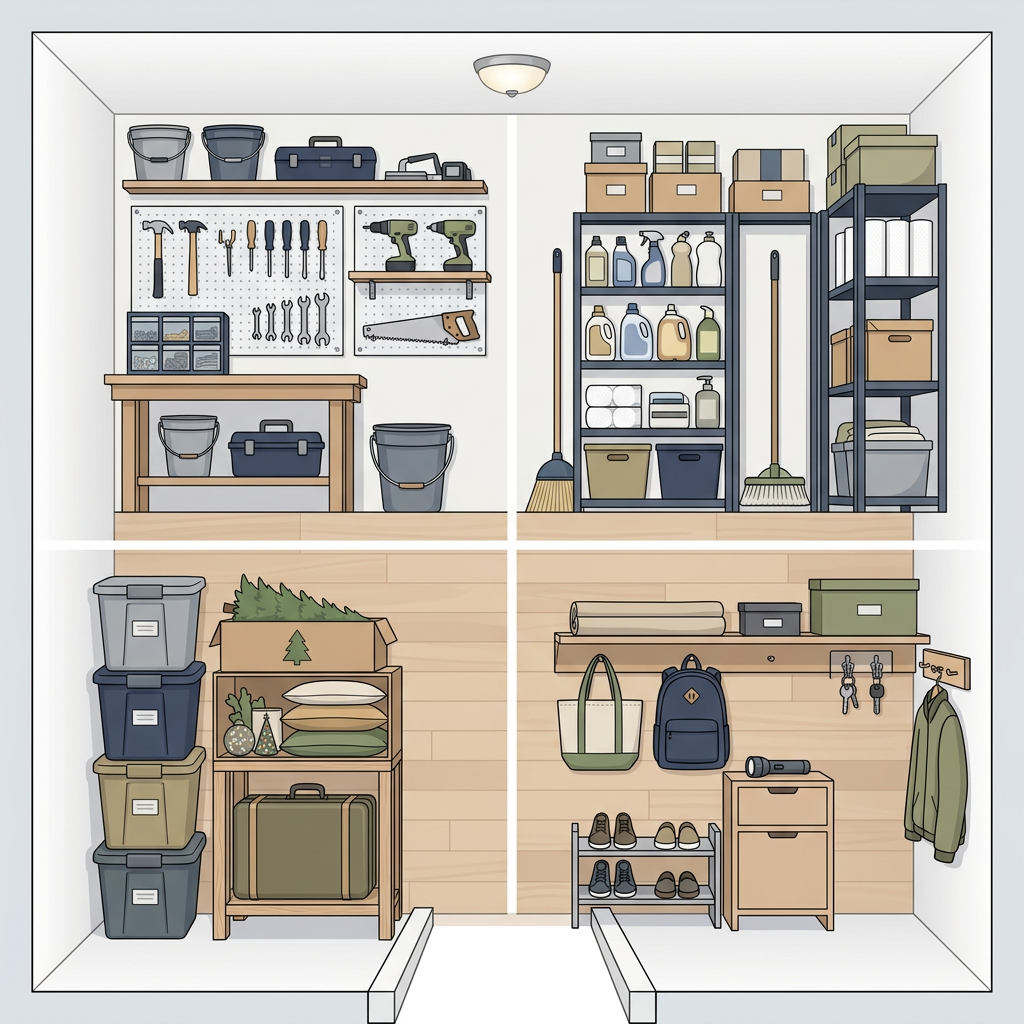
Zones are dedicated areas with one clear purpose. They reduce searching and make it more likely that every household member can put items back correctly. Common zones include seasonal decorations, home maintenance supplies, tools, outdoor equipment, sports gear, paper records, keepsakes, and household backstock.
Place high-use items between waist and shoulder height. Store rarely used, lightweight belongings higher up, and keep heavy items low and stable. This arrangement saves time while reducing awkward lifting and reaching.
Choose Storage That Fits The Room
Buy storage after sorting, not before. Containers should solve a specific problem, such as keeping camping gear together or preventing loose hardware from spreading across a shelf. Clear bins help with quick identification, while solid bins can be better for light-sensitive or dusty items.
Storage Options To Consider
- Open shelving for frequently used supplies
- Wall hooks for long-handled tools and flexible gear
- Drawer units for small repair parts
- Matching stackable bins for larger categories
- Moisture-resistant containers for damp-prone areas
Check shelf weight limits, floor stability, moisture exposure, and the clearance needed to lift lids or open drawers. A storage solution is only useful when it can be reached safely.
Protect Walkways, Shelves, And Exits
Safety should guide every layout decision. Keep the main walkway open, avoid using door swings or exits as storage space, and leave electrical panels, heating equipment, and shutoff valves accessible. Heavy items belong on lower shelves, while tall shelving should be anchored when needed.
Following safe storage and handling practices can help reduce falling objects, overloading, and trip hazards. Do not exceed shelf ratings, stack loose materials carefully, or climb on unstable boxes to reach an item.
Too much clutter can also slow movement during an emergency. Keeping pathways and doors clear supports safer fire response, especially in areas where excessive stored material can create additional hazards, as described in home fire safety guidance about clutter.
Label Bins And Build A Simple Inventory
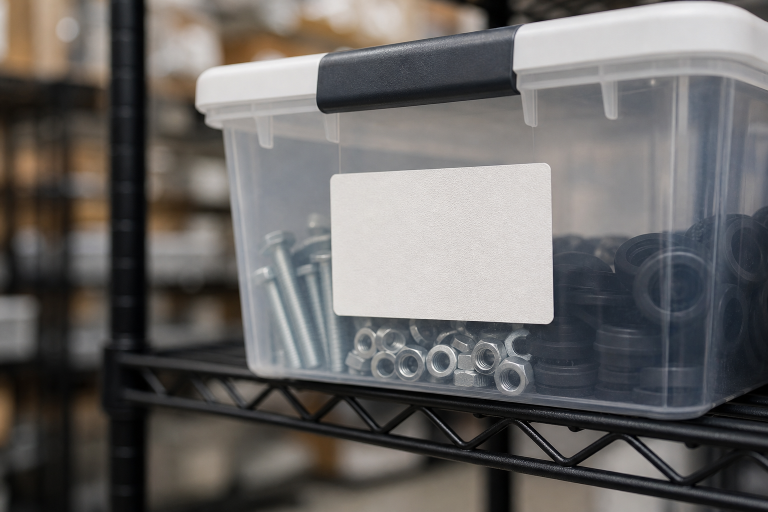
Labels eliminate guesswork. Use large, specific words such as “Holiday Lights,” “Paint Supplies,” “Camping Equipment,” or “Small Plumbing Parts” instead of vague labels like “Miscellaneous.” Put labels on the front and, when bins are stacked, on the lid as well.
A basic paper list, spreadsheet, or notes app can track major categories and their zones. It does not need to list every screw or extension cord. It only needs to answer the question, “Where should I look first?”
Store Seasonal Items Without Losing Track
Seasonal rotations offer a built-in chance to review what you own. Group decorations, clothing, weather gear, and outdoor equipment by season or event. Keep the next season’s items closest to the entrance, then move the current season’s belongings back after use.
Before packing a category away, remove damaged décor, worn-out gear, and items that were not used. This small edit prevents every seasonal bin from becoming heavier and harder to manage each year.
Create A Maintenance Routine
An organization lasts when returning items takes very little effort. Schedule a 10 to 15-minute monthly reset to return loose belongings to their zones, break down empty boxes, remove donations and trash, and check for pests, dust, moisture, or shelf damage.
Review labels as categories change, and open the decision box before allowing new items into the room. Small regular resets are far more manageable than waiting for another all-day cleanout.
Common Storage Room Questions
How Often Should A Storage Room Be Reorganized?
Do a quick monthly reset and a deeper review two to four times per year. Rooms that receive frequent deliveries, hobby supplies, or children’s gear may need attention more often.
Should Storage Bins Be Clear Or Solid?
Use clear bins for items you reach for often. Choose solid bins when light, dust, or visual clutter is a concern.
What Should Go On The Top Shelf?
Reserve upper shelves for lightweight items used rarely. Avoid placing heavy, fragile, or awkward belongings overhead.
How Can A Small Storage Room Hold More?
Remove duplicates, use vertical space carefully, group like items, and protect access paths. More containers alone will not solve a poor layout.
A Storage Room That Supports Daily Life
A successful storage room is not the one with the most bins. It is the one that helps people find what they need, move safely, and return belongings without extra effort. With a clear goal, useful zones, stable shelving, specific labels, and regular maintenance, an overcrowded room can become a dependable part of the home.
Discover more from The Cameron Journal
Subscribe to get the latest posts sent to your email.