Intro
Welcome to The Cameron Journal Newsletter. Each week, Cameron Lee Cowan wraps up the headlines with commentary, helping you navigate today’s media narratives, how they are affecting our Culture, Lifestyle, and Society.
The World is Hard, This is Not
If you’re new here, my name is Cameron Lee Cowan M.A. MFA, and I’m the Creative Director here at The Cameron Journal. You can learn more about me on the about page. I do research and commentary on politics, culture, and the world around us. Each week I send out the latest news narratives, the latest videos from The Cameron Journal and commentary about the week’s events.
Remember, The World is Hard, This is Not.
Update from Cameron
I hope everyone had a great Thanksgiving last week. As you know, I skipped the newsletter last weekend and took the weekend off. I enjoyed the rest, plenty of good times with friends and a few slices of absolutely delightful apple pie. I did skip the ice cream because I don’t eat a lot of dairy (and it’s all far too sweet). But I had a great time all the same. I hope you didn’t miss me for too long. There will be a variety of new interviews on the podcast heading into the end of the year. I’ll have 3 videos a week from here on out. I hope you’ll enjoy some cool people have out and a few coming up!
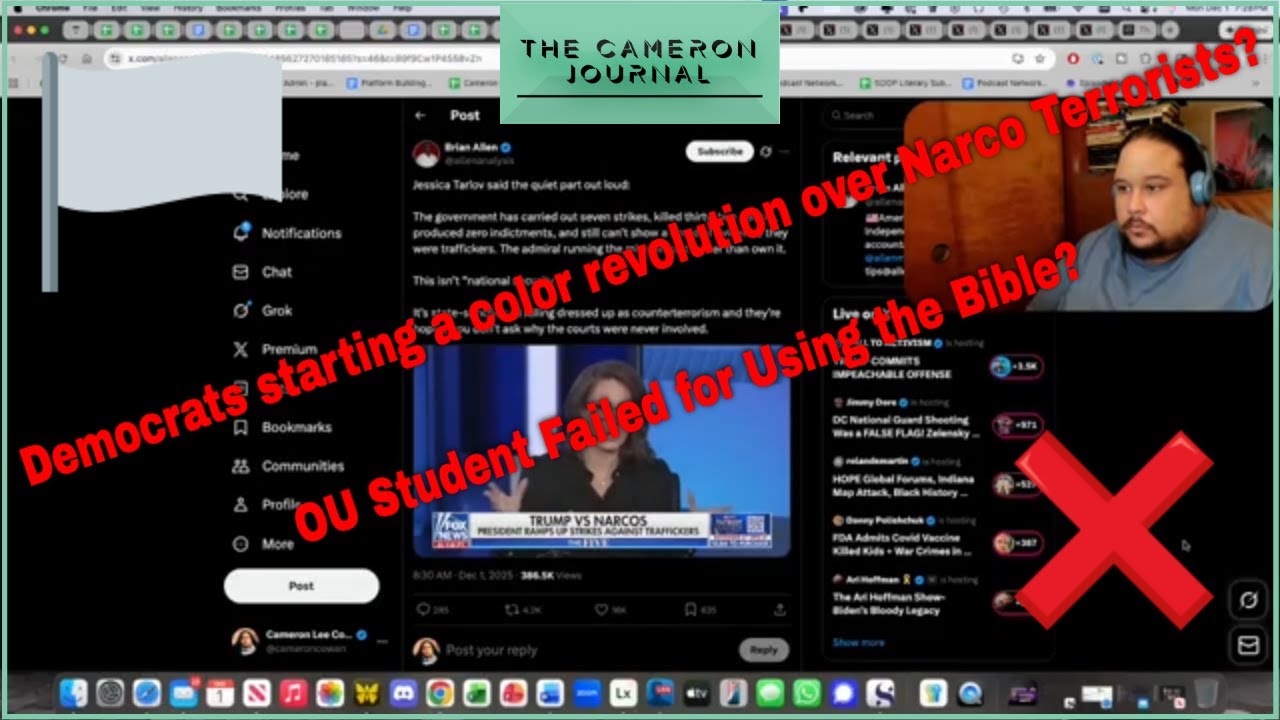
We had a great Newshour last week, with some interesting headlines include the rumbling scandal about a trans professor who failed an Oklahoma University student for using the bible in a paper about the psychology of gender. I can say that the comment section on some of my YouTube shorts has “blown up.” People doubt my story, they think I’m evil, all the usual stuff. I’ll maintain what I said before, if you want to use biblical dogma to prove a point, you have to be clever. I said this over and over again on Twitter. You have to be clever about it. She just rejected the premise because the Bible said so, she could have done better.
Meanwhile, it looks like the scandal in Minnesota is heating up this week too, but we’ll dig into that as we dig into the headlines.
Sign up for CameronJournal+
If you love these newsletters and want to support my work breaking down news narratives at The Cameron Journal, please consider signing up for CameronJournal+. You will get exclusive content for CJ+ subscribers, access to our Discord, and special hangouts with me. It’s the coolest club in town! Don’t want to subscribe but want to support? I take donations at Kofi.
The News Narratives of the Week
Don’t forget to join me on Monday for The Cameron Journal Newshour! We will have a special guest in the 2nd half of the show this week, so make sure to come on by!
Life is Temporary
I’ve been out promoting my book, America’s Lost Generation, and I’ve been talking a lot about Millennials and Gen Z. I saw this tweet this week that really stood to me.
Why are young people so miserable?
The overwhelming feeling of impermanence
They can’t get a job in the city they want, so they “temporarily” live elsewhere
They can’t live in the neighbourhood they want, so they settle somewhere they don’t want
They can’t work in the field they want, so they settle for a job…for now, until they can do what they really want
Years go by and these “temporary” compromises don’t feel permanent.
So they either accept that what they want is forever out of reach, or convince themselves it’s all “temporary”
I felt this in my soul. Much of my life has followed this pattern, and I have friends from all backgrounds who are in the same boat. You buy furniture that you can move easily or things you’re ok with leaving behind. Everything feels like, “another step” but to a destination you can never quite reach. And every so often you feel like you’re about to arrive and the rules change or the goal becomes more distant. So, you try to keep going. But you never feel like you’re settled and that you know what’s going to happen later. It makes it hard to plan or hard to take a calculated risk. Part of this story is economic, but it is also social. Every move means making new friends, and every new job move means earning vacation again (if offered) and making new co-worker friends and navigating new social dynamics. There is no chance for routine and no sense that temporary sacrifices will yield a long-term result. What is the average person supposed to do in these conditions? The tweet tells us: accept that your dreams were dead before you started, or that it is all temporary. The choice is simple: stable sadness or instability with a bit of hope.
In my book, America’s Lost Generation, I address this head one and how it has affected people. I’ve watched people move around the country (and the world) to try to get ahead. Friends and family left behind for better pastures, survival or hope. The economy of the new world is certainly dynamic and that is great for the wealthy who are moving assets (and sometimes themselves) around the world, but it is deeply disturbing to everyone else. I’m not sure what the solution is, but I felt that lack of permanence at a deep level. So far the only advice is to “keep going.” No one has ever told me where to go, and I feel like millions feels the same.
Are We Ready for Medicare for All?
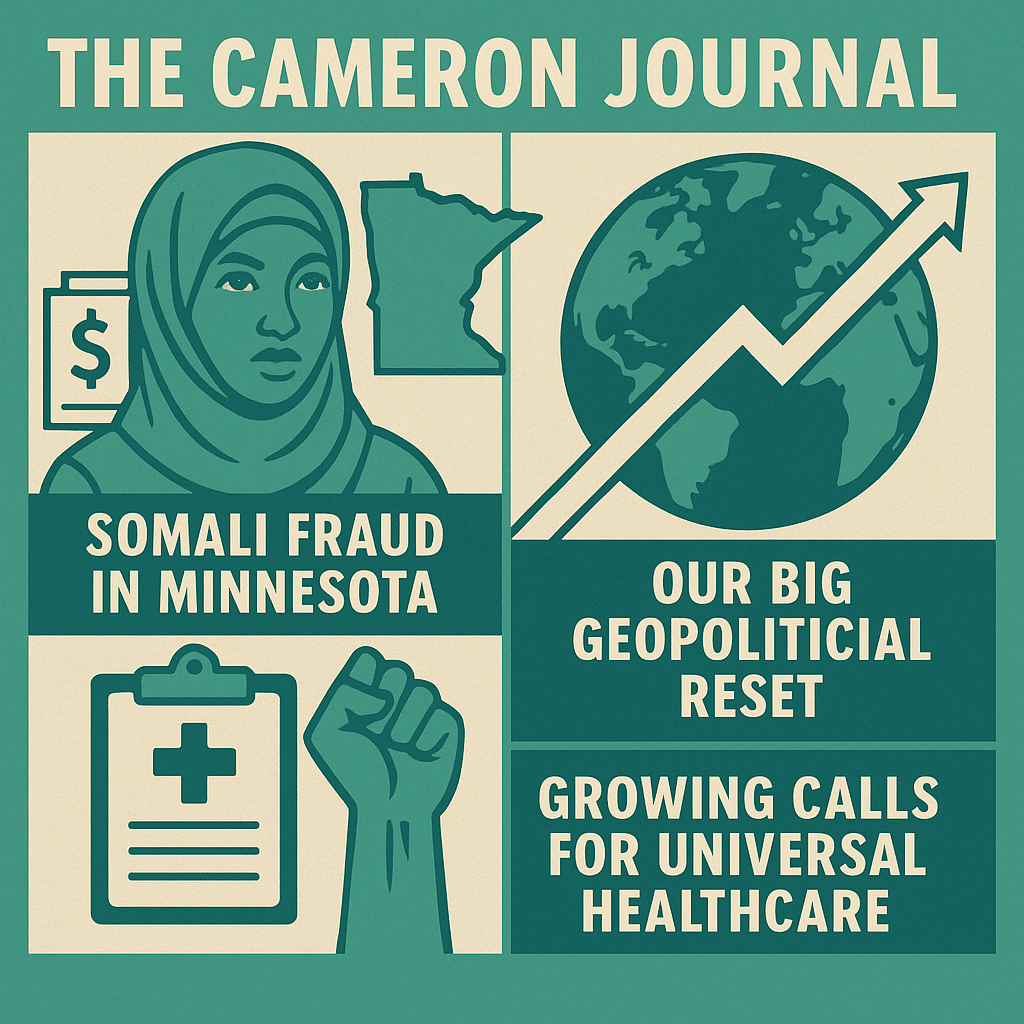
Back in 2010 as the Affordable Care Act was being passed, I made a prediction that would turn out to take far longer to become true. I figured that the ACA was not really set up for success and that its failures (which would become obvious) would lead to universal healthcare, and I thought that would happen in about 2015 or so. Fast-forward another 10 years and I might (finally) be right. According to this new story from Lever, we may have finally reached the tipping point with healthcare. Just this past week, Josh Hawley, of all people asked a rhetorical question, “Why don’t we have universal healthcare?” at a town hall.
It appears that the rising premiums of insurance plans under the ACA have finally broken the American consumer, and having a universal system is starting to sound like a good idea, even for Republicans. My question is this, are we really ready for this? It will be a fierce political fight because the insurance companies won’t go quietly into the night. It would be entertaining for Republicans to be the ones suggestion this consider we just had a government shut down over ACA subsidies. But I’ll take it because the reality is that we pay too much for healthcare, and we spent too much per patient for worse outcomes. And I still maintain that a healthier, more robust population will lead to economic gains both from productivity and from additional money going into the economy and not into the pockets of health insurance companies. Sometimes, when the other side has a good idea, you embrace it.
Minnesota-dishu and the Somali Grift
Governor Tim Walz has problems, big problems. Reporting out this week shows that various organizations, mostly owned by members of the Somali community in Minnesota, stole billions (the number keeps going up) of covid-era dollars meant to help house people, feed children and ease suffering from the pandemic. The covid-era social programs will probably go down as one of the biggest financial grifts in American history. This particular fraud has also gotten national attention from the Trump administration because of immigration. American fraud is bad enough, but when immigrants are scamming, that looks (and is) even worse. The cherry on top is the fact that some of the stolen money was routed to the al-shabab terrorist organization. I’m still feeling like a sucker for not getting any PPP money! Ah, the price of honesty.
There was so little oversight, that these fraudsters were able to set up companies and organizations that barely had an address, and get millions from the State of Minnesota and no one asked for proof of what was being done or by whom. Everything about it was fake and there was absolutely no oversight. And what’s worse is that this went on and has led to 59 arrests and prosecutions. What scared officials even more was that this was not limited to the covid-era, it lasted far longer and is likely still going on.
As fodder for anti-immigration sentiment, this story couldn’t serve the narrative any better. The scandal continues to grow, and the calls for deporting every Somali grows louder online and from the White House. As political narrative, this could not be worse for Tim Walz and the Democrats. It will be seen in all quarters for what it is: a lack of oversight in a state with generous social programs. For those who think we shouldn’t have these programs at all, it will be held up as a shining example of the waste and fraud at the center of socialism and at the center of the Democratic Party. The truth is more complicated, but that will be the surrounding narrative. On top of that, elections for governor in 2026 are coming up, and this will be devastating to Democratic control of the state house and governor’s mansion.
It is obvious that this money was stolen and should not have been, there is no need to argue about that. There should have been oversight and this should have been found more quickly. The better thing would be to get as much money back as possible (although much of it has left the country) and to have a rigorous investigation and put in better safeguards in the future, but the narrative is unlikely to go in that direction. The case will be held up as an example of Democrat corruption, and Trump will make political fodder out of it for Republicans. Look for this to get worse, not better.
However, I would say that this is a wake-up call. I’ve said for a long time that if Democrats wanted to get serious about national power, they would make every blue state and large city (they control them all) the best places to live in the country. Instead, scandals like this undermine the case that we need robust social programs. Why bother when there is all this fraud, and why put democrats in charge when they can’t run them? It is moments like these that make it hard to be a democrat these days.
The Biggest Trend: Geopolitical Reset
Newsweek has new reporting in on the new national security strategy. The Trump administration is focusing on North and South American is reviving the “Monroe Doctrine” from the early 19th century that pushed Europe back from the American sphere of influence in the New World. The young republic stood up to the great powers of Europe and drew a boundary. Given the amount of European colonial possessions in the Caribbean, it was a bold move, but it was our first foray into international politics. Trump appears to want to revive this idea of having control and influence over our neighbors, and is refocusing on problems in our neighborhood.
This is juxtaposed with the current view that the US-led, post-WWII order is quickly coming to an end. Countries all over the world, including US allies, are already trying to figure out what comes next and how they can position themselves for success. In the post I just linked, John Mearsheimer is talking about how Japan is merely a symptom of what everyone is trying to figure out in our newly multi-polar world. One could argue even the war in Ukraine is emblematic of the new era.
So what does all of this mean? Interestingly enough, I was doing an appearance today on the Book Review 101 podcast and Daniel Lucas asked me what the biggest current trend was and I said that while everyone is worried about AI, I’m more concerned about all of these movements in geopolitics. I don’t think anyone understands that with globalized manufacturing, much of our modern lifestyle is predicated on cheap goods produced overseas. If the US withdraws and shipping things all around the world doesn’t make sense anymore, there will be a push to re-industrialize and there will significant shifts in our lifestyles because the new goods will cost a great deal more and there will be environmental impacts.
On top of that, the new factories will be automated because the workforce is shrinking and there is a massive skills gap in the skills needed to fully re-industrialize. AI be damned, we have bigger problems to worry about. There will be difficulty in looking for growth or even new markets because there will be too many trade barriers for it to be as profitable as it has been for the past 30 years. This seismic shift will change everything from what we buy or how we buy it. It will also change the job market and society. People will get left behind, old systems will collapse and this will get more chaotic and given recent events, probably more violent as everything we thought we knew comes apart at the seems.
America’s Lost Generation is Out Now! Get Your Copy!

I’m excited to announce that America’s Lost Generation is out now! It’s available everywhere books are sold or through The Cameron Journal directly. You’ve been hearing me talk about this book for a long time, and you’ve read the Millennials collection on The Cameron Journal. Looking to Japan for guidance (and a cautionary tale), I told the story of Millennials through their voices.
Articles of Interest
Keep up with The Cameron Journal Podcast and The Living Joke

The Interview:




The Cameron Journal Newshour:
The Living Joke:
Discover more from The Cameron Journal
Subscribe to get the latest posts sent to your email.