
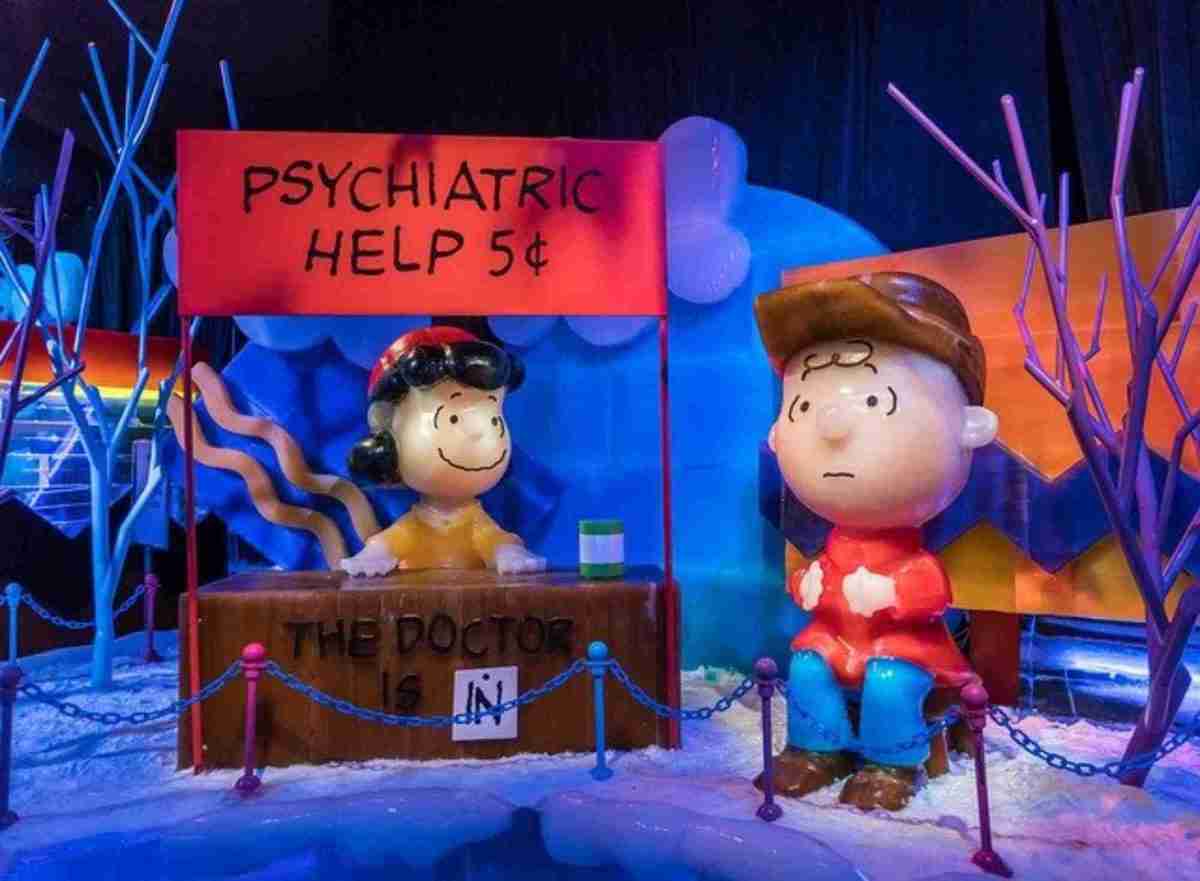
Most everyone is familiar with Charlie Brown, the star of the popular Peanuts comic strip. Although Charles Schultz died in 2000, his popular characters are still a part of American culture and consciousness. But I want to take a different tack with Charlie Brown. I want to talk about Charlie Brown and narcissism. I want to talk about the toxic system Charlie Brown found himself in and why he stays in it. The main problem with Charles Brown is simple: He wasn’t narcissistic enough.
There are articles about how Charlie Brown is emblematic of how life can knock you down and keep you down. There are articles about how the Christianity of Charles Schultz, the creator of the Peanuts, allowed him to have a global conversation about religion through his cartoon. Much has been written about the personalities of the peanuts characters. There’s even the Charlie Brown Personality Theory.
I have a unique view of Charlie Brown. I’ve spent a great deal of my adult life studying personality. This partly has to do with the fact that mine is bizarre. I’m a writer, what do you expect? We are a strange bunch. I’ve had to do deep dives into narcissism, borderline personality disorder, and other sorts of disordered that I have encountered and had to handle. I have been a slow study at this. It has taken me years to identify when something feels wrong and trust that intuition correctly. I was rewatching one of my favorite Charlie Brown movies, and I realized that the problem with Charlie Brown is that he lacks a crucial bit of narcissism. He doesn’t have any real care for himself, his feelings, or his place among his friends. He discusses how he feels this and feels that but what he can’t see is that much of his depression is caused by the fact truly shit people surround him. It takes no imagining to see why Charlie Brown can’t get up the courage to talk to the little red-haired girl or why he keeps returning to Lucy for advice despite the fact she abuses him. Charlie Brown has no self-respect. He is the type of person that is so busy trying to fit in with his friends and please people that his friends have taken full license to shit on him as much and as often as possible.
What’s the Problem Charlie Brown?
Charlie Brown suffers from being a pushover. He is surrounded by people who are selfish and only care for themselves. Because they don’t think of Charlie Brown and won’t stand up for himself, it’s easy for them to take advantage of him. He tries to rise to the occasion but always fails. He can’t lead them to victory in the great river race, he can’t manage thanksgiving, and he can’t find a decent Christmas tree. He is the vanguard for everyone who tried and failed. He’s mediocre on his best day, and life holds for him mostly disappointments. He never gets the red-haired girl. He will never kick the football, nor is he brave enough to walk away from the situation. He is the ultimate beta male. He is the boy for whom life offers little. But much of it is his own fault.
This has to do with the creator, Charles Schultz himself. Charlie Brown is a self-write-in if there ever was one. He set the strip in the Minnesota of his birth. He had a difficult childhood, and the inability to get the red-haired girl is taken directly from his life. His life was fairly tragic, romantically speaking. After the red-haired girl he met in high school turned him down and married someone else, he married his first wife. However, the success of the Peanuts strained their marriage. She supported him, but as he delved deeper into his creativity and drawing, he grew more withdrawn for her. When she raised their children and built and improved their home, it didn’t matter. Once the children were gone and couldn’t build anything more, the pair began to pull apart and divorced. His second marriage was very different. She seemed to be ok with him being a part-time husband.
Charles Schultz was a Christian and brought up religion in his comics often. You can tell that within him there is a deep abiding faith in god. Which considering his childhood, must have been a tonic and not a poison. There are moments when he seems to shout to the heavens, “why god?” through the comic book strip. This theme is the central conflict of the Christmas special. Somehow Jesus was the reason for the season and somehow offering an incomplete answer for life as well.

Analyzing Charlie Brown
Let’s look at the movies rather than the strips; all the best tropes are mushed together into a cohesive whole that we can readily work with. I’ve chosen 3 to talk about. They are all older and were written all or in part by Schultz himself. They are 2D animated on paper the old fashioned way. They are moving comic strips.
Bon Voyage This movie is a favorite but not as much as the Great River Raft Race. It is fairly long for an animated movie, and the plot isn’t that great. In this movie, Charlie Brown receives a mysterious letter to visit his cousin in France while he is an exchange student. The gang is off to France. If you want to see an animated hovercraft, which was the fastest way to cross the English channel before the chunnel, this movie is great. He gets to the Chateau mal Cousin in the pouring rain and discovers that the place is shut. No one is there to greet him, and it appears no one is home. The gang ends up sleeping under the walls of the Chateau that night. They finally meet someone, a little girl, who helps them while they sleep outside. For some reason, that is explained later, they cannot go into the house, but the little girl, his cousin, is still excited to meet him. It seems like life has failed Charlie Brown again until the whole gang pitches to save the Chateau from fire. After the fire, the little girl’s father let them into the house, even though his anger set the fire. In this film, everything actually works out. However, Charlie Brown only gets to sleep in the house for one night as the next morning he has to return to America. Who wants to spend their entire exchange trip sleeping outside? Once again, only the weirdest things happen to Charlie Brown. This film also features a great scene with Snoopy doing the Red Baron, a must-watch.
Christmas
This special is very familiar, and I will not replay the plot. Most anyone who is reading this has seen this special. It is iconic Christmas. Being January, you will have just seen it again. I’m going to jump right in on what Charlie gets wrong in this special.
Charlie can’t connect with others or the holiday; he feels like the commercial has killed Christmas’s true meaning. He expects life to reflect myth, and too often, it does not. The other children aren’t looking for meaning. They are not reflecting on the season. They are ice skating and doing a play. It is just what you do at Christmas time. This is where Charlie is different than other children. He is looking for a specific feeling but can’t find it. He is looking for the magic of Christmas that can’t be bought in a store or purchased with the money of any kind. It is often portrayed in movies and advertisements. Christmas’s real magic doesn’t exist for Charlie Brown because he is looking for it. The other children experience it because they aren’t looking for it. As long as nothing too bad happens to them and they get the presents they want, Christmas is magical and successful. The central view that Schultz gives us is how everyone else just seems to exist while Charlie Brown is having deep thoughts about life and meaning. It sets him apart. He doesn’t want a present. He wants to feel like he belongs somewhere. He wants to feel the magic of self-acceptance through others. Magic for Charlie Brown is the satisfaction of a well-produced play with his friends that really works. Instead, they complain that he is involved. They are endlessly self-involved with being a pretty queen (Lucy) or being relegated to being a shepherd (Shermy). Rather than listen to the direction of Charlie, they would rather dance because it feels good. Because it is Charlie Brown who sometimes follows his instincts, which are different than other people, his Christmas tree sucks. Of course, it does, because Charlie Brown sees the tree’s potential but not its actuality. It seems like him in arboreal form. Charlie Brown gives up on the tree and his friends fix it up. He cannot fix up the tree because he abandons it. Life has failed him again. Life always fails him.
Great River Raft Race
The plot of this movie is fairly explanatory. The Peanuts Gang goes to summer camp, and they want to win the Great River Raft Race. The film is one of my favorites. I recorded it off the TV using VHS back in the 1990s, and I have eternal digital access as long as I remember my Amazon password. I find the film really comforting, and it may favorite to watch on planes. The film opens with poor Charlie Brown getting left behind at a gas station and being rescued by Snoopy, who is channeling Easy Rider. This is the first of many problems about beset Charles Brown in the next 87 minutes. For most of the movie, a group of bullies takes their turns cheating, lying, stealing, and pranking the whole Peanuts gang. Ultimately, Woodstock wins the great race after everyone else gets knocked out of the race through pranks or hubris (on the part of the bullies).
In one scene, the whole gang has had to get in one boat to finish the race. They take a shortcut that Peppermint Pattie suggests, and it turns out the shortcut is a log flume. The boat travels down the log flume at a rapid rate. Peppermint Pattie blames Charlie Brown for the disaster, even though it was her idea, and when the boat gets stuck at the top of a water wheel, Charlie Brown takes responsibility and frees the boat from the water wheel. No one appreciates his effort. Lucy complains immediately, and once again, for the 3rd time in as many minutes, he takes the blame and navigates them back out to the main river. In this movie, we learn that Charlie Brown isn’t just a social outcast; he is terribly inept. He gets left behind; he is forgettable, he tries to lead but isn’t a natural leader other than his ability to bail everyone else out of trouble. He sacrifices himself unnecessarily. He can’t stand up to himself, much less anyone else. Throughout the whole film, he is weak and feckless. One does not feel sorry for Charlie Brown; one pities him. This is a shameful emotion. No one wants to be pitied for their weaknesses and lack. That is what we feel for Charlie Brown.
Conclusions on Charlie
Charlie Brown is a broken boy. He does not have the necessary narcissism to care only about himself like his friends. He is always trying to earn their respect rather than simply taking it. He never leaves his toxic situation. At no point did he give up on the Chateau or the Christmas play. He does not abandon his friends in the river raft race. He does not call out Lucy’s bullying or Peppermint Pattie’s steamrolling behavior in all the comics. He is burdened with the traumatic background of his creator. A boy with no boundaries, no sense of self, and no regard for his own wants, needs, and desires.
Life ended up giving Schultz a good deal. Through licensing, deals, and his comic’s syndication, Schultz became a wealthy man. He was in parades and a true celebrity in his day. Films were made about him, and he had 2 wives and children. They created a wonderful life on land in California. Schultz created the magic that he never had as a boy in Minnesota. Somehow he could never accept it into his life. He could never let himself be happy, which is also true of Charlie Brown. There is something about not getting what you need as a child to really affect your adulthood. This is often the cause of broken relationships and addiction, among other problems. In that way, faith helped Schultz because he could use religion as his coping mechanism. It was imperfect and did not take it all away, but it helped. Adulthood is built on the foundation of childhood, and for those who did not get a good foundation, the rest of the superstructure is always problematic.
It is good that Charlie Brown never grows up because his adulthood would be torturous. Charlie Brown is a future addicted second-divorcee with 3 kids and a dysfunctional girlfriend he wants to leave but can’t seem to move on. It is a good thing that Charlie Brown stayed a boy. He might have become a comic strip artist.
Discover more from The Cameron Journal
Subscribe to get the latest posts sent to your email.