Key Takeaways
- Small changes in airflow, sound, cooling time, or energy use can be early signs of an AC problem.
- Homeowners can safely handle basic checks, but electrical, refrigerant, and repeated drainage issues need professional attention.
- Humidity control is a major part of comfort, especially in warm, damp climates.
- Repair or replacement decisions should consider age, repair history, operating costs, comfort, and parts availability.
- Seasonal maintenance helps identify developing concerns before peak cooling weather arrives.
A working air conditioner can still be underperforming. Maybe the living room stays comfortable while a bedroom remains warm, or the thermostat reaches its setting, but the house still feels sticky. These small changes are easy to dismiss, yet they can indicate restricted airflow, drainage issues, worn components, duct issues, or declining system efficiency. For homeowners in Cocoa and across Brevard County, All Brevard Air & Heat provides repair, installation, and A/C maintenance services for residential and commercial cooling systems. Its maintenance and repair guidance focuses on the concerns homeowners commonly notice, including weak airflow, unusual noises, uneven cooling, rising utility costs, and deciding when replacement may be appropriate in Florida’s hot, humid conditions.
The Cost Of Ignoring Small AC Problems
An AC issue does not always begin with a complete breakdown. A clogged filter may make the blower work harder. A slow condensate drain may eventually create water damage. A system that runs longer than usual can add wear to motors, fans, and other components. Addressing a concern early may give you more repair options and reduce the chance of losing cooling during the hottest stretch of the year. Keep in mind that one symptom rarely provides a complete diagnosis. Higher power bills, for example, can result from hotter weather, increased household use, utility rate changes, poor insulation, duct leakage, or equipment problems. The useful step is to notice the change, perform safe basic checks, and document what you observe.
Common AC Warning Signs
Weak Airflow Or Uneven Cooling
Weak air from supply vents may be due to a dirty filter, a blocked return grille, a blower issue, a duct restriction, or a dirty coil. If one area is consistently warmer, the cause may be duct balance, insulation, sun exposure, duct leaks, or equipment sizing. Open accessible vents, remove furniture or curtains that block returns, and see whether the pattern changes.
Strange Sounds
Rattling can come from a loose panel or debris, while squealing, grinding, banging, or persistent buzzing can indicate a mechanical or electrical concern. Do not ignore new noises that continue after the system starts. Turn the system off if a sound is severe, accompanied by a burning smell, or linked to a tripped breaker.
Water, Ice, Or Short Cycling
Water near the indoor unit can result from a clogged condensate drain, drain-pan problem, or other moisture issue. Ice on refrigerant lines or the indoor coil can be connected to airflow restrictions or other faults. Short cycling, which means frequent starting and stopping, may involve controls, airflow, sizing, or other system problems. These conditions deserve a professional evaluation if they persist.
Safe Checks Homeowners Can Perform
- Set the thermostat to the correct cooling mode and confirm the temperature setting.
- Turn off the system before checking or replacing the air filter according to its instructions.
- Make sure supply vents and return grilles are not blocked by rugs, furniture, curtains, or storage.
- Clear leaves, grass clippings, and loose debris from around the outdoor unit.
- Look for visible water, ice, damaged insulation, or unusual vibration.
- Note when the problem occurs, which rooms are affected, and whether the system runs continuously or cycles too often.
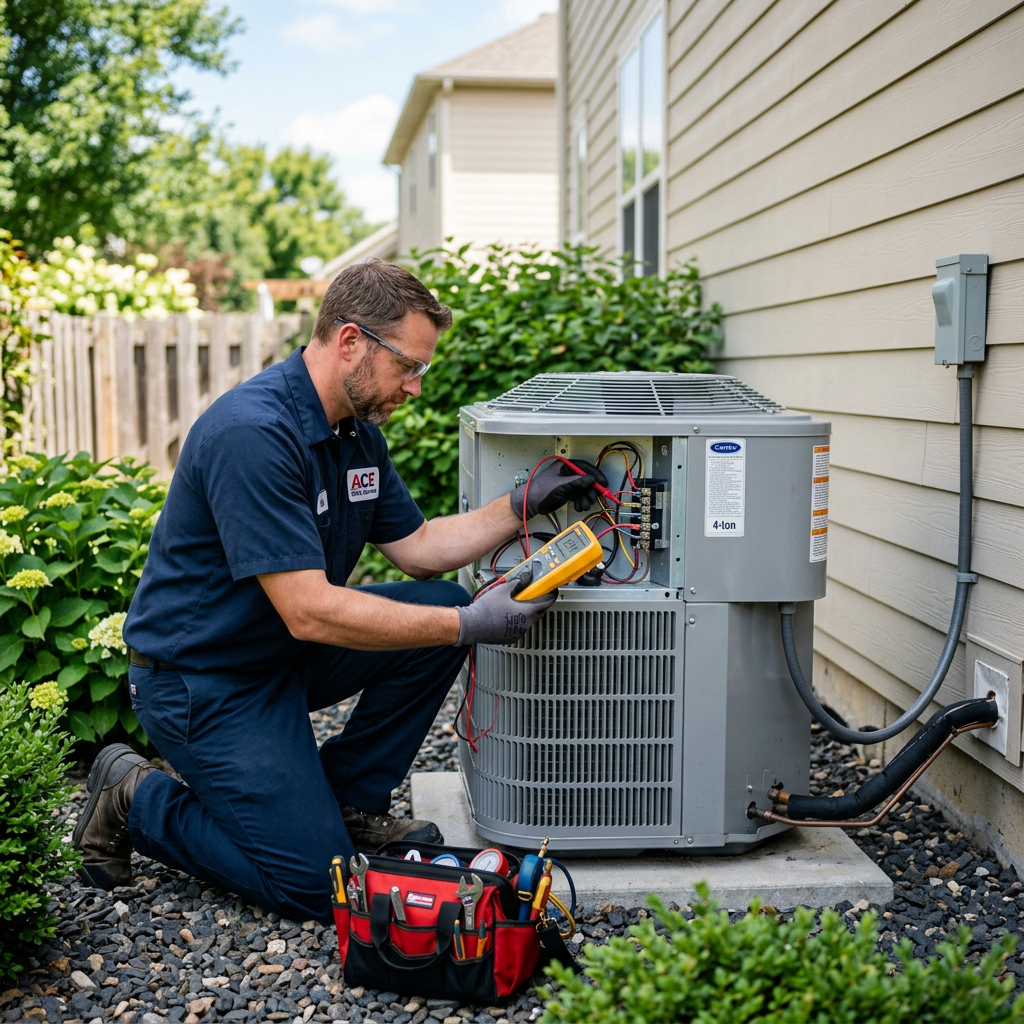
Stop DIY troubleshooting and call a qualified HVAC technician if wiring looks damaged, the breaker repeatedly trips, there is a burning odor, refrigerant may be involved, or the unit remains frozen after being shut down. Opening electrical compartments or attempting refrigerant work can create safety risks and may worsen the original issue.
A Practical AC Tune-Up Checklist
A professional maintenance visit is not a guarantee that no part will ever fail. It can, however, help reveal dirt buildup, drainage problems, worn components, loose electrical connections, and declining performance before they become more disruptive. Depending on the equipment and its condition, a technician may review:
- Filter condition, airflow, thermostat operation, and visible ductwork.
- Outdoor coil condition, blower and fan performance, and condensate drainage.
- Electrical connections, safety controls, and signs of component wear.
- Refrigerant readings when diagnostic testing indicates they are needed.
Why Humidity Belongs In The AC Conversation
Comfort is not just about the number displayed on the thermostat. A home may be cool enough yet still feel clammy when indoor moisture levels remain high. Watch for musty odors, condensation near vents or windows, visible mildew, or an AC that runs for long periods without creating comfortable conditions. The EPA’s indoor air quality guidance recommends regular filter care, moisture control, and maintaining indoor humidity in an appropriate range to help limit mold-related concerns.
Repair Or Replacement: How To Think Through The Decision
Repair May Be The Better Choice When
- The system is relatively new and has otherwise been reliable.
- The issue is clearly diagnosed and limited to a reasonable repair.
- The unit still cools evenly, controls humidity well, and has a solid service history.
- The expected repair cost is sensible compared with the cost and benefits of replacement.
Replacement May Deserve A Closer Look When
- Breakdowns happen repeatedly, or repair costs keep increasing.
- Energy use remains high despite proper maintenance and normal household habits.
- The system struggles with both temperature control and humidity removal.
- Parts are difficult to source, or the unit uses older components that limit practical repair options.
Equipment designs, refrigerants, and parts supply can change over time, so replacement decisions are increasingly system-specific. Ask a simple question: would this repair restore dependable comfort for a reasonable period, or would it only postpone a larger decision?
Questions To Ask Before Approving AC Work
- What failed, and how was the issue tested?
- Is the concern urgent, or is there time to compare options?
- What repair choices are available, and how long is each expected to last?
- Are the needed parts available now?
- Would replacement improve comfort, efficiency, or humidity control?
- What maintenance should follow the repair or installation?
Build A Seasonal AC Care Routine
Check filters, vents, thermostat settings, and visible moisture monthly during regular use. Before peak cooling season, clear around the outdoor unit and arrange professional service if the system has shown warning signs. During heavy use, watch for longer cycles, new sounds, uneven temperatures, and damp indoor conditions. After any repair, keep the invoice, record the part that was replaced, and note whether the original symptom returns.
Final Thought
Early attention gives homeowners more choices. A simple filter or airflow issue may have a straightforward fix, while recurring failures, persistent humidity problems, uneven cooling, or rising repair costs may justify a full system review. Keeping track of when symptoms began, how often they occur, and whether they are becoming more severe can help technicians diagnose the problem more accurately. Ask clear questions about the cause of the issue, expected repair lifespan, maintenance needs, warranty coverage, and whether replacement offers better long-term value. Taking action before a small concern becomes a major breakdown can improve comfort, reduce energy waste, extend equipment lifespan, and help you choose the solution that best fits your home’s cooling needs and budget.
Discover more from The Cameron Journal
Subscribe to get the latest posts sent to your email.