
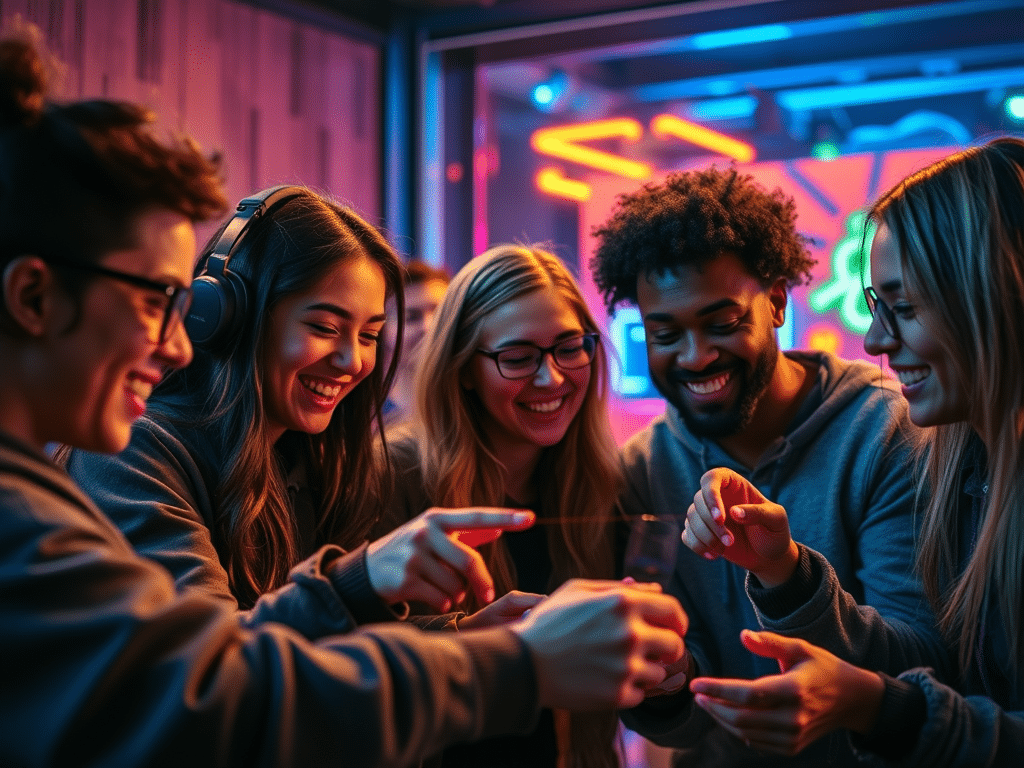
There’s this weird thing happening with how people hang out now. Used to be, socializing meant sitting around talking, maybe getting drinks, watching TV together. Standard stuff that’s worked for decades.
But lately? People seem to want more. They’re gravitating toward activities where they actually have to work together on something. Solve puzzles. Figure stuff out as a team. Take on challenges that can’t be tackled solo.
It’s not that the old ways of socializing are broken – they’re just not hitting the same way anymore. When most daily interactions happen through screens, there’s something appealing about activities that force people into the same physical space, actually depending on each other.
The Passive Problem
Here’s what’s funny about a lot of traditional socializing – everyone’s physically together but not really engaged with each other. Dinner parties where half the table is checking phones under the table. Movie nights where nobody talks because they’re all staring at screens. Bar hangouts that turn into everyone just sitting there scrolling social media.
These aren’t terrible activities, but they don’t create the kind of connections that happen when people have to rely on each other. There’s something about working toward a shared goal that brings out different sides of people and creates stronger bonds.
Families notice this shift too. Parents who used to struggle getting teenagers interested in family time are finding that challenge-based stuff actually gets everyone involved. When there’s a problem to solve, the usual social barriers disappear pretty quickly.
Why Working Together Feels So Good
Turns out there’s real psychology behind why team challenges are so satisfying. Humans evolved as social creatures who survived by collaborating – hunting together, building shelters, protecting each other. Our brains are literally wired to find satisfaction in group problem-solving.
When people tackle challenges together, all sorts of good brain chemistry kicks in. Dopamine from solving puzzles, oxytocin from bonding with teammates, adrenaline from time pressure. It’s like a natural high that passive entertainment can’t match.
The communication aspect is huge too. Challenge situations force people to be direct and clear. No room for surface-level small talk. Everyone has to contribute something meaningful, which brings out more authentic versions of people’s personalities.
Interactive Entertainment Takes Off
The entertainment industry has definitely picked up on this trend. Escape rooms have absolutely exploded – there are thousands of them now, with new ones opening constantly. Places like a sydney escape room represent this shift perfectly – it’s not just entertainment, it’s a shared experience that requires real teamwork.
But it’s way beyond escape rooms now. Axe throwing venues, puzzle bars, interactive theater, team video game lounges – all popping up because people want entertainment that engages them instead of just washing over them.
Even traditional stuff is getting interactive makeovers. Bowling alleys adding escape room elements. Restaurants incorporating puzzle aspects into dining. Museums creating team scavenger hunts. Everything’s becoming more participatory.
Why Team Struggles Create Bonds
There’s something about shared struggle that creates instant connections. When people work together to overcome obstacles, they see each other’s problem-solving styles, creativity under pressure, how they handle frustration. Much deeper glimpses into personality than casual conversation provides.
Time pressure makes it even more effective. With a ticking clock, people don’t have time to overthink social interactions or worry about looking stupid. They just communicate and act, leading to much more genuine connections than carefully managed social presentations.
Success hits different when it’s shared. Individual accomplishments are great, but team victories have this special quality where everyone gets to feel proud while appreciating what teammates contributed. Creates moments of mutual appreciation that don’t happen naturally in other social settings.
Corporate World Catches On
Businesses have noticed this trend. Team-building used to mean trust falls and cringeworthy icebreaker games. Now companies book escape rooms, organize group challenges, create problem-solving experiences for employees.
The reason is simple – this stuff actually works for building real relationships between coworkers. When people collaborate on challenges outside work context, they learn to communicate better and trust each other’s abilities. Those skills transfer back to the workplace in ways traditional team-building never achieved.
Even networking events are evolving. Instead of awkward cocktail parties with business card exchanges, organizations host collaborative activities where professionals work together on projects. Relationships formed through shared problem-solving tend to be stronger and more memorable than small talk connections.
Leveling the Social Playing Field
One of the best things about team challenges is how they level social dynamics. In traditional social situations, certain personality types dominate – outgoing people comfortable making conversation, those who know how to work a room.
But in challenge activities, different skills become valuable. The quiet person who notices details might solve the crucial puzzle. The usually shy person might excel at organizing team efforts. Someone who struggles with small talk might be brilliant at logical thinking or creative solutions.
These activities let different people shine in ways regular socializing doesn’t allow. They’re also great for mixed groups where not everyone knows each other well. Instead of relying on existing connections or comfortable topics, everyone starts from the same place.
What’s Coming Next
This trend toward interactive, collaborative socializing seems like it’s here to stay. As regular life becomes more digital and isolated, people crave experiences requiring real human connection and teamwork.
The activities keep getting more creative too. Virtual reality team challenges, augmented reality puzzle games, elaborate themed experiences combining storytelling with problem-solving. The possibilities keep expanding.
But the core appeal stays the same. People want to feel engaged, challenged, connected to others in meaningful ways. They want social experiences that bring out their best qualities and create memories deeper than just “we hung out and had fun.”
This shift represents something bigger – recognition that the best socializing happens when people are actively engaged together, working toward something meaningful, relying on each other’s strengths. It’s socializing that builds genuine relationships rather than just killing time.
And honestly? It’s about time. In a world where so much interaction feels shallow or digital, there’s something refreshing about activities requiring people to be fully present, genuinely collaborative, and authentically themselves. No pretense, no performance – just real people working together on real challenges.
Discover more from The Cameron Journal
Subscribe to get the latest posts sent to your email.




