Key Takeaways
- SURFALLOY offers PTA welding, HVOF coating, arc spray, and carbide treatments.
- The right process depends on the part material, wear type, and operating conditions.
- Surface restoration may extend component life and reduce replacement costs.
- Share part dimensions, damage details, and service requirements when requesting a repair.
When industrial tools, dies, blades, valves, and production components begin to wear, replacement is not always the only option. SURFALLOY provides plasma transferred arc welding Troy MI services along with carbide surface treatment, hard face welding, HVOF coating, and arc spray solutions designed to rebuild and protect high-use metal parts.
Based in Troy, Michigan, SURFALLOY has operated since 1972 and focuses on surface technologies for components exposed to abrasion, impact, galling, corrosion, heat, and repeated mechanical contact. The right restoration process can help preserve a structurally sound part, improve its working surface, and reduce unplanned replacement-related downtime.
Why Industrial Wear Becomes a Costly Maintenance Issue
Wear rarely affects production in only one way. A worn surface can change dimensions, reduce gripping performance, create inconsistent finished parts, increase maintenance requirements, and eventually force an unexpected production stop. Damage may result from abrasive material flow, metal-to-metal contact, impact loading, thermal cycling, chemical exposure, or a combination of these conditions.
Surface restoration is not simply a matter of adding the hardest available material. The base material, heat treatment, worn area, operating temperature, desired coating thickness, and final machining requirements all influence the process selection. In broad terms, thermal spraying applies heated or molten particles onto a substrate, whereas welding-based overlays create a different type of bond and heat-input profile.
How Plasma Transferred Arc Welding Works
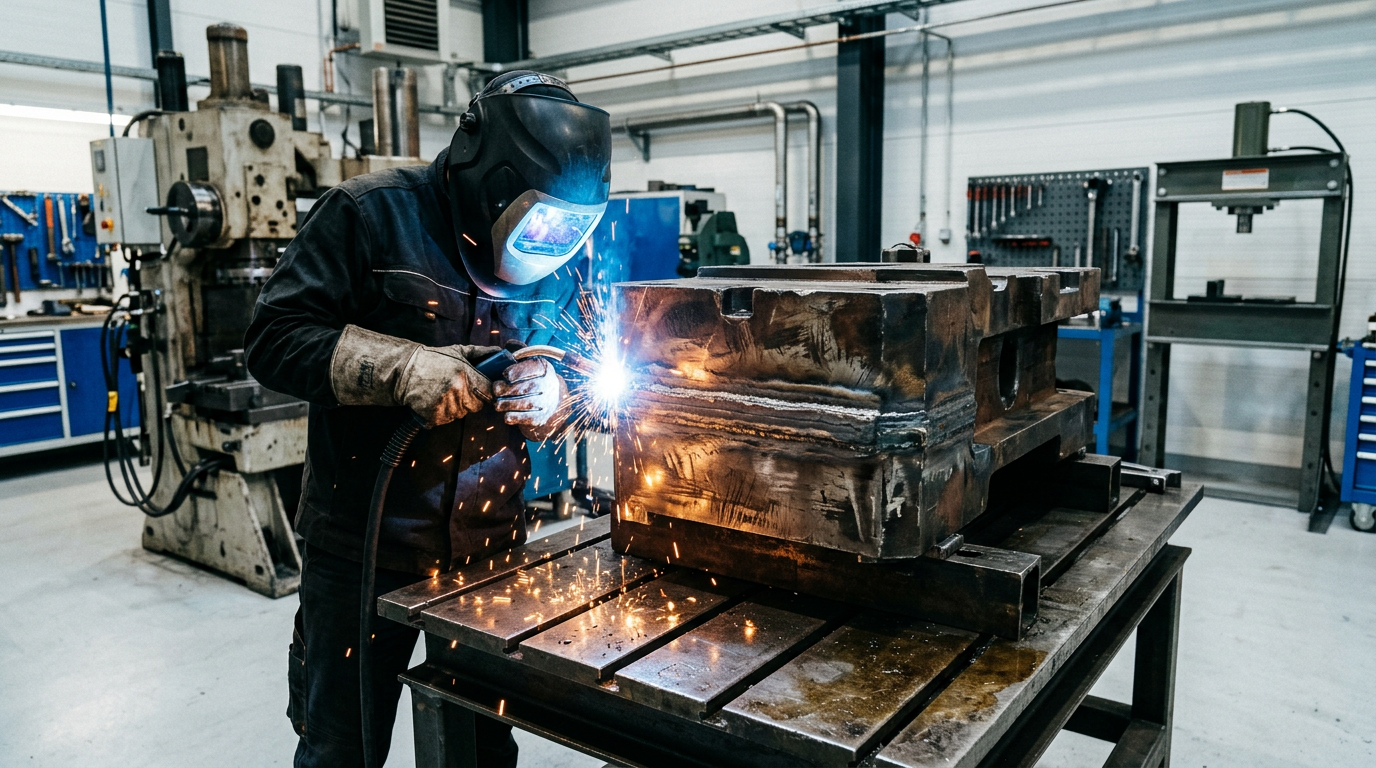
Plasma transferred arc welding, often called PTA or powder arc welding, is a hard face welding process that deposits powdered metal alloys onto a prepared base material. SURFALLOY describes its process as using a high-energy electric arc and inert-gas constriction to form an ionized plasma column. Powdered alloy enters that column, creates a liquid weld puddle, and fuses with the base material.
This distinction matters because PTA produces a fusion-bonded overlay rather than a coating that is only mechanically attached to the surface. SURFALLOY lists practical single-pass deposits from approximately 0.060 to 0.500 inches and reports coating dilution below 10 percent. Those characteristics can support applications in which a substantial, machinable wear layer is required without the need to replace the entire component.
Why Process Control Matters
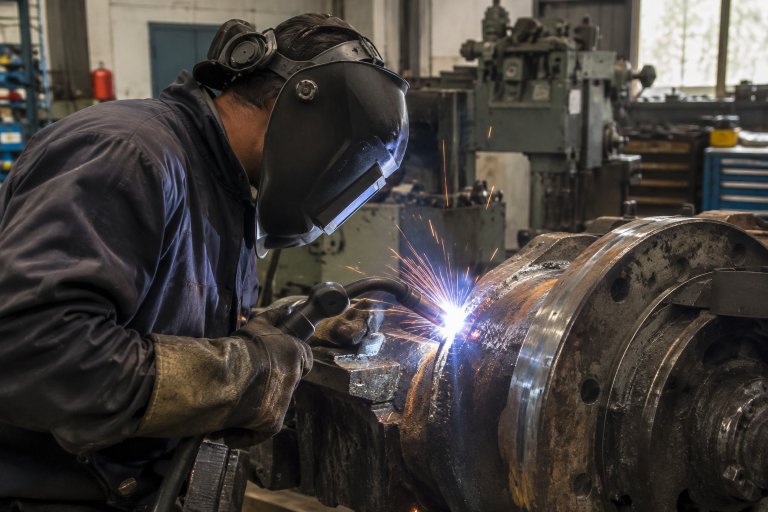
PTA performance depends on more than the powder selected. Current, travel speed, powder feed, gas flow, substrate condition, and heat management affect deposit geometry and microstructure. Published research on plasma transferred arc coatings also shows that welding parameters can influence hardness, bonding, and wear behavior. Results from a laboratory study do not guarantee the same outcome on every production part, but they reinforce the need to match process settings to the component’s service conditions.
Components That May Benefit From Surface Restoration
SURFALLOY identifies a range of industrial applications for hard face welding and surface treatment. Common examples include:
- Forging tools: Components facing heat, impact, and repeated contact may benefit from a wear-resistant overlay.
- Tooling and dies: PTA resurfacing can help restore working areas affected by dimensional loss or contact wear.
- Glass molds: Surface restoration may be considered when thermal cycling and operating wear affect mold surfaces.
- Valves: Suitable alloys can address service concerns involving galling, erosion, corrosion, or heat.
- Mining equipment: Severe abrasion and impact can make carbide-based treatments or hard-facing overlays appropriate options.
- Mixing blades, hammermills, fan blades, scrapers, and knives: These parts often experience material loss along high-contact edges and surfaces.
Choosing Between PTA, HVOF, and Arc Spray
Each process serves a different purpose. A reliable recommendation begins with an assessment of the component, its substrate, the failure mechanism, and how the restored surface will be finished and used.
- PTA hard face welding: A strong choice when a fusion-bonded alloy overlay, controlled dilution, and finish machining are important.
- HVOF coating: High-velocity oxygen fuel coating can be considered for dense carbide or chrome-carbide coatings. SURFALLOY lists applications including wear plates, shafts, rolls, gate valves, fan blades, and turbine vanes.
- Arc spray: SURFALLOY’s twin-wire arc spray process melts two wires and uses compressed air to propel atomized material toward a properly prepared surface. It can be used for dimensional restoration, wear surfaces, electrical conductivity, friction surfaces, shafts, bearings, pump seals, and tool repairs.
Arc spray depends on proper surface preparation, commonly including grit blasting, so deposited particles can key into the substrate. Because thin materials can still be susceptible to distortion during preparation or spraying, component geometry remains an important part of the evaluation.
Why Alloy Selection Is Central to the Repair
The best alloy is the one that addresses the dominant failure mode, not necessarily the one with the highest hardness. SURFALLOY works with iron-, nickel-, cobalt-, and tungsten carbide materials. Iron-based alloys may be considered for many wear applications, while nickel- or cobalt-based materials can be appropriate where corrosion resistance, heat resistance, galling resistance, or combined service demands are important.
Tungsten carbide treatments are often evaluated for demanding abrasive wear environments. However, substrate suitability still matters. SURFALLOY notes that its tungsten carbide coating is not intended for solid tungsten carbide substrates because the substrate is too hard.
Can Restoring a Part Extend Tool Life?
When a component remains structurally sound, restoring the worn working area can be a practical alternative to complete replacement. SURFALLOY states that customers have reported tool-life improvements ranging from two to six times normal life. Actual results vary based on material, loading, maintenance, operating environment, and the selected surface treatment.
Manufacturers can evaluate repair value by tracking service life, maintenance frequency, dimensional stability, part quality, and downtime before and after treatment. These measures provide a clearer picture than relying on a single wear observation.
What to Include in a SURFALLOY Project Request
A complete project request helps determine whether PTA welding, HVOF, arc spray, or another treatment is appropriate. Include:
- The part name, drawing, dimensions, and worn locations.
- The base material and any existing heat treatment or coating.
- The primary wear concerns include abrasion, impact, galling, corrosion, and heat exposure.
- Operating temperatures, contact conditions, and production demands.
- Desired deposit thickness and final machining requirements.
- Photos of the worn surface and details about previous repairs.
- Required turnaround timing and production schedule.
Frequently Asked Questions
What materials can SURFALLOY treat?
SURFALLOY states that its primary surface treatment can be applied to tool steels, low-carbon steels, and, in general, iron-based materials. Its arc spray and HVOF processes can be applied to many metals, including steel, aluminum, brass, bronze, and copper.
Can a previously treated part be restored again?
SURFALLOY states that its primary coating can be redeposited over a previously treated surface in appropriate applications. Arc spray and HVOF recoating may require removal of the existing coating first.
Where is SURFALLOY located?
SURFALLOY is located at 1346 Wheaton Drive in Troy, Michigan, and lists weekday operating hours from 8:00 a.m. to 4:30 p.m. EST.
Restore Valuable Components Before Replacement Becomes Necessary
SURFALLOY combines plasma transferred arc welding, hard face welding, tungsten carbide treatment, HVOF coating, and arc spray to address a wide range of wear and restoration needs. A careful review of the part, base material, failure mode, and service requirements can help manufacturers select a treatment that supports longer component life and more dependable production.
Discover more from The Cameron Journal
Subscribe to get the latest posts sent to your email.